 bNomadic
Book Talk: The Shining Mountain; Two Men on Changabang’s West Wall
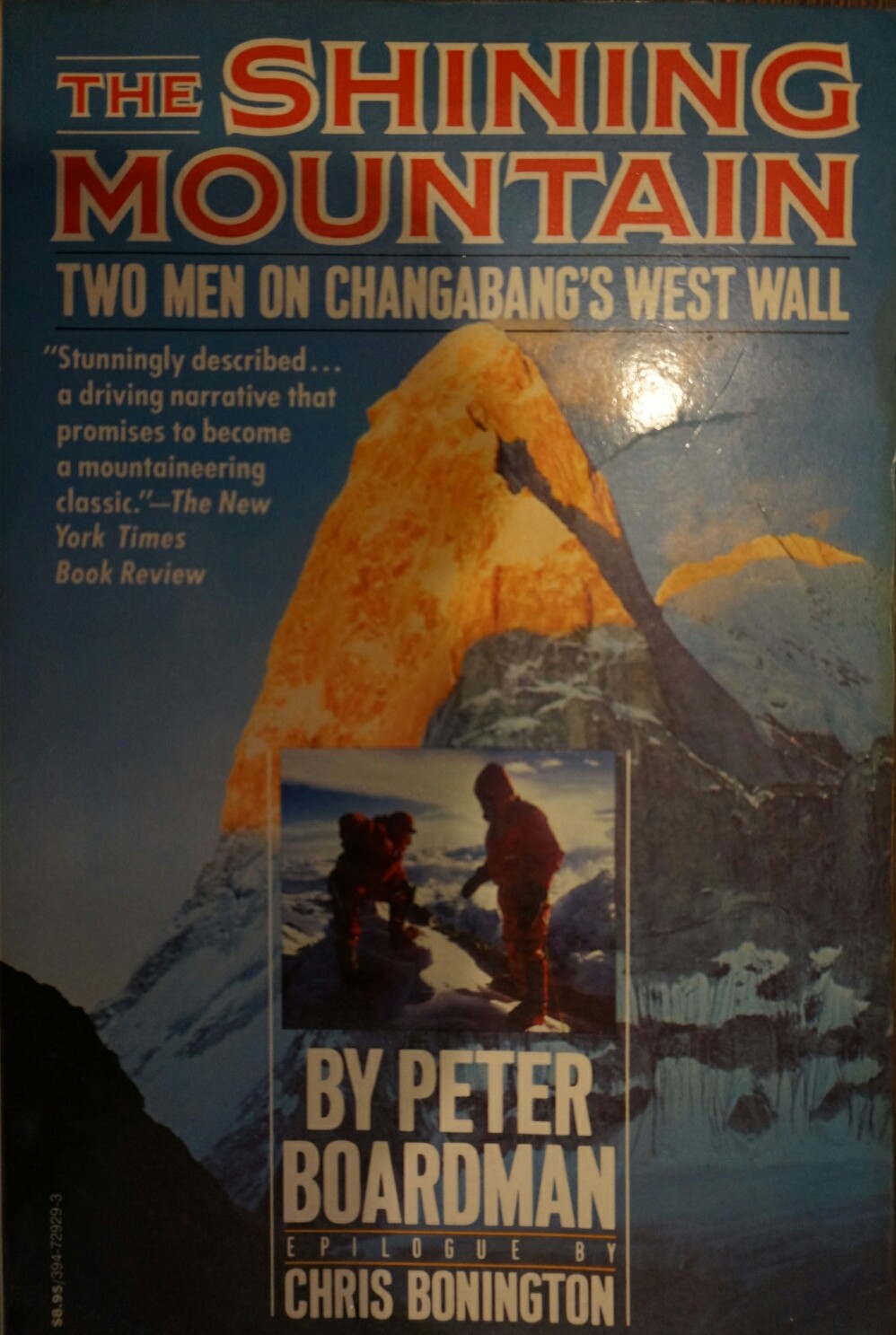
As you would have noticed from the cover of it, the book is an account of the author Peter Boardman’s inspiring climb of the west face of the 6864m Changabang along with his teammate Joe Tasker who also provided some of the photographs for this book. It is a narration of how climbing a peak had become an ultimate goal. The book was referred to me, as a source of mountaineering information about the region, by not one but multiple sources in the Himalayan Club, Mumbai.
First things first: Peter lucidly presented a personal, engaging as well as an honest account of his daring expedition. The book is a riveting story full of guts and mutual trust of how the two member team together solved the great mountaineering puzzle without any assistance or aid from porters as well as professional route or camp setting. It was the author’s maiden book and was critically acclaimed not only in the mountaineering circles but in literary world as well.
The expedition was set in the post-monsoon season of 1976 when the acclaimed climbers Peter Boardman and Joe Tasker made the first ascent of the West Wall of the shark tooth shaped Changabang in the central Himalayas in Garhwal. The sheer scale of the 5000ft white granite wall of the mountain’s west face continues to present one of the greatest challenges of mountain-climbing in the region. Relying on big wall techniques in the dangerous and unpredictable high Himalayan environment, the Boardman-Tasker team almost took a month in successfully climbing the peak. To this day, theirs remain to be the only successful attempt in climbing the peak from the life-threatening west face. In the debates that followed, by many accounts it was considered to be a tougher climb than that of the Everest. “It’s a preposterous plan. Still, if you do get up it, it’ll be the hardest thing that’s been done in the Himalayas” retorted the legendary Chris Bonington, before the expedition, who was the first to climb the peak in 1974 through a different side and regarded the west-wall to be “not a married man’s route”.
It was Peter’s first visit to the Garhwal Himalayas. Apart from the knowledge acquired through hearsay and reading mountain literature, he counted on his partner Joe Tasker’s experience who had successfully climbed the neighbouring Dunagiri just the previous year. The badass rock climber got a culture shock of his life on his first visit to the “muggy smelly” India. Egoistically self-assured of their mountaineering skills and experience, the duo discarded the company of “social chameleon” Flt Lt DN Palta, an IMF-assigned liaison officer, during the initial stages of the expedition itself. As an outcome, the team adopted to course-correct its Himalayan inexperience and overshadowed their rawness with absolute dedication.
High up on the face, Boardman and Tasker resorted to makeshift tentage instead of the hand-crafted hammocks, an unrealistic decision in the high-altitude Himalayas at that time of the season. The climb demanded an extraordinary level of dedication from the men for a full month. “Every technique I had ever used was tested and applied, half consciously – bridging, jamming, chimneying, lay-backing, mantle-shelfing, finger pulls, pressure holds all followed in a myriad of combinations”, accepts the author. Every morning they would fix ropes and ferry loads up the face and descend to a lower camp. Operating in capsule style, the team hauled its own supplies and equipment up the mountain. Later on, the successful climb of the Changabang had changed the attitude of Peter towards these mountains. After the descent the duo compassionately volunteered to retrieve dead bodies of members of a US team that unsuccessfully attempted the Dunagiri.
Boardman’s detailed technical expression of climbing conditions on the mountain face has made this book not only a mountaineering classic but a literary gem as well. The book may not provide any additional information about the region but is a high quality work as far as mountaineering is concerned. Supplemented by valuable references from Tasker, the book perfectly captures the personal and physical challenges involved in the climb. Subsequently, the duo became best climbing partners, popular authors as well as legends in the mountaineering circles before their tragic death at Everest’s Northwest Ridge in 1982.
In about 190 pages, with the decorating aid of about 15 black-and-white photos, 2 map sketches, the author has absorbingly summed up his capsule style expedition to the central Himalayas. First published in 1978, the book continues to be out of print for a long time now. Although, I was able to buy the book online from a store based in England, the e-editions of the book are available at both Flipkart as well as Amazon.
Book Talk: Becoming a Mountain
Released in November last year, Stephen Alter’s Becoming a Mountain is one of the most recent additions to the Himalayan literature or escapades. The author talks about his experience and inner-healing through treks and climbs in the Garhwal region of the central Himalayas.

Having hit by a tragedy at home, the author heads to the Himalayas in search for his inner peace and soul. Although an American by origin, author Stephen Alter has always been a Himalayan lover – having grown up in Mussoorie, a Himalayan hill station near Dehradun in Uttarakhand. As established by his previous books, his love for Himalayan spirituality is not a fresh one or born out of the recent misfortune back at home. Trekking and camping under the shadow of holy snow-clad peaks of Garhwal Himalayas, he hoped to overcome that tragedy.
The author talks about his love for Himalayas and expresses his frame of mind while he relates his repeated rendezvous with Flag Hill at Mussoorie, the revered Nanda Devi, the holy Kailash Mansarovar and the Bandarpunch. With the intention to overcome the mental fatigue resulting out of the attack, the author decides to rekindle his engagement with the holy peaks and attempts the Himalayan treks one at a time. While recovering from the injury, climb to the Flag Hill reignites the memories of his childhood.
Stephen believes that walking is not only the best exercise but also the most effective way to overcome depression or mental fatigue. He next attempts the established trek to the Roopkund Lake. Just as an unprepared college adult who is forced to camp in the jungle, the author too is lily-livered high up on the mountains. His candid expression, in fact, becomes a source of entertainment on his heftily paid pilgrimage to Kailash Mansarovar from Nepal border. Later in 2013, the arrival of the catastrophic monsoon weather denies him a chance to climb the Bandarpunch; much in agreement to his hesitation.
Author Stephen’s happenstances with the Himalayas as he gets surrounded by the snowy peaks and his encounter with the wild flowers, birds or animals that he comes across on his journeys are all but a fulfilling delight to be read. He often correlates his sojourns with the accounts and anecdotes of earlier travellers. All through his travels, he intends to relate the outcome of the attack on him and his wife with the serenity and beauty of the Himalayas. It is with the energy and wisdom emanating from his travels through the Himalayas that he has shaped and penned his thoughts in the current book.
Just as his previous books, the travel-accounts presented in this book would make for an interesting, entertaining and fulfilling read. With his expert expression and control over the language, the author, this time a victim of violence who approached the hidden Himalayas for healing, has successfully showcased his love and admiration for the Himalayas. A rare and rather realistic mysticism makes this book a rich as well as an informative memoir that knuckles under the limits of both mountain and man.
A hardbound edition of this 262-page book is currently priced at Rs 495. Published by the Aleph Book Company, New Delhi, the book is available at Amazon as well as Flipkart.
Notes from Haryana: The ever popular Sultanpur National Park

As the state government showcased Sultanpur habitat as part of its tableau in the just held Republic Day parade at the Rajpath in New Delhi, I thought of writing about this ever popular bird-watching destination located within the confines of NCR. The birding destination, I always held, is already very popular but a few interesting thoughts and queries after conclusion of the 2015 RD celebrations have brought me to share my experiences at the sanctuary. Owing to the birdlife, facilities and mostly the ease of access to this sanctuary, it remains to be one of the most organised bird-watching winter-destinations in the region.

Locally called Loharjung, a near-threatened Black-necked Stork. More images at Flickr Photoset
Located just 15km from Gurgaon on the Gurgaon-Farrukhnagar-Jhajjar highway, the brackish waters of the low-lying marshy tract is just a suitable habitat to attract as well as support a large variety and quantity of birdlife especially in the migratory season. The sheer richness of the biodiversity in this swathe of semi-arid vegetation appealed the distinguished guests and participants – at the IUCN General Assembly held in Delhi in 1969 – including Dr Salim Ali, Peter Scott, Dillon Ripley, Luc Hoffmann as well as Prince Birendra from Nepal who visited the site at the initiative of Peter Jackson, then a journalist and a wildlife enthusiast. Later representations sent to the government by Dr Ali and Jackson saw the destination declared as a Bird Sanctuary in 1971 which was subsequently upgraded to a National Park in 1991.

A misty winter morning at the Sultanpur National Park
Before Sultanpur was declared protected, the marshy lake was either frequented by bird-watchers, a rarity in those days, or the elites of the capital region who flocked the site to bag a “precious” game trophy. Records highlight that not only the British but the local nawabs were equally fond of hunting to please their “adventure”-tastes. Much before that, the expanse was once famed for the quantity of salt it produced. The Imperial Gazetteer of India mentions that the trade died due to extra taxes imposed by the British. Today, the doyen of Indian Ornithology, Dr Salim Ali, is largely credited for bringing awareness and transforming the 359 acres of this region from hunting grounds to a protected bird sanctuary.
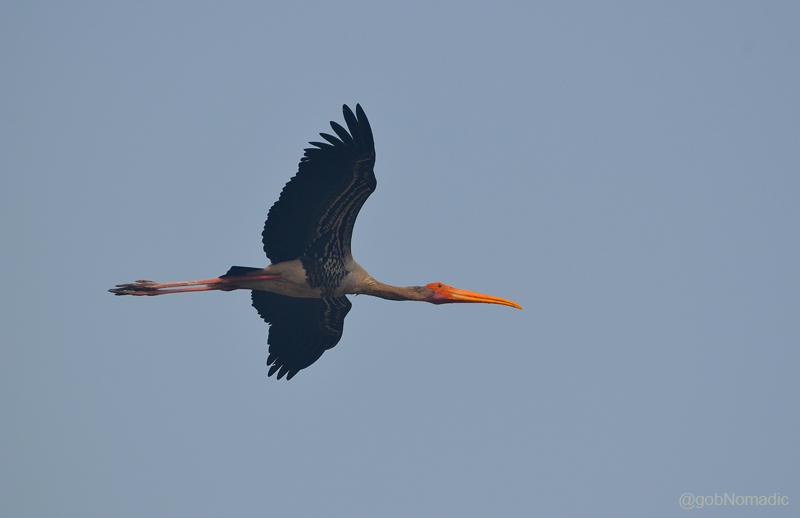
Locally called Janghil, a Painted Stork in flight. Please visit Flickr for more bird images

A family of Bar-headed Geese shooing off strangers. More bird images at Flickr Photoset

A misty morning as observed from the periphery pathway at the lake.
Every season a large number of waterfowls visit the sanctuary including Pelicans, Cormorants, Cranes, Herons, Egrets, Storks, Flamingos, Geese and Ducks, etc. A number of endemic territorial birds reside here round the year. Breeding of Saras, Storks including a rare Black Necked Stork have been recorded in this park. It is estimated that every winter season, the park is visited by over 30,000 birds. The official checklist confirms sightings of over 250 bird-species in the sanctuary, however, the quality and size of the habitat has deteriorated from what was originally observed as claimed by Jackson in a recent interview. A detailed checklist published by the Haryana Forest Department could be accessed here.
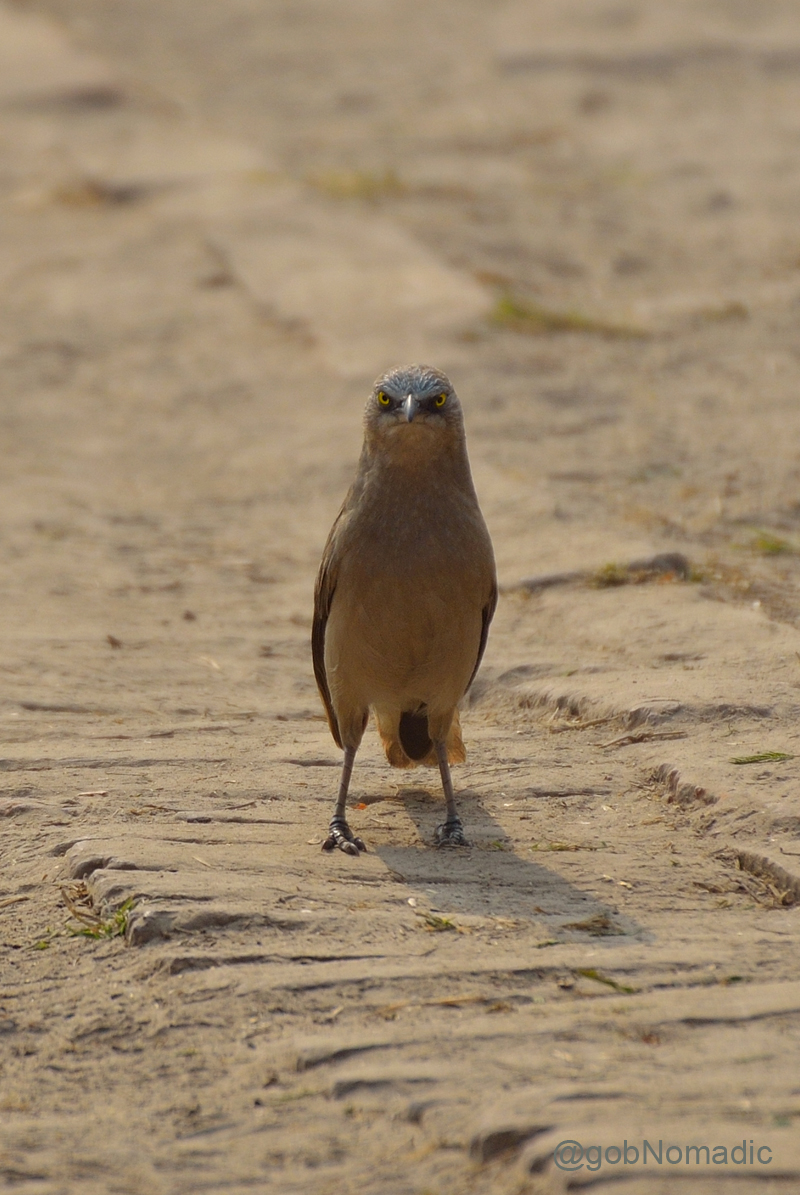
Locally called Ghogoi, an angry Large Grey Babbler.
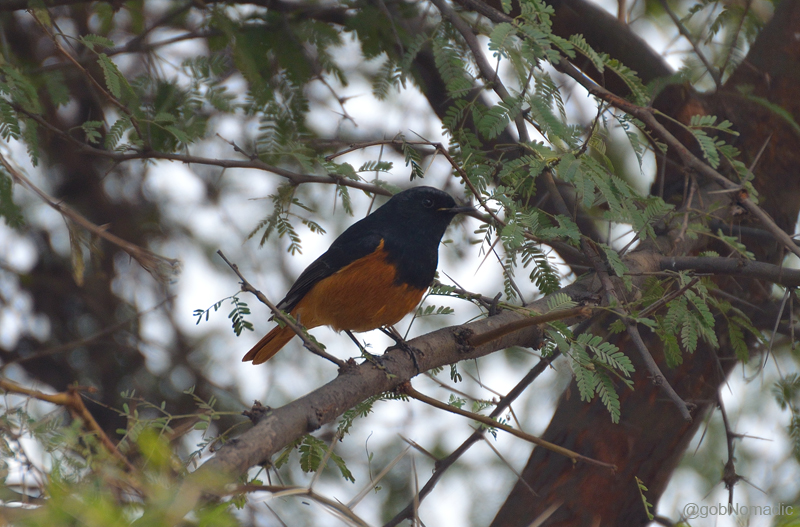
Locally called Thirthira, a Black Redstart. More from the region at Flickr Photoset

Locally called Sada Munia, an Indian Silverbird. More images at Flickr Photoset

A Great Egret, also called Great White Heron patiently waiting for its catch. More images at Flickr Photoset

Locally called Chhoti Murgabi, a Common Teal. More bird images at Flickr Photoset
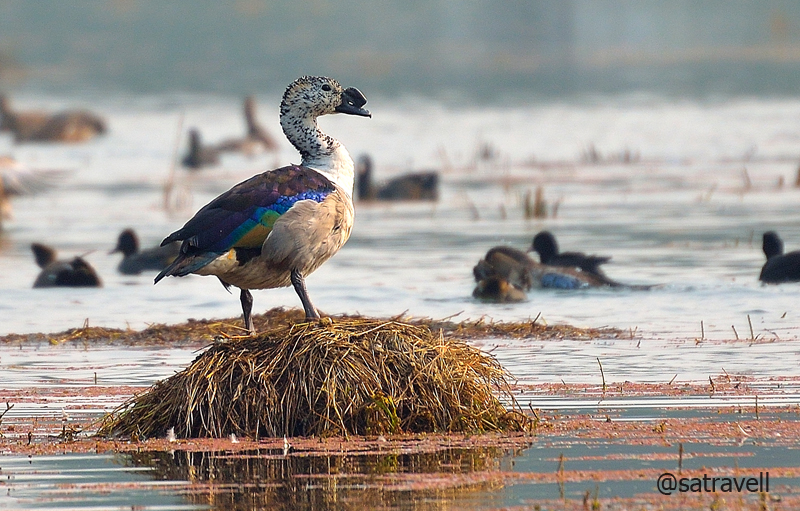
Locally called Nakta, a Comb Duck. Please visit Flickr Photoset for more bird-images
Some of the frequently spotted resident birds include Common Hoopoe, Paddyfield Pipit, Purple Sunbird, Little Cormorant, Eurasian Thick-knee, Gray Francolin, Black Francolin, Indian Roller, White-throated Kingfisher, Spot billed Duck, Painted Stork, White Ibis, Black headed Ibis, Little Egret, Great Egret, Cattle Egret, India Crested Lark, Red vented Bulbul, Rose ringed Parakeet, Red wattled Lapwing, Shikra, Eurasian collared Dove, Red collared Dove, Laughing Dove, Spotted Owlet, Rock Pigeon, Magpie Robin, Greater Coucal, Weaver Bird and Mynahs, etc. The common winter visitors at the Sultanpur Bird Sanctuary includes Cranes, Geese, Greater Flamingo, Ruff, Black winged Stilt, Common Teal, Common Greenshank, Wagtails, Northern Shoveler, Rosy Pelican, Gadwall, Sandpipers, Eurasian Wigeon, Black tailed Godwit, Spotted Redshank, Starling, Bluethroat and Long billed Pipit, etc. The sanctuary also accommodates a Blue Bull couple and a few jackals.

Locally called Roz, a Blue Bull (Nilgai) male inside the sanctuary
Just as every bird-watching destination, the best way to observe birdlife at Sultanpur will be to take a walk. A walk along the lake, at a leisure-pace, wouldn’t take more than a couple of hours unless you want to wait to take those special shots with your camera. Four tall watch-towers have been placed to assist you in observing birds and their habits. The pathway offers plentiful of options to sit with a camera hide. The library and the interpretation centre at the park houses over 70 portraits of birds along with films, slides and some memorabilia left by Dr Salim Ali. The staff at the park is full of information and experience to initiate a novice into the calmer realms of bird-watching. Bharat Lal, the forest guard at the sanctuary is full of anecdotes and incidents about the celebrity birders from the NCR region. “Demoseel Krane ke liye subah paanch baje tayyar rehna”, he retorted to my queries when I last stayed there. Despite myself getting ready at the agreed time, I failed in my attempts to locate the elusive pair of Demoiselle Cranes that season. And that’s the beauty one has to live with in a wildlife zone. It’s not a zoo, remember!

Commonly called Bandar, Rhesus Macaques pose a threat to the nesting sites of resident birds
An additional inlet of canal-based water has partly bolstered the water supply to save the water body and the refreshing greenery surrounding it that attracts diverse birdlife round the year. The lake is dotted by reeds, aquatic plants and some recently created mud pits in the water. The boundary-wall of the sanctuary is surrounded by agricultural lands. Geographically, the park is surrounded by Sultanpur village towards West, Chandu village towards East, Sadhrana village towards South East and Kaliwas towards the North; all within the confines of Gurgaon district. The park boasts of almost every facility a visitor could possibly think of at a bird-watching destination. This includes accommodation, decently appointed cottages or rooms, restaurant as well as a bar, conference room and a forest rest house where ex-PM Indira Gandhi was held captive after her arrest in 1977.

Winter sundown at the Sanctuary
Best time to visit: Winter season
Travel Lure: Bird watching, Picnicking
Accommodation: Plentiful
How to reach: 15km from Gurgaon on the Gurgaon-Farrukhnagar-Jhajjar highway
Book Talk: A Slender Thread – Escaping Disaster in the Himalayas
On the face of it, a book titled “A Slender Thread: Escaping Disaster in the Himalayas” may seem like a mountaineering chronicle or even a war history full of self-driven adventures. This is what I always thought when it popped up every now and then in the suggestions list of the online portals from where I often make purchases. Quite frankly, it is not very usual of me to buy and read a book which is mostly a climbing log. But this one, a bestselling work by the author and an acclaimed climber Stephen Venables mercifully, is not just about mountain climbing. It was while researching about Panchachulis that I stumbled upon this book as a recommendation by a certain someone from the Himalayan Club, Mumbai.

In actuality, the book is modestly a regular mountain expedition book, well acclaimed nonetheless; more because of the unusual heroic effort put together by his expedition members who saved author Stephen Venables’s life after both his legs got fractured high in the glacial Himalayas. I found the first half of the book, which deals with research, planning and preparation of the expedition, to be most attention-grabbing as well as informative. The author nicely weaves the mountaineering history of the region, including the patron Goddess Nanda Devi, with the story. The legends and explorations of the likes of Smythe, Longstaff, Shipton and Tillman have been righteously presented.
Soon after the author is airlifted by the Indian Air Force’s chopper from a cwm at above 5500 m alt, the book becomes rather emotional with the focus shifting to Stephen’s personal life back home in Britain. The family and profession related emotional trauma every climber goes through has been very well expressed. For someone who wishes to carve a career out of mountaineering or just armchair climbing in general, every detail is grippingly informative. At the end one would often argue that Venables was actually lucky to have partnered with some of the finest of mountain climbers from India and Britain for this expedition. An acclaimed climber himself, Venables authentically brings forward that gone are the days of gentlemanly camaraderie among the fellow climbers or expedition members. “Looking back now, at the end of the century, one gets a sense that the 1936 Nanda Devi expedition was the highlight of the golden age of exploration – an unusually contented, cordial pairing of American innocence with British experience”.
The unexpected fall faced by Stephen Venables, the first Briton to climb the Everest without supplemental oxygen, on the descent from his successful first ascent of Panchachuli V in the central Himalayas is something which is most dreaded by climbers – an abseil-point failure which guarantees nothing but death. The extraordinary sodality and courage demonstrated by his companions Victor Saunders, Dick Renshaw, Stephen Sustad, Chris Bonington, Harish Kapadia and not to forget the IAF pilots would go down as one of the best rescue and teaming efforts in the annals of mountaineering history. Having broken both his legs and trapped at above 5500 m alt, he was totally reliant on his team mates for his survival. This is an account of his laborious journey and nearly miraculous rescue as well as of the sheer brilliance exhibited by the team. All is well that ends well. Right!

Panchachuli II (the highest one of the group) in the backdrop. Source*: Stephen Venables
Although, the author engagingly describes the planning as well as execution of the expedition, I still feel that he has been unable to do full justice to the raw beauty of higher Himalayas. Nevertheless, this unflustered story of the author’s struggle high up on a remote Himalayan peak is still a worthwhile read especially if you are a devotee of mountaineering literature. For about 200 pages interspersed with clean black n white photographs of Indo-British joint expedition – of which the author was also a part – to the Panchachulis, the publisher Random House has priced the book at about Rs 1100. The book is available at both Amazon as well as Flipkart.
Book Talk: The Nanda Devi Affair
This is yet another book that has reserved a place for itself in my bookshelf dedicated to travel writings. Not so much for the author Bill Aitken’s travels or trekking escapades but because the book reliably captures the aura surrounding the forever mysterious mountain peak of Nanda Devi. Even after two decades when it was first written, the book continues to be popular and one of the most easily available resources on the subject.

…One of the most easily available resources on the subject…
Originally published in 1994 by Penguin, the latest reprint of the book is priced around Rs 299. Surprisingly, the publisher has mulishly disregarded a better typesetting in all its reprints including its original edition. In about 194 pages, the author talks about the mountaineering history and his fascination towards one of the most beautiful and revered high-altitude regions of Himalayas, the Nanda Devi biosphere.
It was legendry Eric Shipton‘s mountaineering literature classic, The Nanda Devi, which he wrote after he had successfully discovered the treacherous route to the base of the mountain that eventually inspired Bill Aitken to make a determination that come what may, one day he too would cross the blooming Rishi Gorge and win a way to this Hindu Garden of Eden. Having fled Britain because of a failed love affair, Aitken, a young Scot, claimed to have his true home at the mountain’s feet. “The affair with the ravishing Goddess had occupied a third of my life,” he writes.
In part through his travels and explorations spanning almost three decades as well as by way of acquiring knowledge through various published and unpublished chronicles pertaining to the region, he writes about the Nanda Devi, patron Goddess of Kumaon and Garhwal. As he begins to talk about his hikes through the hillsides of the dev bhoomi Uttarakhand, he gradually approaches the subject after giving inkling to the absorbing hill life. While doing so, he briefly touches upon the routine ordeals faced by the hill folks against the difficult terrain and painful weather as well as history and traditions in the light of the beauty and divinity associated with the high mountains. The arresting ecological as well as geographic features of the Nanda Devi continue to propagate a religious craze in the region and the sacred peak is considered to be the seat of Goddess Parvati.
From featuring the best viewpoints in the Kumaon region that offers an extraordinary sighting of the Nanda Devi to the contributions made by the legendary explorers right from Shipton, Tillman, Roskelley, Longstaff, Curzon, Traill, Ruttledge and even Pranavananda, Atkinson, Sax and Odell, etc. in highlighting the confines of the sanctuary, Aitken has tried to capture all. Wherever deemed fit, he would vent his frustration at those who threaten the peace of these mountain abodes: be it the bigheaded babus at the Indian Mountaineering Foundation (IMF)’s Delhi office or the musk smugglers to the incompetent forest officials to the secret Indo-US mountaineering assignment in which a nuclear-powered spying device was proposed to be installed atop the Nanda Devi as well as the pushy professional climbers who cared a fig about the environment of the sanctuary that ultimately led to its closure. “Sara Kailash chut hagi – the entire mountain had been polluted, “he quips.
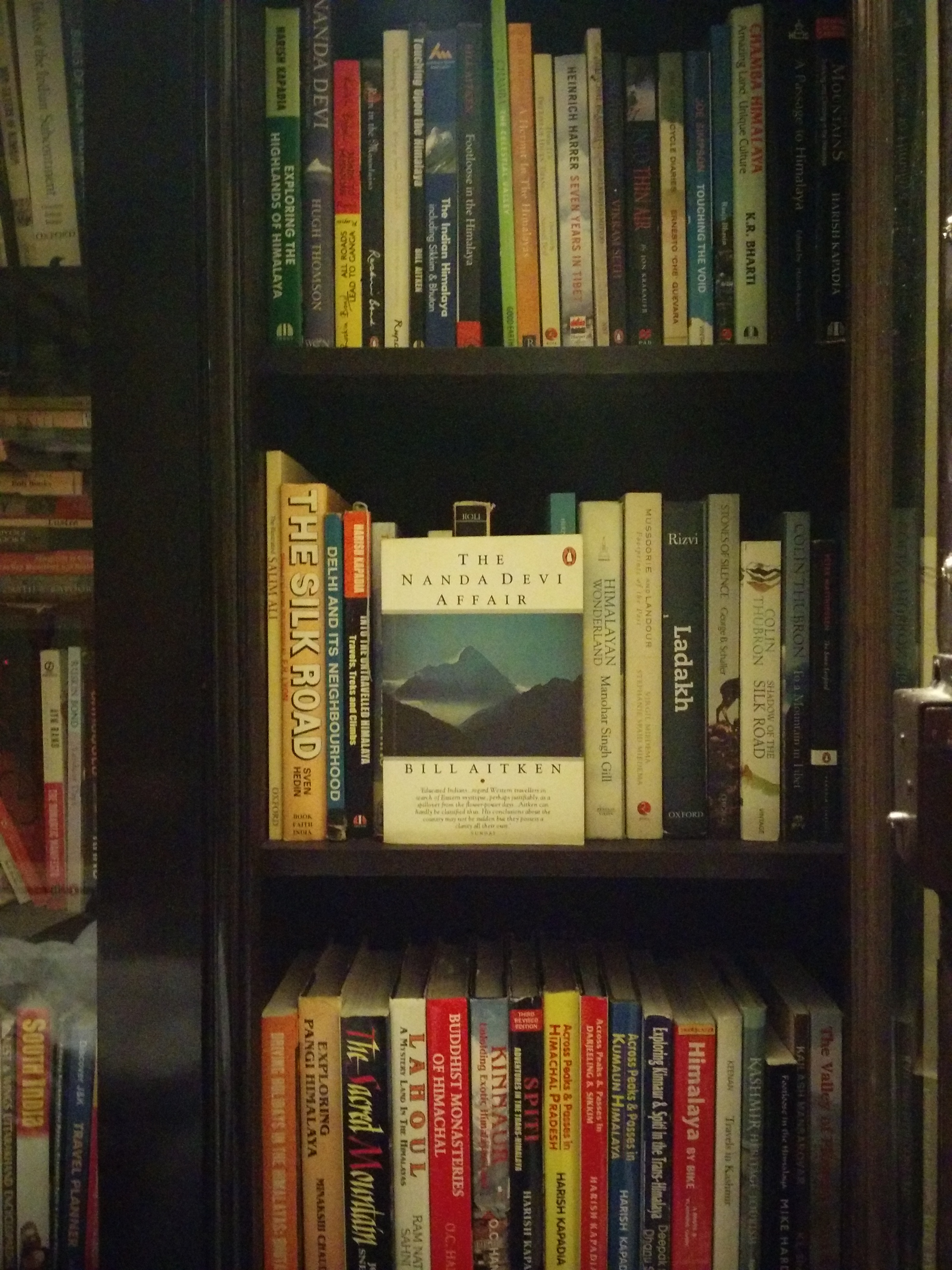
The book has reserved a place for itself in my bookshelf
Initially, Aitken’s style of writing might appear to be complicated and one might judge him for his condemnatory outlook but the passion speaks for itself and his love for mountains is visible everywhere. The Nanda Devi Affair is undoubtedly the author’s bestselling and most popular book full of anecdotes related to the mountain as well as the land and the people surrounding it. His other published works include Touching Upon the Himalaya: Excursions and Enquiries, Mountain Delight, Footloose in the Himalaya, Seven Sacred Rivers and Riding the Ranges, etc. You may like to buy the book online here, here or here.







 bNomadic