 bNomadic
Garhwal Diary; Lesser exploits in the Himalayan Balcony at Pauri

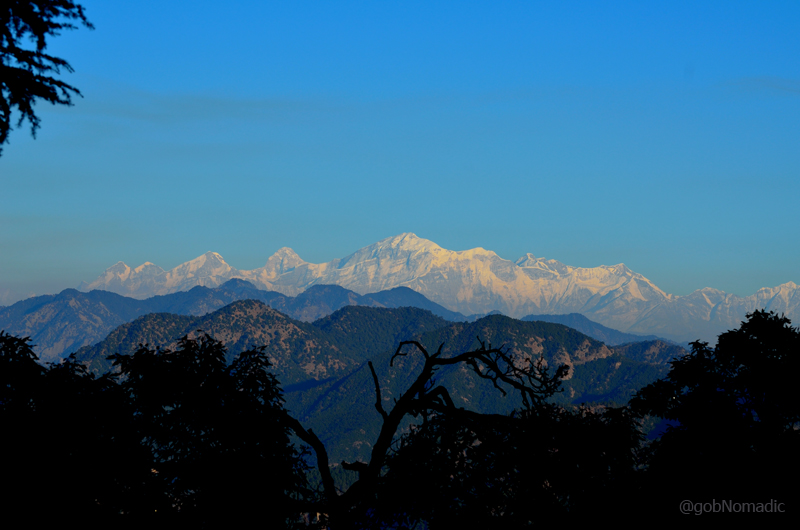
Incipient sunbeams creating mystical profile of gleaming Hathi Ghori Peaks. More at Flickr

The shining Central Himalayas in the morning. More from the region at Flickr Photoset
The inchoate beams of the sun, next morning, unveiled some more features as well as divine aspects of the holy snow-clad screen. With the morning light producing silhouettes over the gleaming icy pinnacles, the awakening of senses reverberated with the mystical reflections off the snows in the vast Himalayan amphitheatre. Peaks as far as Dunagiri, Nanda Devi and Mrig Thuni towards the eastern horizon were clearly visible. Collecting my senses from the previous night’s slumber, I sat by the window pane and arranged my camera.
Not just aesthetically admired but the peaks of the Great Himalayan Range visible in Garhwal or Kumaon are revered as their guardian deities by the locals where the inspired ones usually begin their day by bowing in reverence for the Himalayan Gods. In Pauri, the centre stage is occupied by the Badri Vishal. The spirituality associated with the Himalayas finds a much deeper significance down below in the plains. The Ganges fed by the central Himalayas is in actual fact the lifeline of north India, grain bowl of the country.

The Hathi Gorhi Parbat massif above Khirsu woods. Please visit Flickr for more images
L to R: Nanda Ghunti (6340m), Roung Tee (6370m) and Trishuli (7120m). More at Flickr
The locals, particularly the priests, are generally well versed with the nomenclature of this part of the Himalayas and would happily point out the peaks and directions for you. The issue, however, is the relative topography as well as its latest terminology. With a hope of finding a latest relative map of the state or the region, I futilely checked at the bookshops of the main market located on either side of the main road or “The Mall Road” as referred to by the locals.
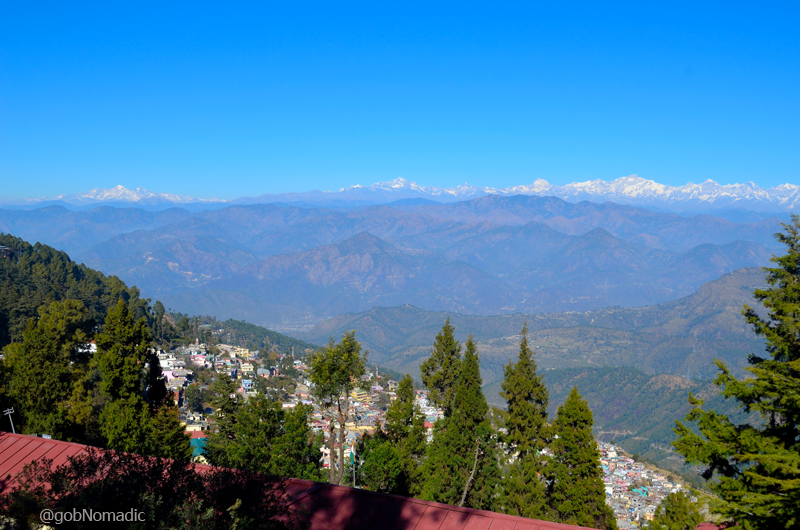
A panoramic view captured near the Deputy Commissioner’s residence. More at Flickr
With amiability in their attitude, the inhabitants of the political capital of the Land of Gods are profoundly religious as is reflected by the thriving historical temples dotting the town. The popular ones are Kandoliya Devta, Laxmi Narayan, eighth-century Kyunkaleshwar Mahadev, Hanuman Mandir and a temple dedicated to Nag Devta. Nearby, other places of interest which could also double up as picnic spots include Ransi ground, Khirsu and Adwani forests, etc.
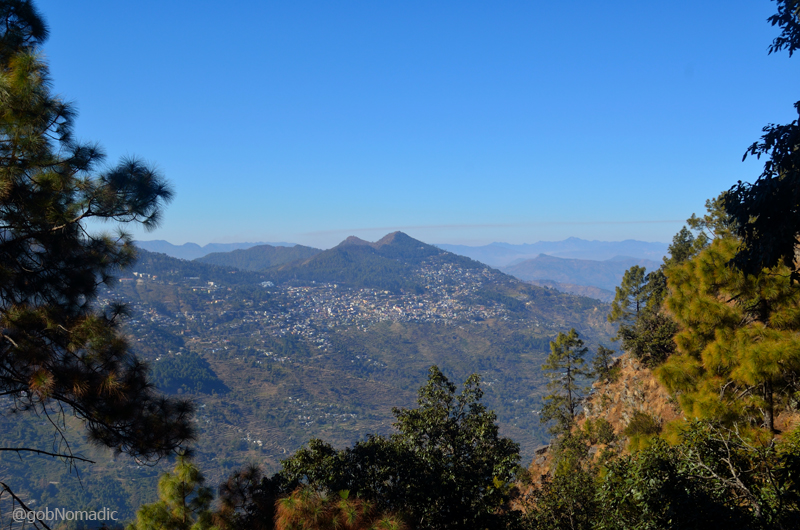
Horse-shaped Pauri town. More images from the region at Flickr
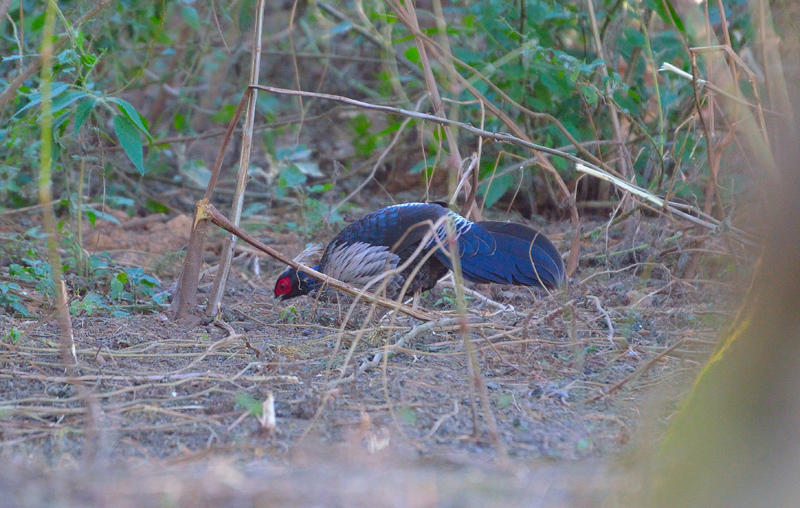
Kalij Pheasant (White-crested) spotted near Khirsu
The view towards the Trishul, from Pauri, is partially enriched by the wooded ridge of Khirsu. Enticed by its sylvan charm, I hoped to get a better view of the mountain from the ridge, basically an extended right ridge-arm of Pauri that can be reached in about 30 drive-minutes. The approach offers some splendid Himalayan vistas as well as photogenic access to raw flora and fauna. In fact, the government has long been planning to develop the small hamlet of Khirsu into a hill station but the actual progress reflects the sad state of affairs.
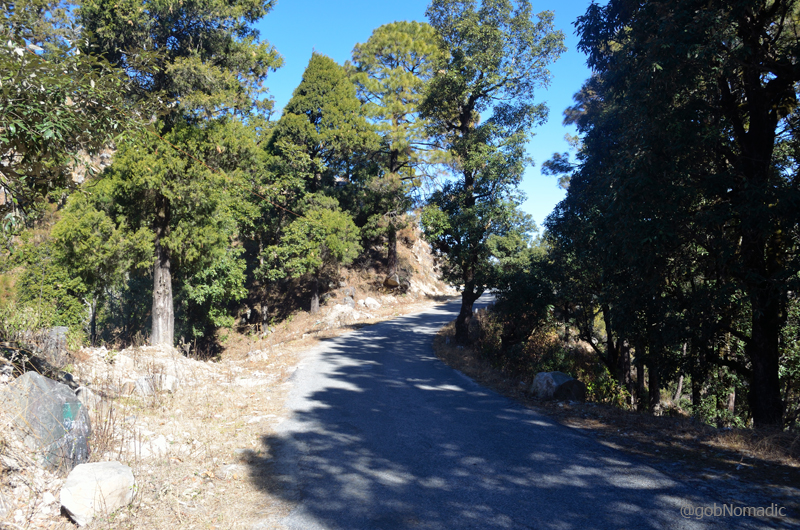
The narrow dreamy road to Khirsu. More of the region at Flickr

The terraced fields of fertile Nayar Valley. More images from the region at Flickr

Mountainscape as viewed from the GMVN property at Khirsu. More images at Flickr Photoset
The accommodation options at Khirsu are limited to a few guesthouses including a spacious GMVN property and a FRH that promotes camping. Even though, I was disappointed by overall management of the quiet hamlet including the GMVN property, the densely wooded ridge not only offers some refreshing trails to take a walk but allows distinct views of Chaukhamba. At 1800m, the tranquillity of wooded Khirsu gets broken by chirping of birds or occasional clamour of monkeys. The ancient temple of Ghandiyal Devta is also located nearby.

Chaukhamba massif captured from Khirsu; Satopanth and Kumling are also in the frame
I budgeted a day to visit the popular temples of Pauri. Encircled by evergreen deodars, the Kandoliya temple, situated just above town, is dedicated to the local deity Bhumi Dev and allows some quiet moment with eternal Himalayas. The Himalayan Gods, who superficially live on mountains in trees and streams, are innumerable. Every valley or village has its own deity but the most venerated one throughout Uttarakhand remains to be the Nanda Devi.
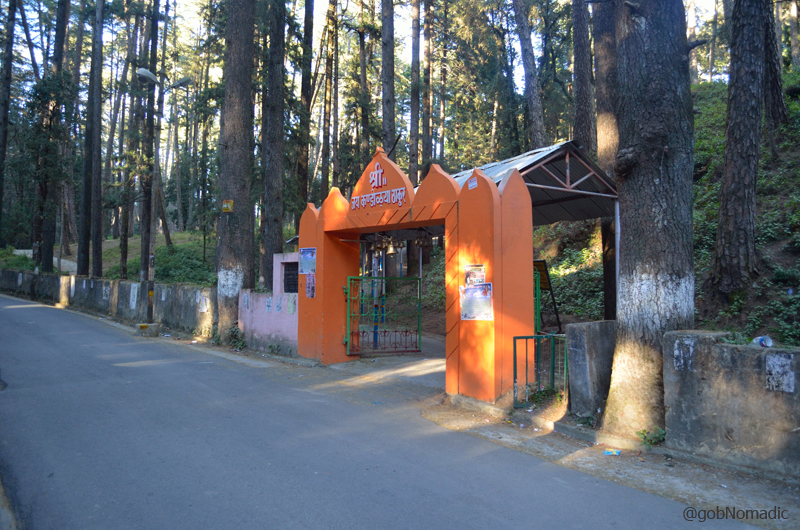
Entrance to the Kandoliya Mahadev Temple at Pauri. More images from the region at Flickr
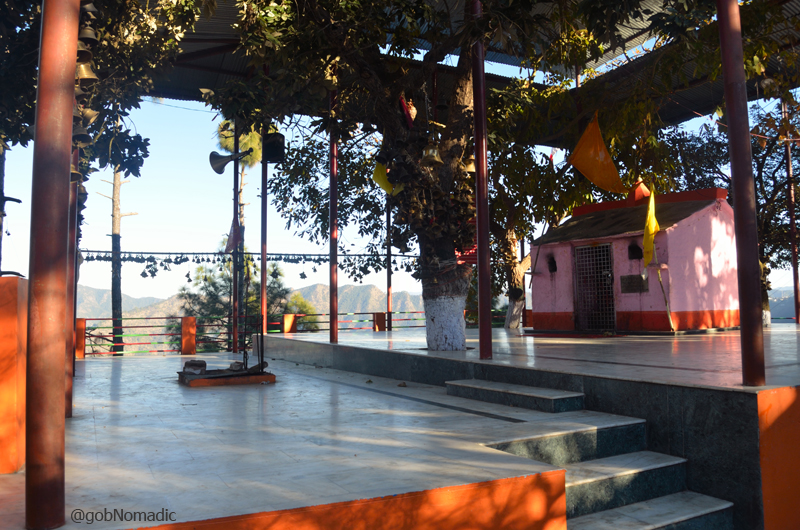
It takes about 10 min to climb the stairs to reach the Kandoliya Mahadev Shrine
Later in the day, following a thoughtless guide book, I trekked all the way up to the Kyunkaleshwar temple, from the CH, only to discover that it can now be reached through a narrow motorable road. Situated a little above the settlement of Pauri, the temple offers some fascinating Himalayan vistas. Said to be belonging to the eighth-century, the temple is dedicated to Lord Shiva and still practises the age-old Guru-Shishya ritual in its Gurukul.

A Havan Kund inside the Kyunkaleshwar temple complex (taken from smartphone device)
The Gurukul students or staff would gladly guide you through the historical memorials located within the temple compound. If you are lucky enough, your walk to the temple could be rewarded with a remarkable presence of wildlife as well as birdlife including wild pheasants. I luckily spotted a Himalayan Fox couple. One more temple dedicated to the Nag Devta could best be reached through a 45 min trek starting near the Superintendent of Police’s office.
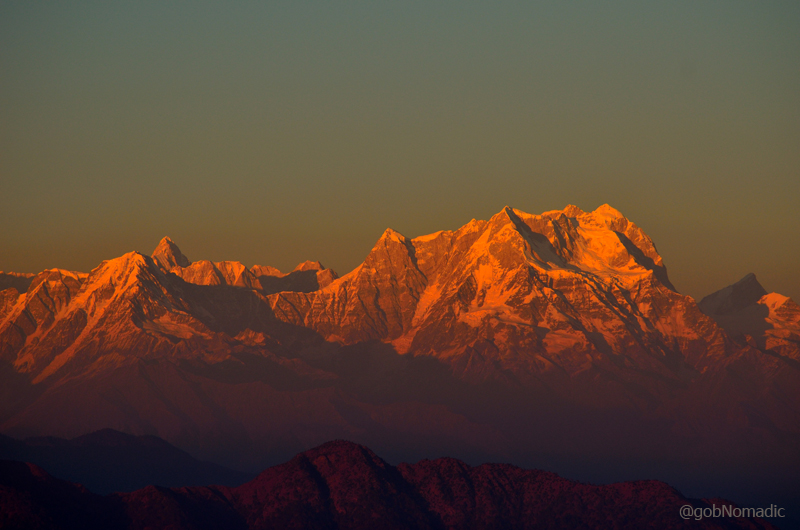
The Golden Chaukhamba massif. More images of the region at Flickr Photoset
Average Altitude at Khirsu: 1800m
Best time to visit: October to April, avoid monsoons
Famous for: Sylvan charms and Chaukhamba views
Accommodation: Limited but mostly available
Garhwal Diary; The Grand Balcony of Himalayas at Pauri
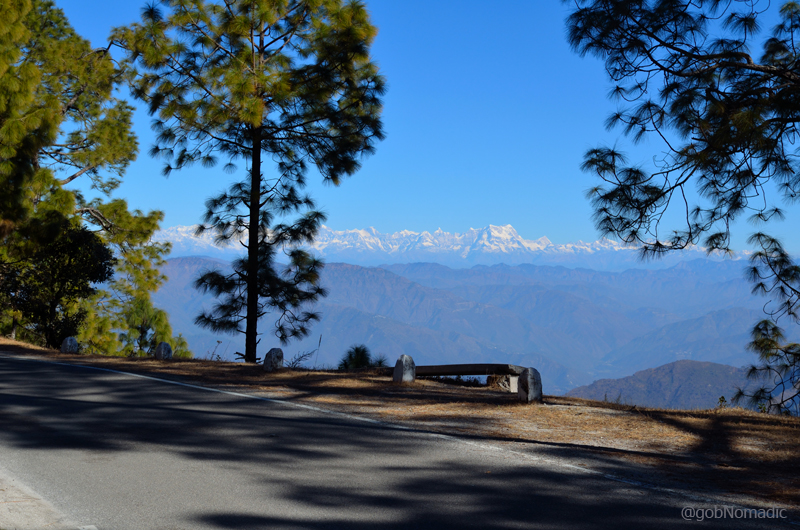
The poetic highway NH 119. More pics of the region at Flickr Photoset
Very often, our notion of the perfectness of a hill station collectively comprises the quality of the mountain-scape it offers to its visitors. In the Himalayan state of Uttarakhand, the flavour of landscape switches to a newer angle with every rising ridge or changing hillside but the prime focus of the show remains the snow-capped curtain of central Himalayas stretching roughly over 150 miles from Swargarohini in the west to Panchachuli group of peaks in east. Nonetheless, such an innocuous desire to be able to savour the picture-perfect grand Himalayan spectacle gets verbalized by supportive weather conditions prevailing at that point in time. I would say that I was very fortunate indeed to have been blessed by a near-perfect view of the glowing snowy screen which Pauri Garhwal is famous for.
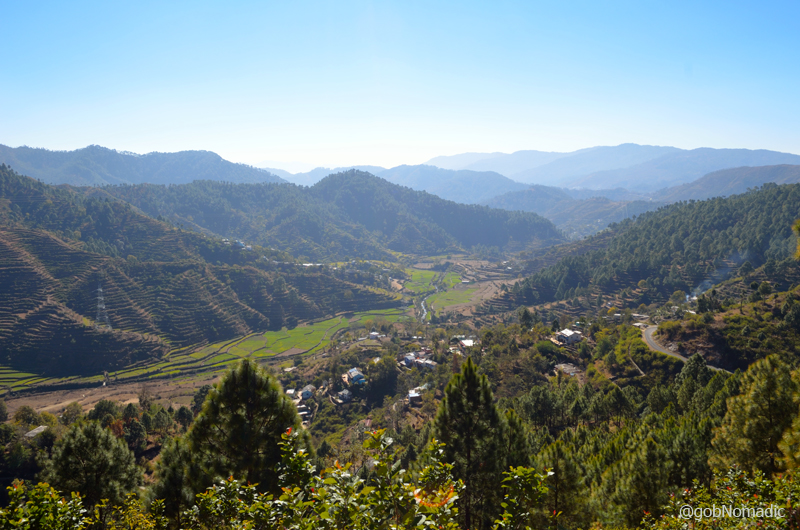
The fertile Nayar Valley. More from the region at Flickr Photoset
Descending the Lansdowne ridge, the nicely tarred NH 119 takes about 150 comfortable-minutes to reach Pauri, the administrative headquarters of Pauri Garhwal district of the state. Looping an exposed hillside, the narrow highway passes through Gumkhal and Satpuli just as the white curtain disappears from the scenery giving way to the Nayar Gorge. Spread on both sides of the highway, the small trade centres of Gumkhal and Satpuli comprises, typical of a small Garhwal town, matchbox-sized shops many of which still retain their wooden framework. Ahead of the confluence point of Western Nayar with Eastern Nayar at Satpuli, the road gradually ascends and the narrow gorge opens into the richly fertile Nayar valley comprising one of the most scenically terrace-shaped agriculture fields. The delight of passing through the multi-shaded green landscape immediately got fructified at a bend near Buwakhal when the shining snowy screen made an instant appearance. Passing through dense woods, the remaining six kilometres till Pauri presented a short intro to the Great Himalayas where one by one each major peak announced its presence.

The vantage offered by Pauri ranges from the far-flung hills of Mussoorie to Chamoli regions.
Previously known as the British Garhwal, Pauri has always been an important trading centre and was a staging post during the silk-route days. Spread on the terraced northern slopes of Kandoliya Range, at an average altitude of 1750 m, Pauri has gradually become the political nerve centre of Garhwal region. Possessing a rare scenic beauty and scintillating surroundings, the settlement of Pauri comprises a fusion of recently constructed houses as well as olden ones bearing signs of traditional architecture and a market that fulfils most needs of the region. Unlike most other hill stations developed by the British, Pauri has retained very little from the colonial past. In its place, Pauri is a confused manifestation of an expanded village gradually germinating into a Himalayan town. The character of the landscape shifts from being milder to a more rugged one as one enters the side valleys to reach snows.

L to R: Kirti Stambh (6510m) and Kedarnath (6940m) in the centre. More at Flickr

The 6351 m Sumeru Parbat continues to be one of the most difficult and less attempted peaks of the region. More peaks and nomenclature of the region at Flickr Photoset
The visitor profile to Pauri includes pilgrims who are either on their way to the famed Char Dham Yatra or visitors to the ancient temples of Pauri. Though, in the recent times, Pauri has been gaining popularity with adventurers, trekkers and para-sailors. Owing to the avenues generated by an influx of tourists, over the past few years, a few guesthouses, restaurants, eateries and a couple of ‘resorts’ have come up. I always say the state-run GMVN property could have been managed better. The best aspect of staying in Pauri is that almost every accommodation offers a splendid view of snow-capped Himalayas. However, the best views can be had from the Deputy Commissioner’s residence.

Literally meaning Tail of a Monkey, the shining Bandarpunch massif. More at Flickr
Fortunately, I was welcomed at the conveniently located Circuit House (CH). I particularly liked the accommodation for the views it commanded and the sumptuous home-cooked meals dished out by the cook. In winters, during the daytime, the open lawns of the CH complex would become favourite haunt of the neighbours who would spend their afternoons taking the sun. As the locals were gearing up to receive the first spell of snowfall of the season, the exceptional sunny afternoons were possibly their best bet to socialise.

Morning view from the lawns of the CH. Please visit Flickr Photoset for more images
Having offered a tea, I could not think of a better way to soak in the views of the Garhwal Himalayas. Barring a few inquisitive eyes, my presence was generally discounted by all. The region consists of a succession of gentle mountain ridges divided from each other by deep glens and climaxing at the snowy Himalayan canvas. Excluding the helm of Srinagar, the pasture of Panai on the banks of Alaknanda and the submontane tract, there was no level land visible from Pauri. The vantage offered by Pauri included the far-flung hills of Mussoorie, Chamba, Tehri, Rudraprayag, Srinagar, Karnaprayag and Chamoli regions. The panoramic view of enamouring snowy range included the peaks of Swargarohini, Bander Pooch, Gangotri Group, Kedarnth, Sumeru, Chaukhamba, Neelkanth, Hathiparvat, Nandadevi and Trisul etc. My eyes remained fixed on the spectacularly arresting mighty Chaukhamba massif. What more a Himalayan devotee like me would desire for than a noise-free civilised space and time to savour the holy glittering rocks?
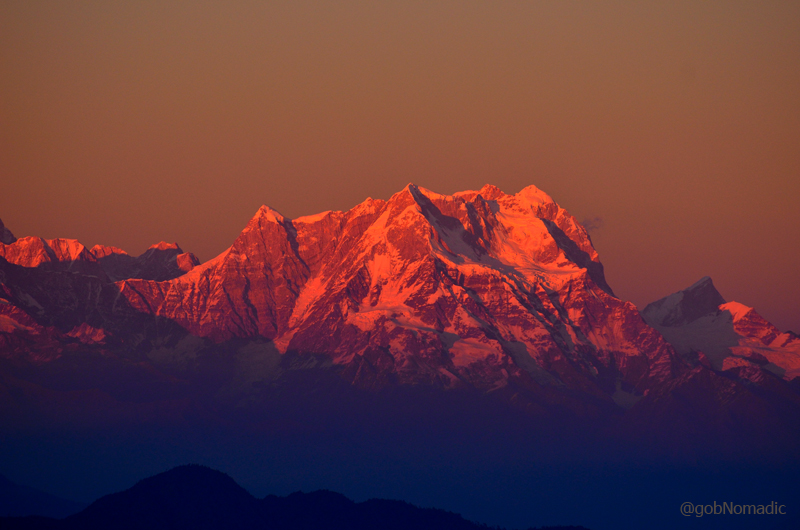
Ranging from 6854 m to 7138 m, the mighty Chaukhamba Massif. More at Flickr
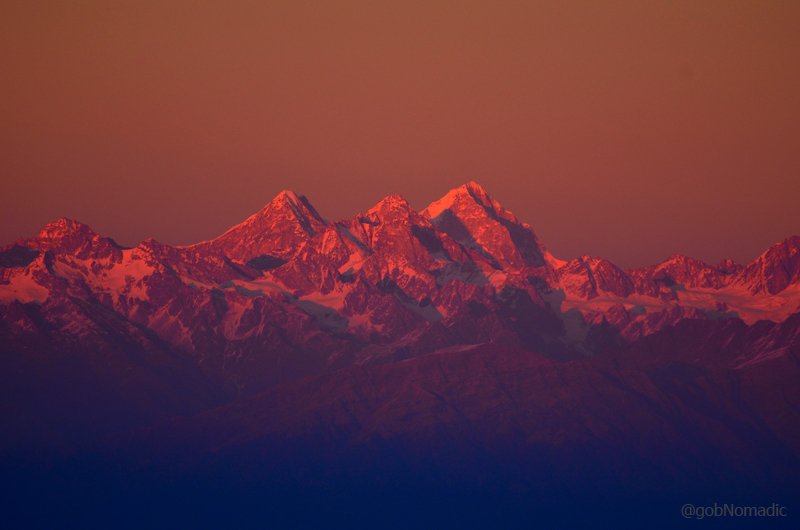
The 6596 m Neelkantha (Badrinath) towards right. More peaks at Flickr Photoset
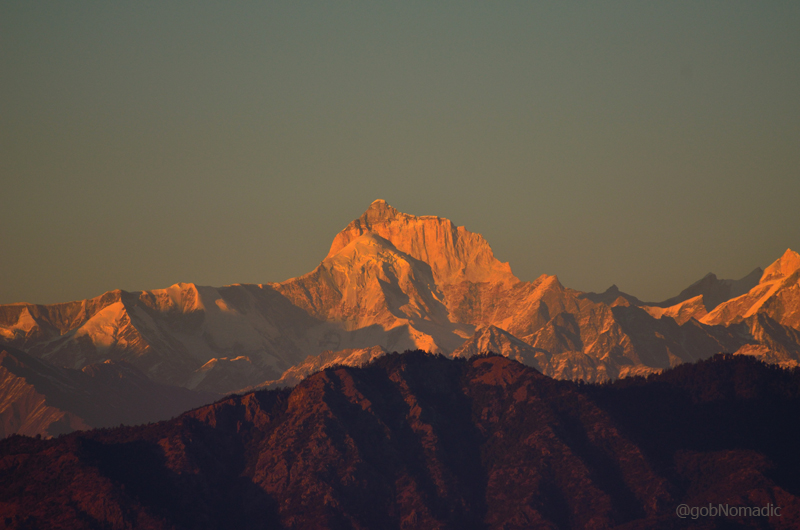
The golden 6904 m Mt Thalay Sagar. More images from the region at Flickr Photoset

The glittering Kharcha Kund 6613 m. More peaks from the region at Flickr Photoset
The mystic sunlight in the morning and evening exhibits a glittering rebellion of colours on the sharp snow-clad rocks. The blue hues seamlessly merging into a shade better, ridge after ridge, produce a hypnotic effect during the two extremes of the day. The magnitude of habitation could feasibly be assessed in the night when the countless sparkling lights jeweling hillsides are viewed under a starry nightscape. I would regrettably say that no ridge or no corner as visible is spared from construction or the destruction.

The glittering Gangotri Group as observed from Pauri. More from the region at Flickr
Given the nature of the mountainscape, there can be little doubt that Pauri should be visited in a haze-free weather. The climate of the region is generally pleasant in summer, very cold in winter and heavy rainfall in monsoon. Apart from providing a considerate environment to a poet or an author or a photographer or a painter, Pauri offers some pleasing walks through dense woods full of flora and fauna. Such frivolous details would be covered in the next post.
Do not forget to load your photography gear with a wide-angle lens. In my case, sadly, my chief moped at the last moment.
Average Altitude: 1700m
Best time to visit: November to April, avoid monsoons
Travel Lure: Himalayan views
Accommodation: Mostly available
Kullu Diary; the flowing Ridge of Kothi
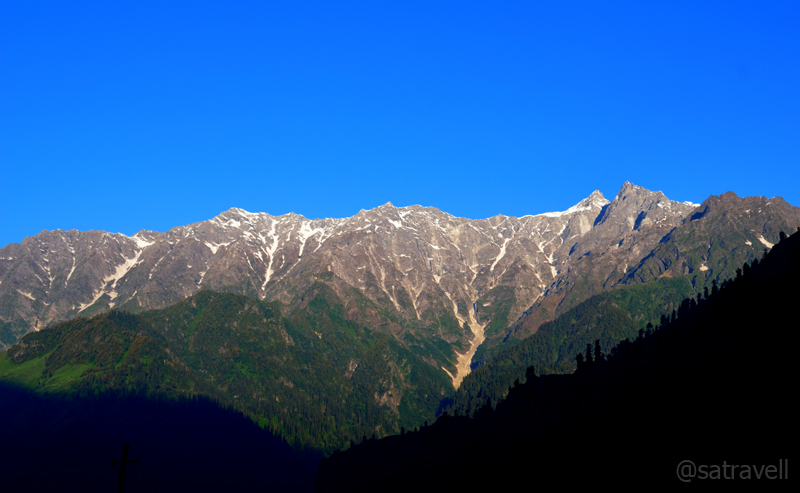
Northern arm of Bara Banghal Range captured from Kothi Ridge. Please visit Flickr for more images
Situated a little more than ten kilometer from the fine spreading of enormous deodars jacketing the touristy Manali, Kothi makes for quite a visible delight. At 2552 m, almost placed at the foot of the mighty Rohtang La, since time immemorial, Kothi has been an ideal camping ground or base for several popular treks including the traditional crossing over of the pass to reach Lahaul.
Having crisscrossed the Kothi ridge, several times before, it was in the summers of 2013 when opportunity knocked the humdrum of daily life and presented with a window to travel in the Godly Kullu Valley. I immediately grabbed the offer made by my dearest advocate brother and directed myself towards the head of the fertile Beas Valley.
I would not vacillate in calling this place as one among the few remaining idyllic hideouts offered by the Beas region. Retaining its own poetic charm, the splendidly attractive ridge offers plentiful of vistas ranging from green Deodar cover to raging stream and finely shaped snow-capped lower Himalayas to alpine pastures.
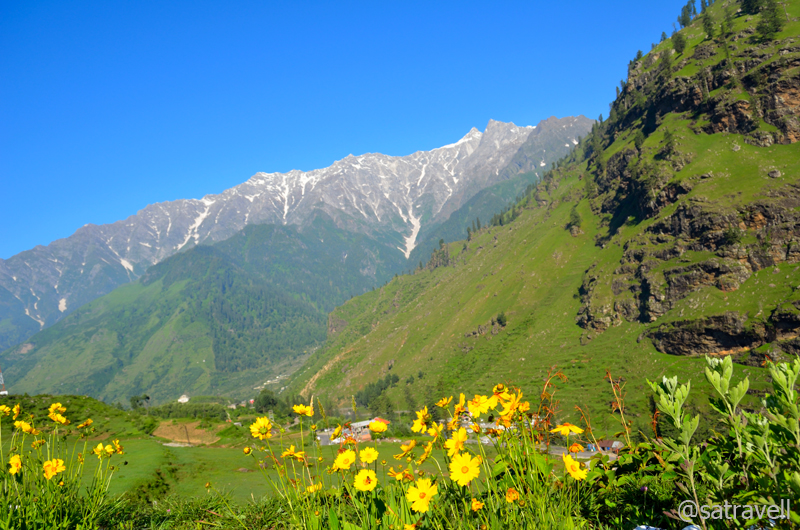
View towards the Beas Valley. For more pics, please visit Flickr Photoset
Possibly deriving its name from the bungalow, now occupied by the PWD of the state government, the Kothi-ridge has always been among the favourite halting spots for trans-Himalayan bound travellers. Although basic facilities like small shops, a few Guest Houses, restaurants, etc. have sprung up on the ridge, still commanding its grand old charm, the PWD Rest House continues to be the landmark building of the ridge. It was not difficult for me to recognise the PWD RH from the Check Post, for Rohtang cross over, stationed just before Kothi as one crosses the narrow deep Beas Gorge.

View towards the Rohtang Range. For more pics, please visit Flickr Photoset
As the morning sprang up to life the next day, I could not but minutely observe the splendid canvas of nature. Opposite the bungalow are the fine-girt precipices which line the southern foot of the Rohtang range, while south of them stretches an inimitable vista of the valleys, the wide forestland and the snow-sprinkled ranges that makeup northern sentinels of Kullu. The RH itself is positioned on a grassy slope at the lower edge of the immense forests of pine and chestnut, which were once the favourite haunt of both red and black bear as per the earlier records maintained by travellers. However, on a highly unfortunate note, currently there isn’t much left in the immediate surroundings for a wildlife lover except for the flying scavengers who occasionally glide through thermals coming off the rocky edge.
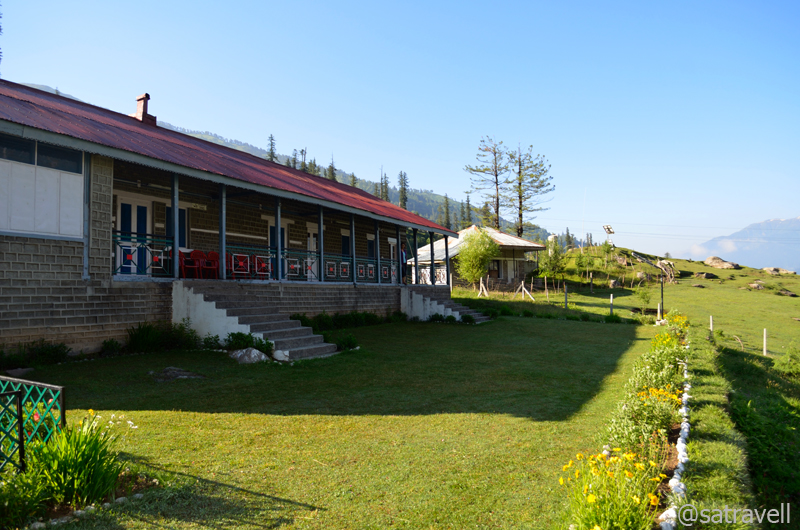
The Kothi Bungalow (RH). More images from the region at Flickr Photoset

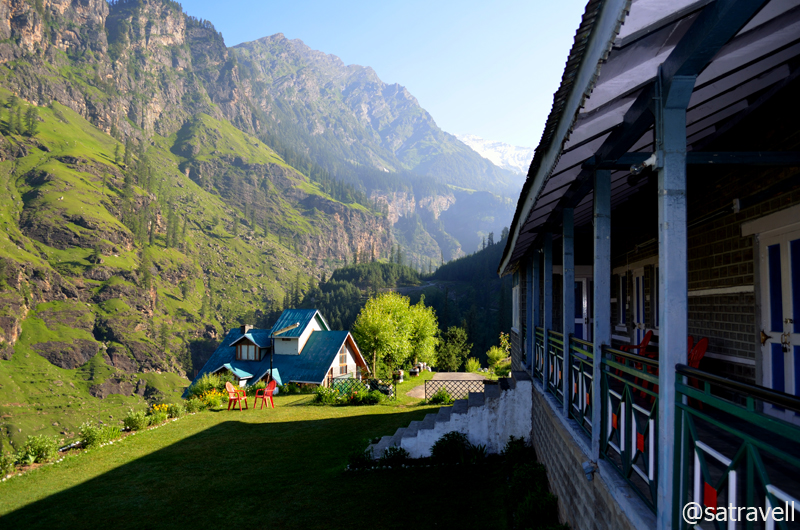
View from the corridor of the RH. The mobile tower is positioned in Palchan; the Gorge and the small settlement of Kothi towards the lower-right of the frame
View towards Rahla. The bungalow, part of this frame, belongs to a bigwig from Haryana.

A Himalayan Bulbul. More at Flickr
Just as one slopes down, one of the mighty natural wonders of Kullu lay bare before your eyes. The head of the valley is marked by a mighty crack, as if some natural upheaval had happened in the times gone by. The gorge, more than 20 ft wide, is walled by sheer cliffs. More than 100 ft below at the floor of the gorge, the Beas races and surges with an unceasing roar displaying its free fall momentum from the crest of Rohtang. Down below it is joined by the voluminous Solang Torrent before it gets codified into the Beas River.
Right from the earliest recorded travellers including Col Bruce or Moorcraft and Trebuck in their expedition of 1820, everyone made a special reference to Kothi, its splendidness and the challenge which this Gorge posed to be crossed. As for me, it will continue to attract and inspire me to remain forever attached with Himalayas.

The snow-capped Rohtang Range captured in the morning. More from the region at Flickr
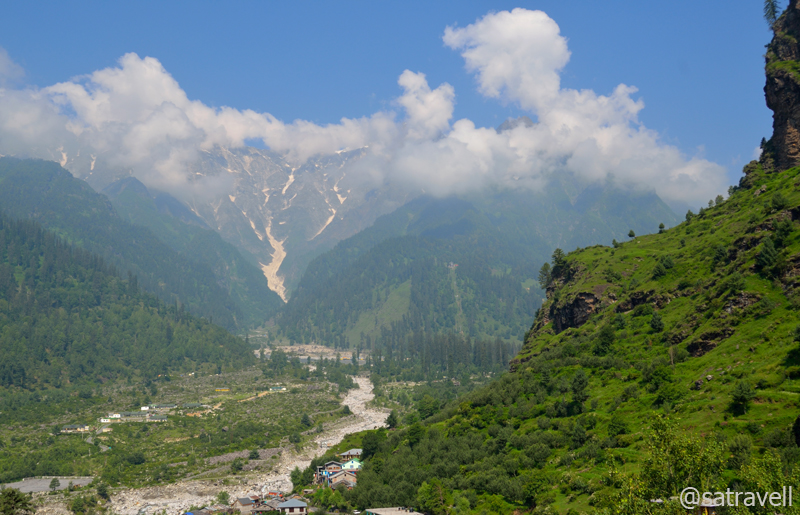
View towards the Halindi and Sarai Nala Valleys. More from the region at Flickr Photoset
Average Altitude: 2500m
Best time to visit: Avoid monsoons and winters
Travel Lure: Himalayan views and refreshing walks
Accommodation: Very limited
Postscript to my trans-Himalayan Stroll
The following is a page entry from On Road through the trans-Himalayan Region. To read complete travel memoirs and trip report, please visit here.
Chapter 22 of 22

Nun-Kun in Suru Region. More from the stroll at Flickr Photostream
The following morning, I chose to ignore the otherwise routine morning activities, which includes yoga or a morning-walk. Without breakfasting, we checked out of the hotel and having bought prasad, from the market, for family, we set out towards the Jammu city (308 m). Without any stoppage on the way, we lunched at the famed Haveli on NH1 past Jalandhar. The cruising affair of The Faithful continued non-stop till Karnal where I spent 10 min in unloading cousin as well as his belongings. The distance between Karnal and Jind was covered via Panipat. This way I reached my home at around 2230 hrs after picking my better-half and the kid from her parental house in Jind itself.
Even more enthusiastic about the Indian trans-Himalayan region and having gained some first-hand knowledge, I spent the remainder of the night in recounting the experience as well as key highlights of our sojourn on the rugged edge of the world. While describing the happenings of the trip, I could almost pinpoint the key regions where I could not manage to travel this time on the dream journey. Certainly, there is all the more to look forward to on my next visit in the coming seasons.


Even though, it is all the more preposterous vainly trying to give inkling to what you consider to be your quest. Still, chronicling travels is a vital aspect of a wanderer’s objective. The current journal is my first ever attempt in the aforesaid direction. In the due course of writing, I got introduced to as well as discovered the various measures a writer needs to take while travelling. All such measures have been integrated with the thinking as well as planning process for all prospective journeys. In future, I do wish to get a chance to travel and visit a similar area for a longer duration to be able to grasp as well as analyse the realities and present them in a more useful manner.
The description, as mentioned in this journal, is a creation of knowledge on the area accumulated, over a period of time, by gaining first-hand experience as well as reading numerous books and write-ups which I so far came across. The finest of the accounts, as mentioned in this journal, would be those which are able to reproduce the soul as well as create a precise imagery of place. The description may seem below mark and perhaps thoughtless but anyone who has been to the trans-Himalayas would endorse the specifics and may like to supplement it with words which are even more beautiful. The memories of red, yellow-billed alpine choughs calling against the backdrop of rocky cliffs and wind-blasted afternoons are forever etched in my mind.
“He who travels far will often see things
Far removed from what he believed was Truth.
When he talks about it in the fields at home,
He is often accused of lying,
For the obdurate people will not believe
What they do not see and distinctly feel.
Inexperience, I believe,
Will give little credence to my song.”
–Anonymous
Maa Vaishno Devi
The following is a page entry from On Road through the trans-Himalayan Region. To read complete travel memoirs and trip report, please visit here.
Chapter 21 of 22
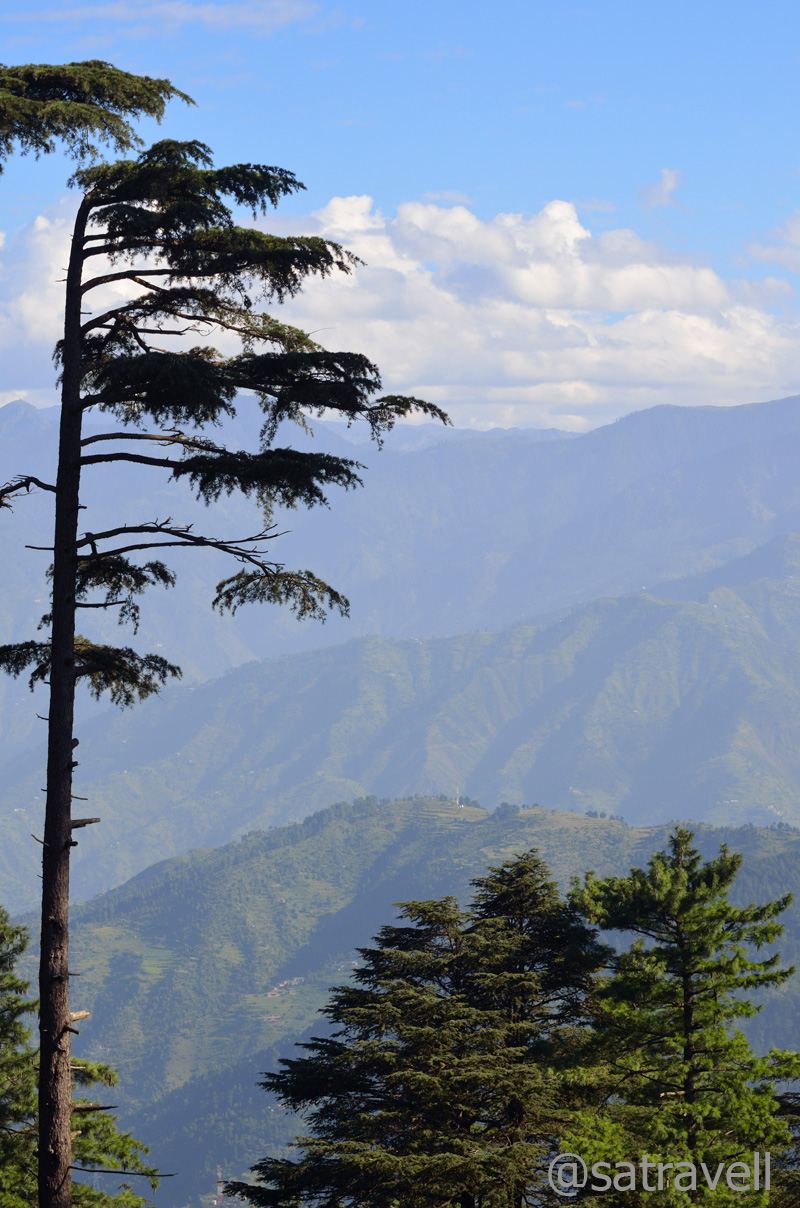
Morning view at Patnitop. More at Flickr
The following morning, after meal, we leisurely left the hotel premises to start the activities of the day. The gradual descent from the highest point on Srinagar-Jammu road – Patnitop – in late morning, gathered momentum after passing through Kud, located just eight km ahead. The settlement of Kud is famous for Indian sweet Patissa, sold fresh and hot by the red-coloured sweet shops located on both sides of the NH1A. A tea here seemed to be a perfect approach to break the laziness armour-plated by the nip in the morning air. The JKTDC as well as a few private operators maintained their properties overseeing the captivating Kud valley. The township of Udhampur was still 40 km ahead.
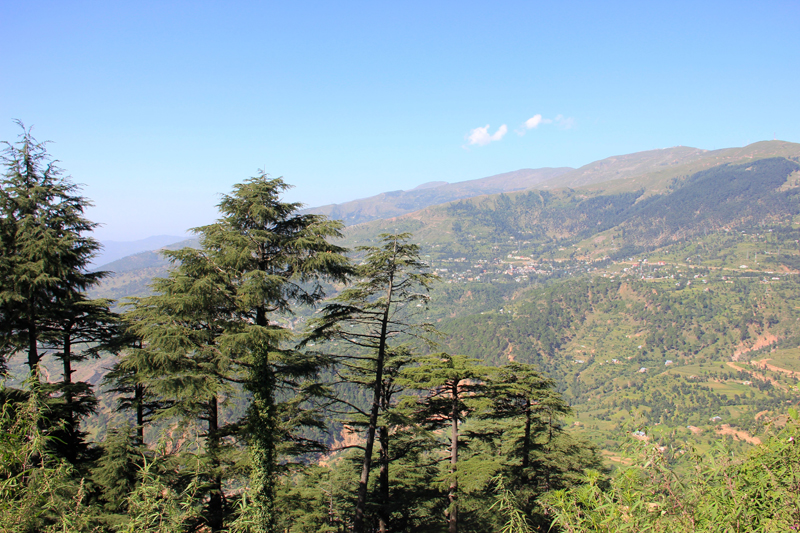
Descending the Patni Top towards Tawi basin. More from the region at Flickr Photoset

Nearing Kud, famous for Patissa. More from the region at Flickr Photoset
Descending the green Shivalik hills, we soon reached the military town Udhampur (808 m). The town wore a deserted look due to Bharat Bandh, called by the NDA (National Democratic Alliance), main opposition alliance at the centre, to protest against the fuel price hike, FDI in retail as well as rationing of subsidised LPG cylinders. Greened by Eucalyptuses, the district consists of many travel destinations including the sixth-century group of temples at Khiramchi, Shivkhori, Pancheri, etc. I was particularly interested in visiting the ancient temples but was advised by the paramilitary staff, posted near the Supply Chowk, not to venture into the off-NH1A area because of the protests. Frustrated, we asked for the directions to Katra, base for Mata Vaishno Devi pilgrimage, which could be reached taking a 17 km road branching off the main highway from Domail ahead of Tikkri. Initially, we had no plans of visiting the major Hindu shrine but passing through an area, so near to the keenly sought-after destination, we just did not want to miss the opportunity.
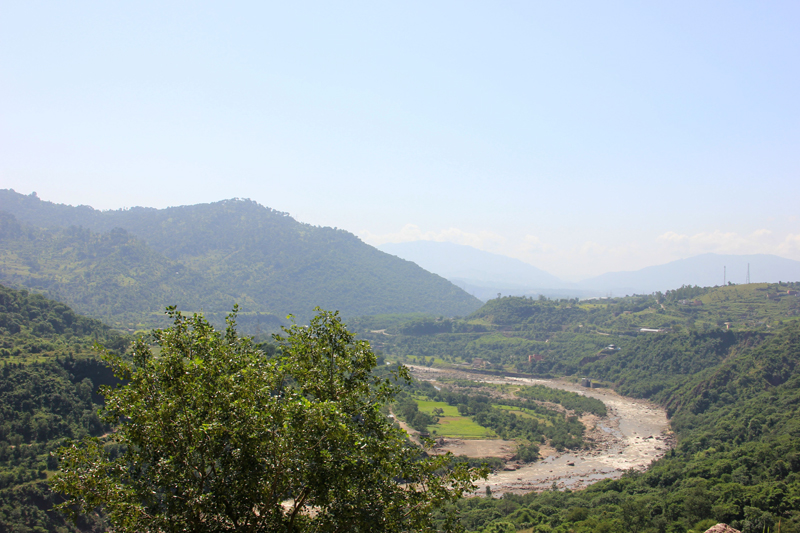
Ahead of Udhampur; near the diversion for Katra. More images from the region at Flickr Photoset
The hill – Tirukuta Mountain – on which the main temple is sited, becomes visible from the highway itself near Domail. Revering the holy site, the road meandered in a valley-like topography and slightly gained height to reach Katra (868 m), a base-village located at the foothill of the Tirukuta Mountain. With ever increasing number of pilgrims, Katra today is a thriving tourist village offering accommodation options as well as restaurants that suit all pockets. Having been to the shrine more than half-a-dozen times, by now I was familiar with the area. Confirming an accommodation, we took an afternoon nap in the hotel room allowing just sufficient time to climb in the evening and be back, after darshan at the shrine, before the next daylight.
I usually start the yatra in the early evening so as to reach the Bhawan, the Sanctum Sanctorum which is the Holy Cave, before the evening Aarti time – a couple of hours prescribed Pooja dedicated to Vaishno Maa – which starts after the sun sets. Likewise, the morning Aarti finishes before the sun rises. Loading my backpack with camera kit, GPS device as well as basic necessities for the climb, I headed out towards the market area. With the passage of time coupled with the wider acceptance of the shrine, Katra has expanded itself from a village to a tourist town peppered with restaurants, Prasad shops selling souvenirs as well as dry-fruits, garment shops, hotels, guesthouses and dharamsalas, etc. Pilgrim registration has been made mandatory at Katra before the start of the yatra. The registration slip (also entitles with accidental insurance up to Rs 1L), so obtained, is checked thrice by paramilitary jawans on the way to the Bhawan. With over 10 million pilgrims visiting annually, the affairs of the shrine are looked-after by the government controlled Shri Mata Vaishno Devi Shrine Board headquartered at Katra. Earlier, the control of the shrine vested with the Maharaja of Kashmir. The hefty offerings which the shrine receives are claimed to be utilised towards the welfare of the pilgrims as well as to improve the infrastructure.

Starting from a gateway-cum-checkpost located two km ahead of the registration counter at Katra, the yatra, an easy 12 km climb on graded pathways that takes up to four-five hours. More from the region at Flickr Photoset
The initial stretch to the imposing gate, marking the beginning of the foot march to the Bhawan, passed through fume-choked crowded streets of Katra. People generally prefer taking an auto from Katra to reach the gateway but I resisted doing so. The gateway is marked by a security check post that screen luggage as well as frisk every yatri. It didn’t require much explaining from my side to convince the jawan that the camera I carried was just a photo-camera (and not a video camera) and the GPS device was simply meant to record altitudes of major landmarks. The shrine has of late been subjected to substantial paramilitary presence owing to numerous threats issued by terrorist outfits such as Lashkar-e-Toiba.
Starting from a gateway-cum-checkpost located two km ahead of the registration counter at Katra, the yatra, an easy 12 km climb on graded pathways that takes up to four-five hours, passes through numerous ancient temples as well as landmarks on way to the Bhawan. Situated at a distance of one km from the gateway, the first major landmark, a gushing stream named Banganga (780 m) is popular for holy bath as well as langar run by T-Series Super Cassette Industries. This stretch of the climb is dotted with numerous souvenir shops as well as dhabas selling basic meals. Apart from incessant chanting of Jai Mata Di, the stretch is marked by Prasad shops blaringly playing the popular Bollywood numbers karaoked to “holy songs”. Pithoos, palkiwalas and ponywalas registered with the authorities could be hired in this stretch (from Katra to Banganga). Alternatively, one may like to hire the battery-operated auto-rickshaws (pre-booking required) or avail helicopter services (requires advance booking) to reach the Bhawan.
Crossing over to the other side of the valley, formed by the Banganga, the pathway steeply climbs in switchbacks to reach the next popular halt named Charanpaduka (1025 m) located about 1.5 km ahead. Legend has it that Mata Vaishno Devi took some rest here while climbing the Trikuta Hills. Aptly named Charanpaduka, the temple dedicated to the fable is said to have the foot prints of Goddess. The entire pathway, especially the first six km from the gateway, is dotted with refreshment, fruit shops, dhabas as well as the Shrine Board’s eateries. Increasingly popular nowadays, the first Café Coffee Day, selling limited items, is located 700 m ahead at an altitude of 1160 m.
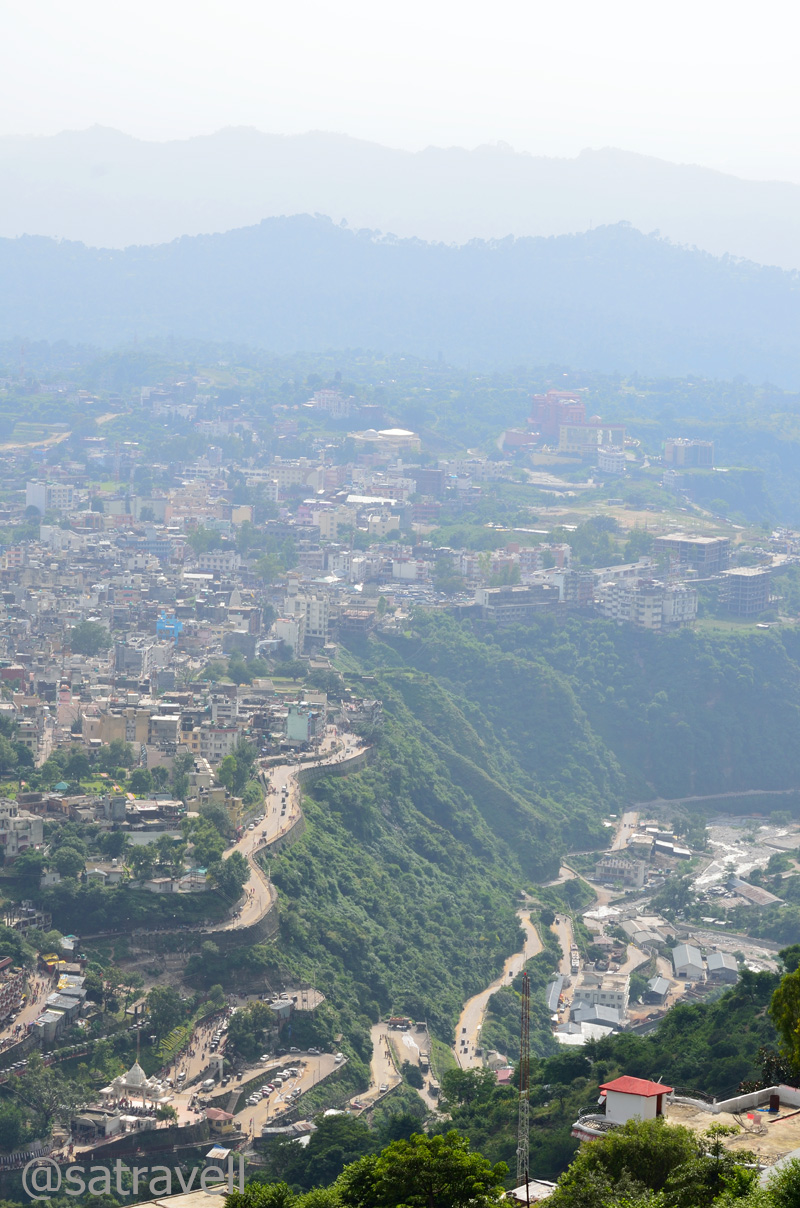
The climb starts from the entrance Gate visible down below (bottom left). More at Flickr Photoset
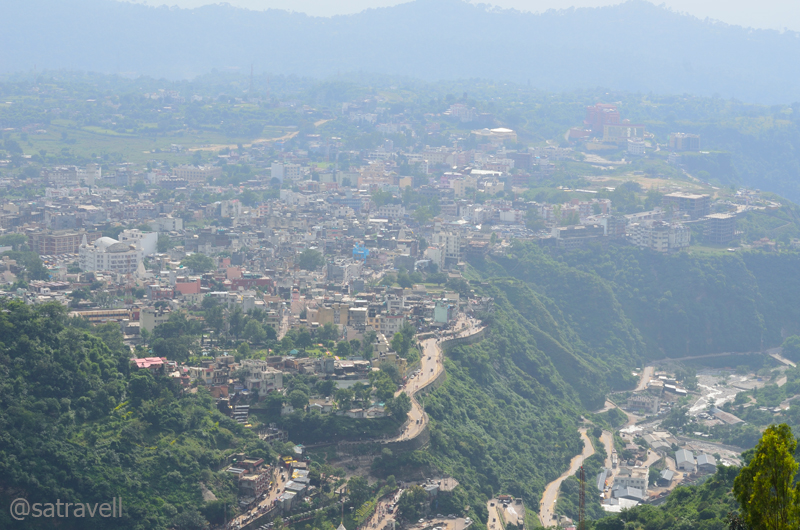
View towards Katra town; The Banganga Valley towards left. More at Flickr Photoset
The next widely accepted stopover, Ardhkuwari is located, midway on the yatra route, about 3.5 km ahead of Charanpaduka. Consisting of Ardhkuwari Temple comprising Garbhjoon, an ancient cave, believed to be a hiding place for Shri Mata Vaishno Devi from a tantric named Bairon Nath. It is from below this landmark, a recently constructed pathway, free of ponies, branched off the original route to the Bhawan. The original route climbs for four km to reach the highest point called Sanjichat after which it descends, for slightly more than a couple of kilometre, to reach the Bhawan.
Nevertheless, I took the newer route which was appreciatively out of bound for ponywalas and offered a slightly shorter access to the main temple. Whereas, the first-half of the pathway was not only crowded but full of ponies (and their shit), the remaining-half was calmer and offered splendid views of the Katra as well as distant looking Tawi River dividing the Jammu city into two. A fewer refreshment shops and Shrine Board’s eateries were located in this part of the yatra route. The major ones were at Himkoti (1500 m), located three km from Ardhkuwari, and Saket (1622 m), located 1.5 km before the Bhawan. I stopped to grab a quick Kadhi-chawal meal at the Shrine Board’s eatery at Himkoti. Open round the clock, the Board’s eateries sell hygienically cooked meal-combos, at reasonable prices, including rajma-chawal, idli-sambar, wada-sambar, dosa, kadhi-chawal, poori-chhole, etc. The Board has done well to build tin sheds, as well as wash rooms, after almost every 100 m all along the way. Apart from serving as a resting point, the sheds offers protection from rains as well as falling stones.

Tawi basin; captured en-route to the Bhawan
Plodding up the cave-shrine, the devotees often break into a dance amidst collective chants of Jai Mata Di, Zor se bolo, Jai Mata Di… The state of trance reaches its peak as one nears the cave for ultimate darshan of the three holy pindies of Mata. It was this meditative trance that makes the fatigue go vanish as one climbs the slopes of Trikuta Hills to reach the Bhawan. Being alone, undisturbed and ignorant of the happenings of the world down there, I revelled in the ultimate unison with oneself. Within no time I reached the premises of the Bhawan and having obtained a group number to enter the holy-cave, after showing my registration slip, I joined the queue to buy bhaints (offerings comprising a red chunni, dry coconut, Prasad, etc.) for Mata from a shop maintained by the Shrine Board.
Like in any other pilgrimage, one has to beware of thieves or pickpockets here as well. The incidents of luggage-lifting are not uncommon here. As carrying luggage inside the Bhawan complex is not permitted, the safest way to secure one’s belongings is to use the cloakroom services provided, free-of-cost, by the Shrine Board. However, as the insignificant-looking padlock which they provide practically carries little meaning, one is advised to carry own lock. I shilly-shallied while locking my backpack containing camera, other gadgets, wallet, wrist-watch, etc. along with shoes and belt. Afterwards, I joined the devotees of our group who sat cross-legged in a queue while listening to the Aarti being performed inside the cave as well as chanting Jai Mata Di. The tempo of collective chants increased as we neared the holy-cave which was recently renovated and modified to accommodate more devotees.
As we neared the holy-cave, I was not surprised to notice separate walkways for VIPs devotees whose entry inside the complex was prioritised based on the level of contacts each one of them had. This corporatisation of darshans was not something which was unique to this shrine. The desire as well as greed of our minds that bring us near God often remains ignorant of the fundamentals which led to the creation of God or religion in the first place. Today, the ease or rapidity of darshan at a shrine gets described either by contacts or money to buy “pooja-packages”.

Midnight view towards the main Shrine of Maa Vaishno Devi. More from the region at Flickr Photoset
The revelation of the Mother Goddess, inside the cave, is in natural form called pindies, three tiny rock-heads stemming from a single rock. After getting my bhaints exchanged from a counter located after the cave, I quickly headed towards the cloakroom where, mercifully, everything was in order. Collecting my stuff, I parked myself on a cold iron-bench located nearby the forked junction where the two pathways, from Katra, meet. It was nearing midnight but devotees of all caste, creed and sections of the society were still pouring in intoning Jai Mata Di. Considered by many to be a part of the yatra, the temple of Bhairon Nath, to be visited after Mata’s darshan, is located at a distance of 2.5 km from the Bhawan. The pathway is further linked to the Sanjichat. The last time when I visited the Bhairon Nath temple, I spotted many langoors on the way. This time I directed myself towards Katra through the preferred pathway on which ponywalas were prohibited to enter. The decent, putting additional weight on knees is harder than the ascent. By midnight I reached the eatery at Himkoti and munched on kadhi-chawal again. The never-ending groups of pilgrims, some enthusiastically cheering on others while a few dragged themselves panting for breathe, kept the trance gather momentum.
The popularity of Vaishno Devi has grown gazillion times, in recent years, making it one of the most sought-after deities in North India. A couple of decades ago, the shrine was especially popular with Punjabi community but today pilgrims comprise natives of Bihar, Rajasthan, Gujarat, Uttar Pradesh, West Bengal, etc. as well. A great favourite of Delhi-Mumbai celebrities, the cave-shrine in due course of time has become one of the chief manifestations of Durga Mata. Descending the slopes of the hill past the Ardhkuwari, I plugged music into my ears just to escape the raucous as well as unmelodious bollywoodised songs sold in the name of religion. Lacking ideas and imagination to be put into a soothing melody, the filtering of Bollywood beats into the realms of devotion and mysticism is a culture-wide phenomenon. With the arrival of blazing Bollywood item numbers as well as the emergence of remixes, the bhajans too have undergone a makeover in the name of innovation.
It took me slightly more than four hours in reaching the gateway back from the Bhawan while the ascent had took just four. Almost immediately as I stepped on the other side of the gateway, I was surrounded by autowalas for Katra, who took full advantage of the situation and blackmailed tired visitors jacking up the fare by 10 times. In this age when both religious affiliations as well as criminal intentions are on the rise, our generation has just been enslaved by money-oriented desires and materialistic greed. I opted to continue walking to reach the hotel room. That night, I knew, I was going to get the best sleep.

Hustle bustle, on the route, well past midnight
View and read more on the area at the Kashmir Region Photoset on Flickr
You may also like to subscribe to the email updates, of the remaining chapters, by entering your email id in the sidebar.







 bNomadic