 bNomadic
Sirmaur Diary: The Orchard Valley of Rajgarh

Centred around the exuberant hillside of Rajgarh tehsil (1580m) in Sirmaur district of the Himalayan state of Himachal Pradesh, where many of the finest fruits of European orchards are cultivated, my latest spontaneous escapade combined all the indispensable ingredients of hillside travelling – views, heritage, culture, spirituality, wildlife, food, lounge, treks and trails.

The Peach Bowl of Asia – Rajgarh. More images from the region at Flickr Photoset
Coming from Chandigarh; the state highway to Rajgarh via Ochhghat and Giripul branches off the NH 22 at Solan. The market of Rajgarh is about 100 km from Chandigarh and nearly 40 km from Solan. Thanks to my birder friend, Sarabjit Singh who has been a regular into the area, the information I needed for Rajgarh valley was organised easily. The hilly tract of Sirmaur spread from Shimla-Solan in the north-west to Garhwal-Dun Valley in the east and located north of the Ganges has always been historically significant. Over the past thousand years, the administration of Sirmaur changed hands several times among the local chieftains, Thakurs, Rajputs, Mughals, Gurkhas, Sikhs as well as the British; leaving tales and a rich history behind. During the freedom movement, the region also figured in the popular Pachhota movement. A place of note, the fort of Raja Sirmaur at Rajgarh unfortunately got destroyed in an accident in 1960. As of now, a majority of the residents are from the Khash Rajput Clan of Rajasthan and are occupied with cultivation of fruits and vegetables.

Now selling modern products, the olden market of Rajgarh. More images from the region at Flickr Photoset
Popularly known as the Peach Bowl of Asia, the credit for which largely goes to the first government of the state led by Dr YS Parmar, the valley of Rajgarh is nevertheless still struggling to find a permanent place in the circuitry of “tourism”. The fruit cultivation in the valley did necessitate the state government to construct a network of metalled roads connecting the major settlements. However, to me, the only downside of venturing into the area was to deal with potholed (although wider) roads. Curving on the wooded mountain faces, the motorway looked pretty to eyes but only from a distance.

A traditional slate-roofed hut in the fruit-countryside of Rajgarh. More images at Flickr
Leave aside the bumpy roads and look for apricots and peaches which are abundant round every inhabited spot; or plethora of cultivated berries, pears, mulberries and a variety of nuts often the only occupation of local populace. The wooded crags are the favourite haunt of birds of prey while other species nestle on the tall trees; and at the slightest panic, myriads of small fowls rush out of the shrubbery adding to the animation of the scene by their hurried flight. The traditional slate-roofed hutments, a highly picturesque traditional architecture, heighten the beauty of the landscape. As we climb higher towards Nohradhar, pines give way to deodar as the Himalayan shrubbery dot the hillside.
The lush green valley is not only visually appealing but also serves to be a good place for trekking and ridgetop camping. The stretch of the Giri River near Giripul, a little before Rajgarh, is popular for angling activities. A few enterprising locals have recently set up paragliding as well as rock climbing craft and services in the valley. Of late, several excellent camps and properties have come up in the vicinity of the settlement of Rajgarh cashing in the growing accommodation needs. Unlike the northern Himachal, the valley is accessible throughout the year. Nonetheless, visiting Rajgarh after the monsoon season has its own visual charm when the valley adorns a vibrant cover with the forests getting thicker and greener. Moreover by that time the maddening traffic driven by the seasonal peach season gets off the road; as also the marketplace hustling with hullabaloo of traders and cranking sound of diesel engines.
It was late-evening already when we reached the market of Rajgarh before last week. A cool darkness had descended upon the street as I asked for directions to the Forest Department Rest House, a two-room basic affair. Apart from a plan to climb the Churdhar Peak, the highest peak of lower Himalayas, we had not figured out what to do with our time in the valley. We had already visited the Dolanji Menri monastery on the way from Solan and planned to go to an all women enterprise at village Bhuira the coming morning.

Locals call it “Kanda Falls“; a secluded spot
The FRH is a couple of kilometre away from the market. Next morning, we again descended to the market for fruits-breakfast. Like elsewhere in the Himalayas, the material impact of globalisation was well appercipient. Next to a matchbox-shaped fruit-shop, menfolk dressed in kurta pyjamas sipping their morning teas stood chatting with each other; womenfolk in salwar-suits that looked inspired from Punjab while the younger ones wore jeans casuals as their eyes remained glued to flashy mobile screens. Collecting some more fruits in a newspaper-packet, we left for Noradhar; intending to visit a popular fruit processing unit at village Bhuira on the way.
What started as a kitchen experiment in her modest farm house at village Bhuira, today Linnet Mushran’s small-scale food processing unit successfully sells more than 27 varieties of Jams, Chutneys, Preserves, Jellies as well as Marmalades and employs over 100 women. Hugged by a wooded cover of tall deodars, her humble acre-large orchard that spills with a riot of flowers and at the same time commanding a sweeping view rippling up to Chail mountains was truly an idyllic setting for an enterprise like hers.

Chail ridge at the far end. More images from the region at Flickr Photoset
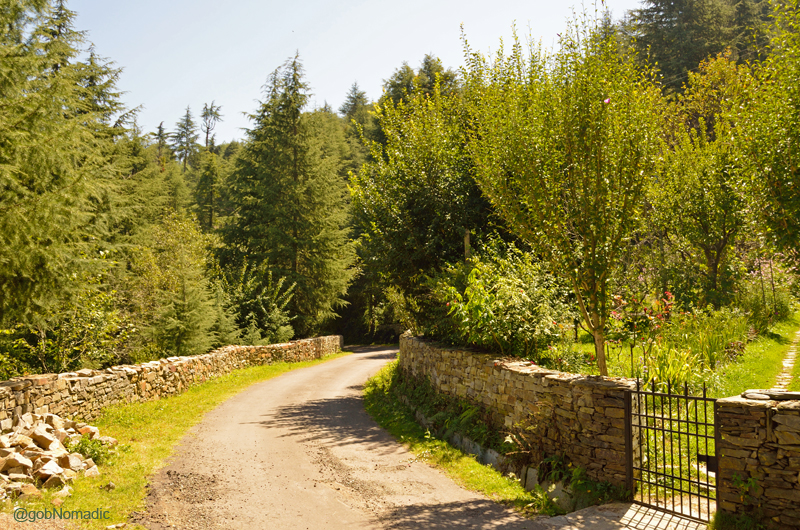
At Bhuira in Rajgarh. For more images from the region, please visit Flickr Photoset

Hugged by a cover of deodars, Bhuira Jam‘s humble cottage-orchard spills with a riot of flowers and foliage

The labeling and packing section at Bhuira Jams. More images from the region at Flickr Photoset
Linnet was out of town when we reached the manufacturing unit of “Bhuira Jams” but her staff took complete ownership of the operations and more than made up for her absence. Donning white hair caps along with plain colourful jackets, her staff was devoted to the roles assigned to them by Linnet when we reached there. The lady in charge showed us around. The campus was well maintained and flawlessly clean. We were allowed to take a look at the processes of jam making through a large windowpane. Available at most leading grocery stores pan India including the likes of retail brands such as Fab India, appreciatively the Bhuira products are available at a discount where they are born. I bought a carton full of available varieties.
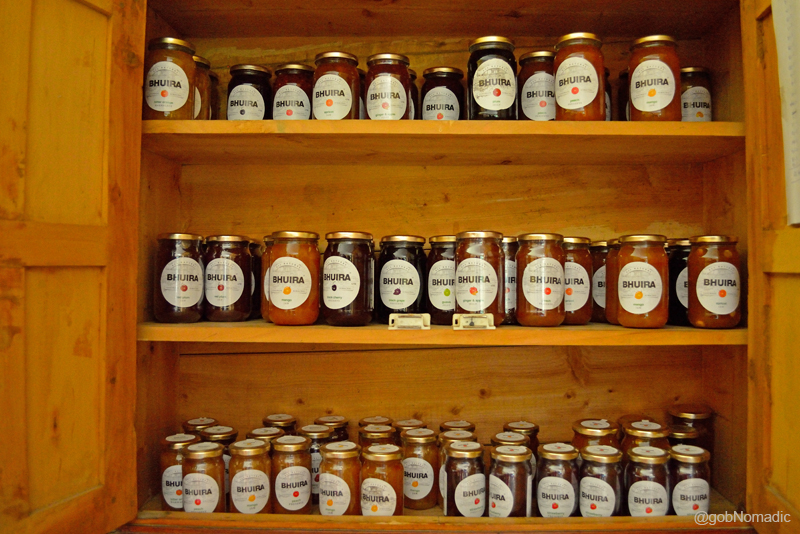
An all women enterprise, the Bhuira Jam sells more than 27 varieties of Jams, Chutneys, Preserves, Jellies as well as Marmalades. More images from the visit at Flickr Photoset
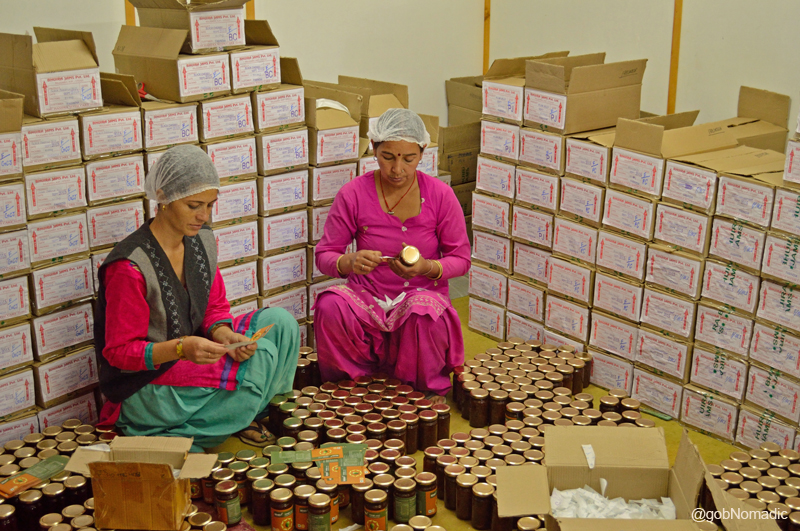
The small-scale fruit processing set up engages over 100 local “Happy Mountain Women”
Down below towards the left, an olden temple-like structure caught our attention. We decided to make a visit to the tiny settlement where the temple was prominently noticeable. Driving through a wooded cover, we turn up on a dirt track which led to the settlement. A few minutes later, we were inside the courtyard of the stone and wood temple that was dedicated to Shirgul devta, the lord of Churdhar and the chief deity of the valley. The tower-styled main temple was built, employing the traditional Khasha architecture, on a raised platform. The doorway had numerous coins nailed on its frame; said to be signifying the answered prayers. The residence of priest, who was out of station that day, was at the back of the temple.
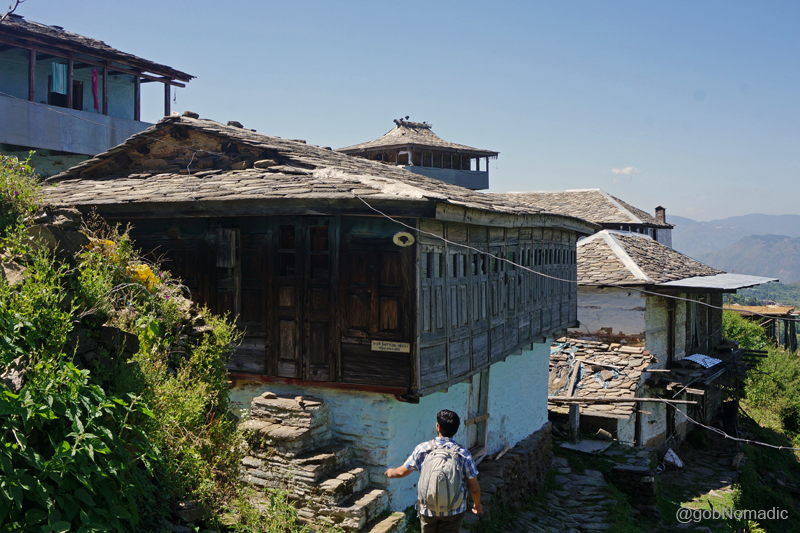
At the small settlement of Thanoga. More images from the region at Flickr Photoset
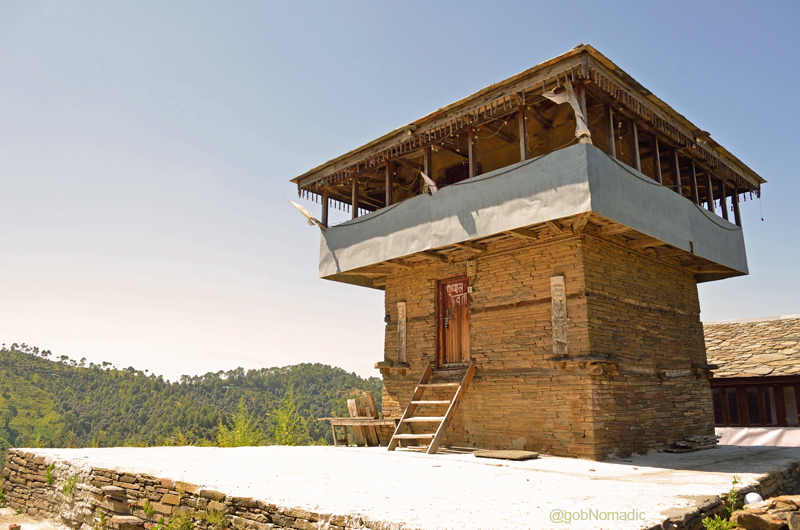
A temple dedicated to Shirgul Devta, an incarnation of lord Shiva, chief deity of Churdhar region. Every region in Himalayas has its own distinct deity. More images at Flickr Photoset
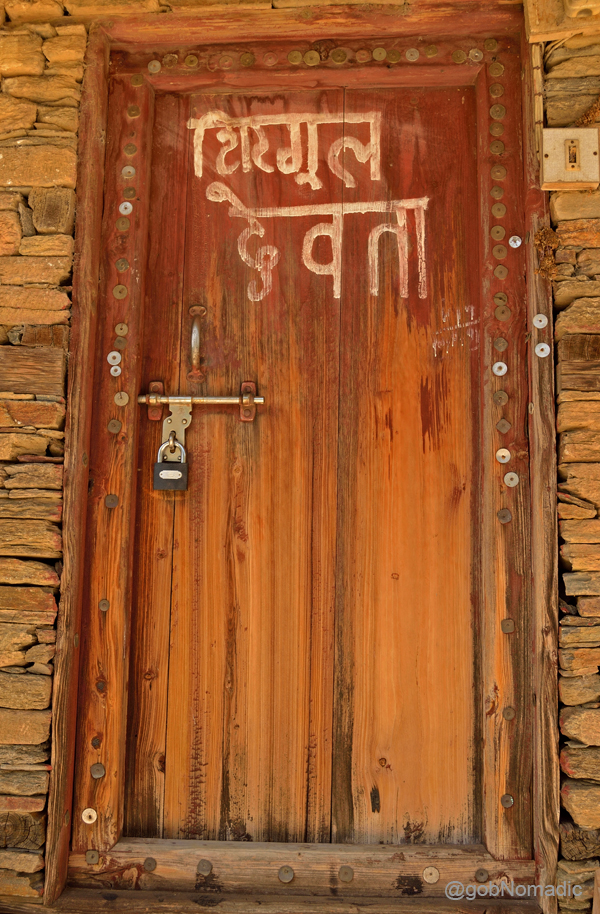
The doorway had numerous coins nailed on its frame; said to be signifying the answered prayers.
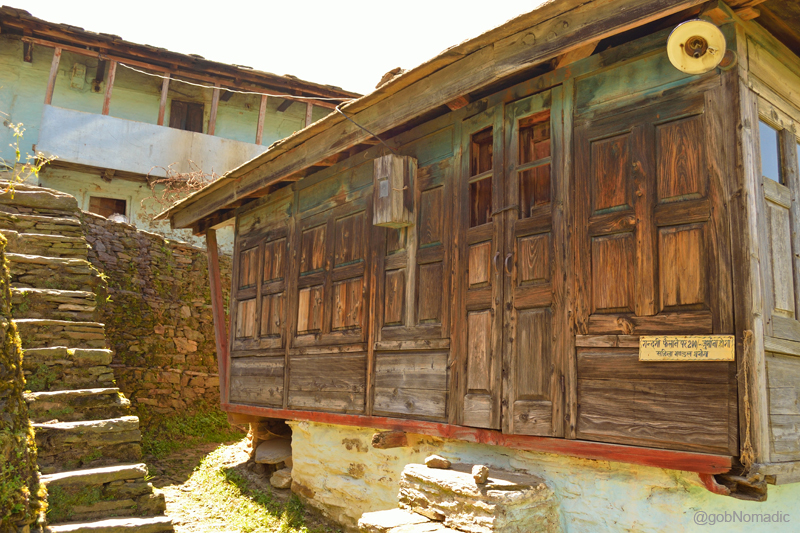
गन्दगी फ़ैलाने पर 200 रूपए जुर्माना होगा! More images from the region at Flickr Photoset
An hour later we were on our way to Noradhar, the base to climb the Churdhar peak. On the way we drove through some real lush green terraced fields. The bumpy ride to the base took about an hour at a leisurely pace.
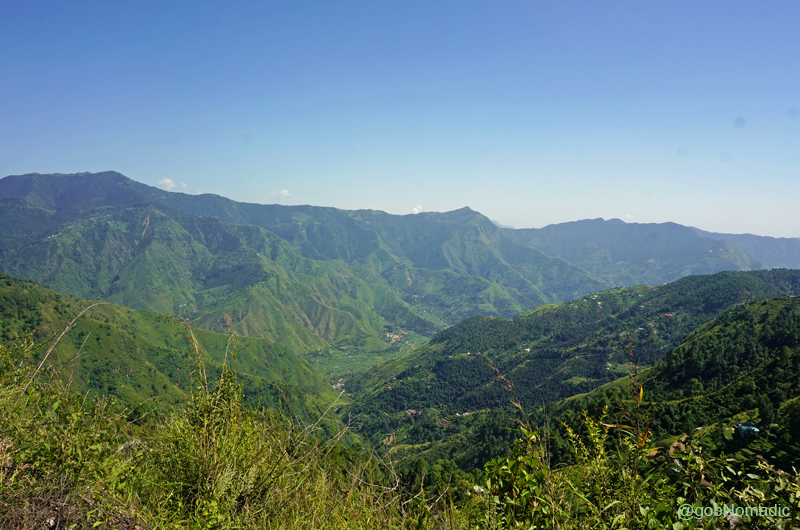
Mountainscape en route to Noradhar. For more images from the region, please visit Flickr

Terraced fields near Kanda in Rajgarh, Sirmaur. More images at Flickr Photoset

“Beyond what we wish and what we fear may happen, we have another life…More images at Flickr
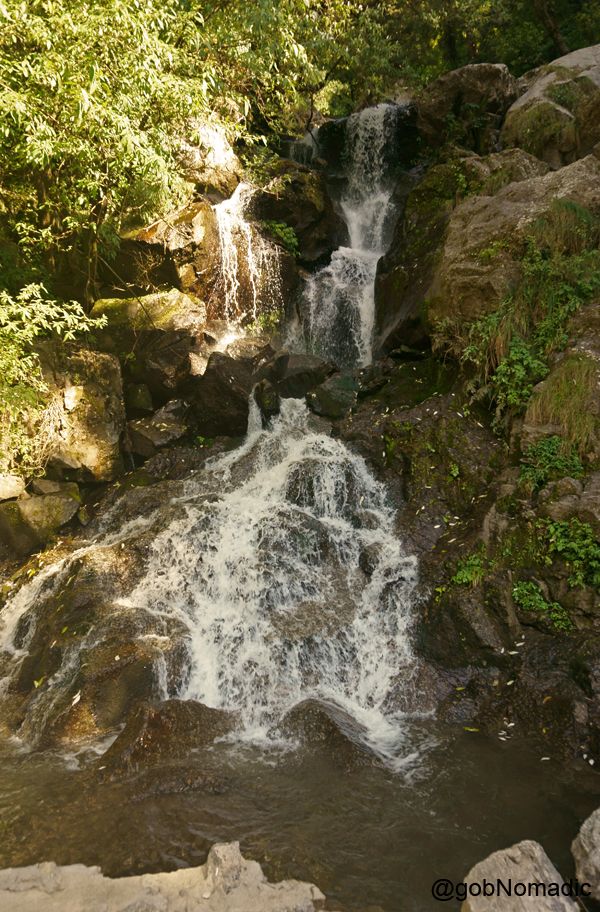
…As clear and free as a mountain stream” — Rumi; within an hour we were at Noradhar. More at Flickr
Average Altitude: 1600 m
Best time to visit: Autumn to Spring
Travel Lure: Bird-life, Wooded trails and other similar soft adventures
Accommodation: Limited but usually available
Crossing Nathu La to enter Tibet

The following post is a part of the “Kailash Mansarovar Yatra” Blog Series Into the Sacred Space. To read complete travel memoirs and trip report, please visit here.
I woke up to a sound of thunder in the middle of my sleep. I reached for my watch. It was still three am in the morning. I could hardly complete four hours of sleep. The lack of it was mostly due to the excitement regarding today’s schedule of activities – of finally crossing the Nathu La (4310m). By the time the mobile alarm announced four o’clock; I was up and about and was already packing my luggage. It was chilly outside. The water inside the thermos was still steaming. With the last remaining tea-pouch from the stock I had so fondly bought from Gangtok, I made myself some tea.
After completion of some more formalities at the customs check post, we had to report at the border gate at 0700hrs IST. At the break of dawn the group gathered at the parking lot. The luggage committee dutifully made a recheck of the entire individual as well as group luggage. Everything looked to be in order. A loud holy cry of Har Har Mahadeo was raised by Babaji after which we all got on the bus and occupied our respective seats. As incipient rays of the morning sun filtered in through the windowpanes of the bus; we left for the Nathu La.
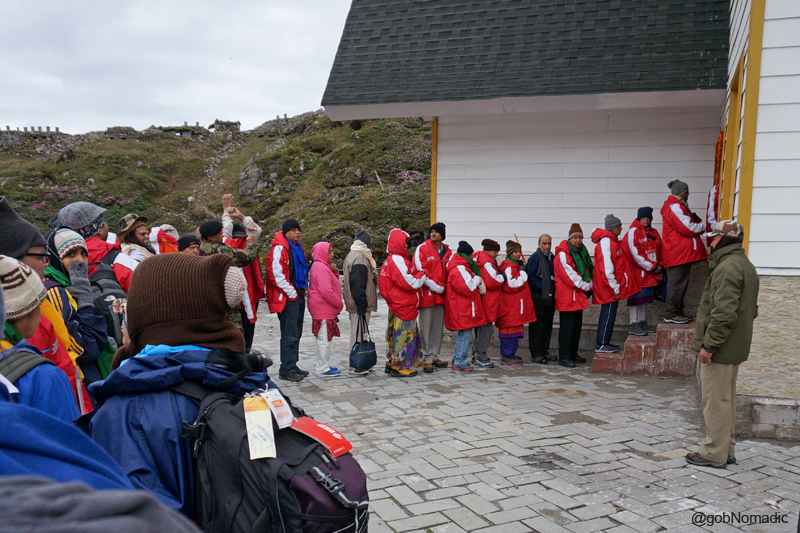
Queued up at the customs check post to complete the final formalities before crossing the Nathu La
From Sherathang, the approach to the Nathu La is very gradual on a broad tarred-road. Before the road got built, the neighbouring Jelep La was always the preferred alternative to enter the Chumbi Valley located north. Within less than half-an-hour we reached the Customs check post positioned some 100 metre before the pass. Southwards; mist and clouds had masked the valley up which we had just climbed. The group members queued up in the order of their listing in the group visa. The custom officials took no time in completing the remaining formalities after which we pushed off towards the pass where the stationed unit of the Indian army had also organised a High Tea for us. In the meantime, our luggage got transported to the Tibet-side where it got loaded in a truck after initial screening. For personal exigencies, two co-travellers had to go back after the culmination of formal activities at the India-side of the pass.
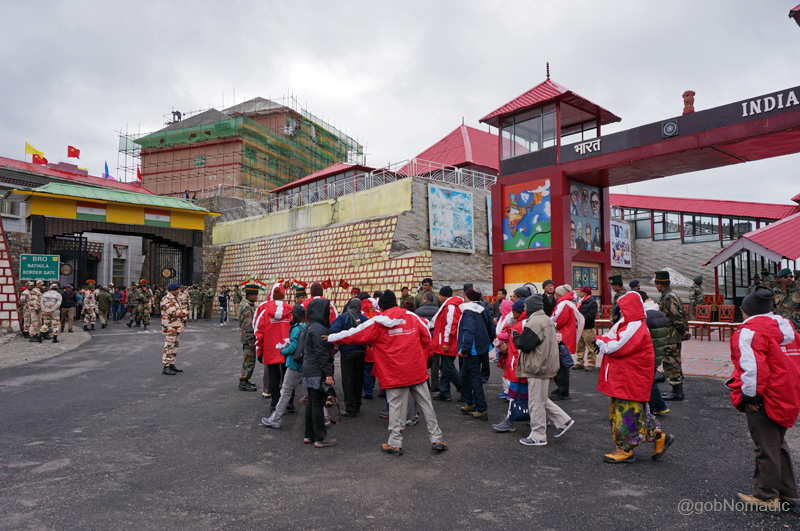
At the Nathu La; Kolkata is approx 700km from the pass. More images at Flickr Photoset

A Bofors 40mm/ L60 Air Defence Gun used in the World War II on display at the Pass
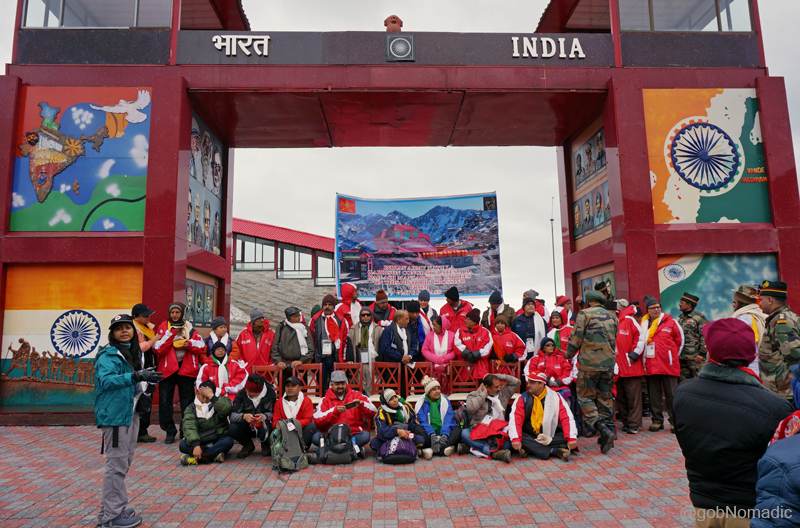
Getting ready for a Group Photo at the pass. Please visit Flickr for more images of the region

Joined by senior officers and Sh Taurn Vijay, the enthusiastic group members during the photo-shoot

And getting noticed with incredible fanfare. Please visit Flickr for more images
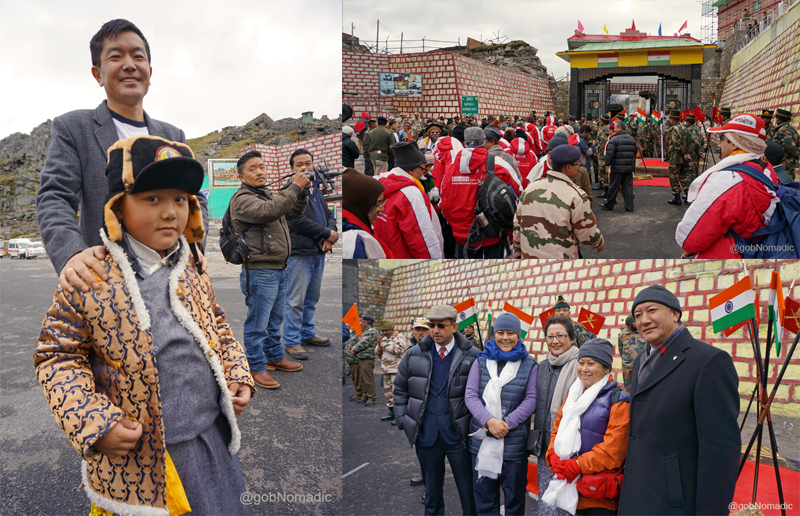
Clockwise from left: A young well-wisher who came to see us off; Lining up to cross the border; Sikkimese travellers occupied the centre-space throughout the Journey
Down the road we had just climbed; Please visit Flickr Photoset for more images of the region
As we lined up on the no man’s land, a light drizzle came and spattered the crest of the pass; not more than 40 metre in length. The whistling wind that accompanied the light rain swept us cold, as we stood chatting with the Indian Army and ITBP soldiers. The Tibet-gate opened at 0730hrs IST sharp; equivalent to 1000hrs China Time. Another holy cry was raised and this time the response was louder and even more energetic; the soldiers had also joined. Once across the border, the formalities and quarantining procedures finically took more time to get over. Being the first batch; a whole lot of extra formalities including speeches and thanksgiving bestowed upon us. The main speakers included Chinese Ambassador to India Mr Le Yucheng, Mr Dong Ming Jun, Vice Chairperson of the Tibet Autonomous Region (TAR) and Sh Tarun Vijay, Member of Parliament who represented India viewpoint. With watery eyes due to cold; applauding whenever we needed to, we stood still as spectators for almost two hours.
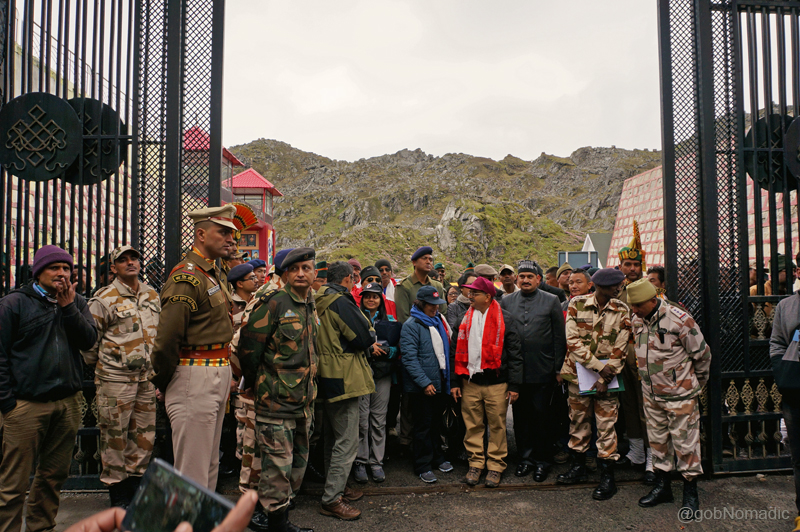
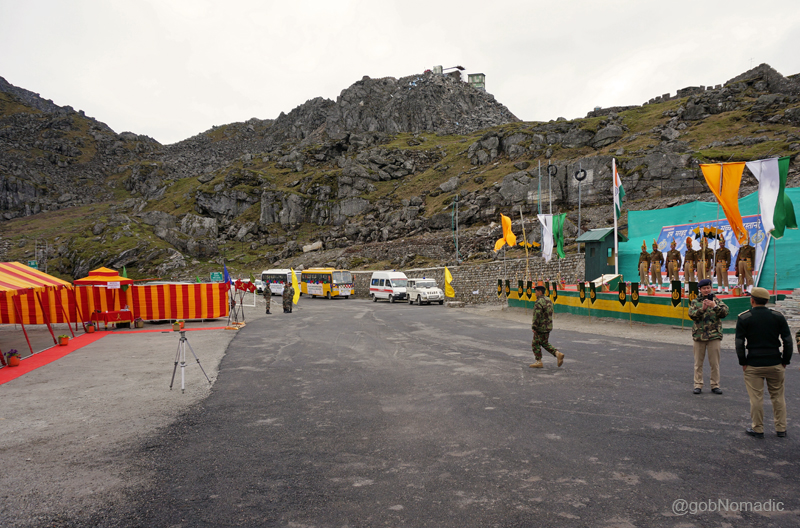
Standing upon the no man’s land of the friendly border pass Nathu La. More images at Flickr

Clockwise from top left: Yours truly awaiting his turn at the passport verification-cum-quarantining kiosk; Chinese Ambassador to India sharing China’s perspective; just before we boarded the bus; Sh Tarun Vijay, MP presenting India’s viewpoint

The lengthy proceedings at the “Nai Dui La” left the elderlies completely exhausted. More at Flickr
Before we could get acquainted with our trip-guides and language-translators, we were requested to board the buses. The view into Tibetan side from the top of the pass was remarkably much greener than most of us had possibly expected it to be. Down below, with small settlements spread on both sides of the Amo River, the pine-clad ridges of inhabited Chumbi Valley rippled one after the other; as far as the eyes could see. Called as Nai Dui La in Tibetan, the Nathula literally implies a place where the “snow is deepest and the wind strongest”. Shielded by the crags of the range through which Nathula provides a passage, around this side of the pass, the wind had reduced to just a gentle breeze. A signboard in local parlance read Lhasa is 480km from where we stood. Awestruck by the beauty of the Chumbi Valley, we started the descent into Southern Tibet in complete silence. The road ahead – as if some giant serpent had creeped along the mountain-face – was a succession of loops. Our next halt was at the customs check post-cum-trading mart of Rinchengang; just seven km below the pass. Colourful prayer flags marked the entry into the historical trade outpost of Rinchen where all our documents, passport, luggage and baggage including our body temperatures got verified and examined. The truck carrying our luggage had already reached here. After receiving a go ahead from the Chinese authorities, a few basic apprehensions had gone and everything else unheeded as we thought of the Tibetan marvel that lay ahead.
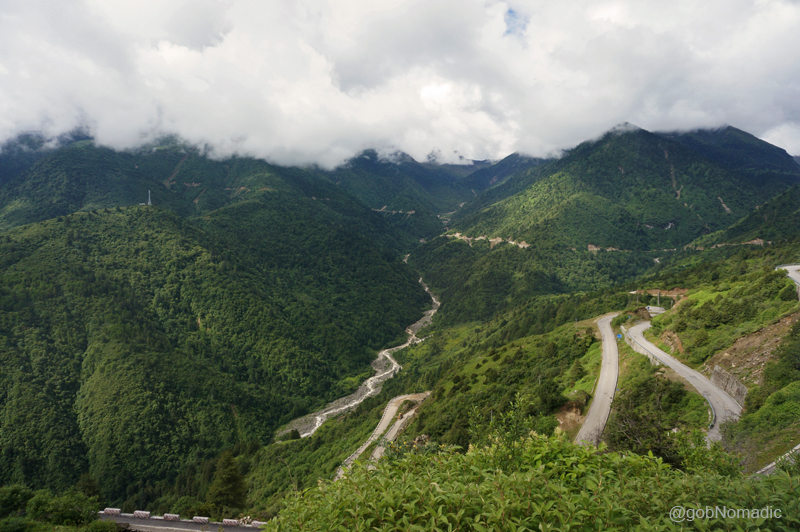
The road climbing down in loops to reach the green Chumbi Valley floor at Yadong. More images at Flickr
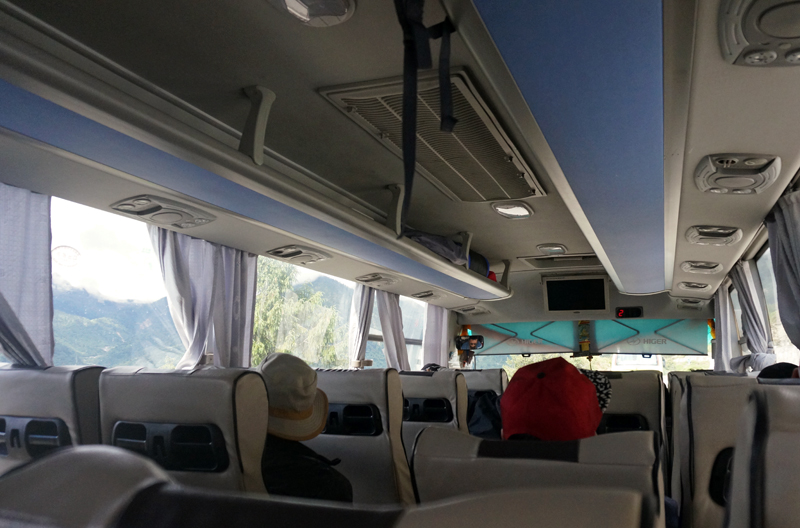
Equipped with a host of features like AC, GPS, Video, CCTV cameras, supplementary oxygen, etc., the twenty-seater tech-savvy buses were actually very comfortable
The new Yadong (referred as Shiasima in olden trade-records), the chief centre of the Chumbi Valley, was still 30 km away. Escorted by Chinese militia and authorities in their official vehicles, we began the descent with great pomp in the shape of a convoy. Sandwiched between the Himalayan watershed of Sikkim and Bhutan, the valley is one of the most fertile regions under the administration of TAR. The terrain had all the hints of a material well-being and comfort there. Apart from being a commercial, cultural as well as a Buddhist centre of note, the region possesses extraordinary natural beauty. The town of Yadong, then a village, was once a flourishing terminus on the ancient silk and tea trade route connecting the modern-day Yunnan Province with Bengal in India. It was through these established horse trails that the British military expeditions of early twentieth century overran a portion of Tibet. A few years after that, in the 1912-upheaval of Tibet, HH the thirteenth Dalai Lama is said to have been smuggled up the Jelep La, with the British assistance, through this route to meet Sikkim heads and British envoys in Kolkata for help. More recently in 1958 when trading still prospered on the Sikkim – Tibet highway, Pt Jawaharlal Nehru stayed here for a night; visiting the key monasteries on his way to Bhutan.

The renovated Gargyul or Gajiu Monastery, originally constructed in 1747; overlooks the Sikkim-Tibet highway and is the closest one to the Indo-Tibetan border. More images from the region at Flickr
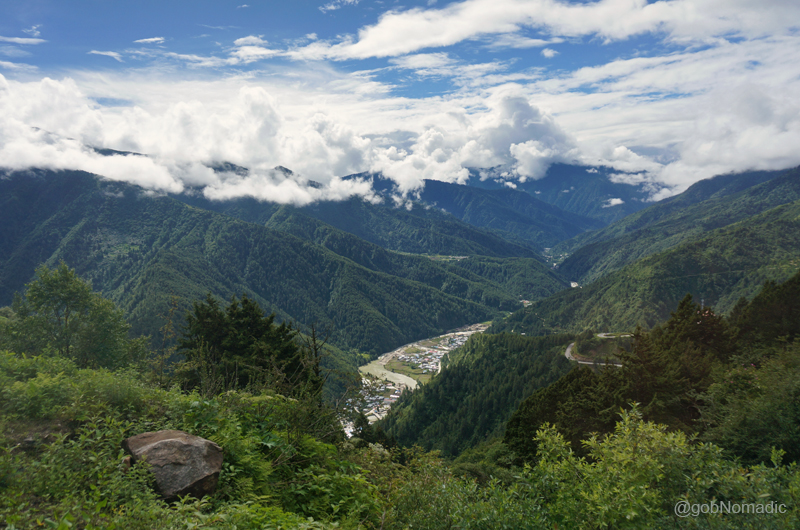
The settlement of Yadong; and the Amo River visible down below towards the valley floor. More at Flickr
The locals, it seemed, were already mindful of the start of the Kailash Mansarovar Yatra through Nathula, which was once so dear and friendly to them. Descending more than 1,000 m in altitude, as we snuggled into the settlement of Yadong, spread on the valley floor, its residents, shopkeepers, pedestrians and almost whoever saw us came out on streets to greet us and wave. Meandering through the markets, streets and corners of the town, our convoy made its way to a multi-storey hotel for a prearranged lunch. The houses here were well-built with stone and cement, often multi-storeyed and surrounded by fertile patches as well as orchards. We halted at the hotel for more than an hour; where many of us got their US Dollars exchanged into the local currency of Chinese Yuan. From the lobby of the hotel a near-view of the torrential Amo Chu could be obtained. In Tibetan language, Yadong means “rushing deep valley” and now we saw its manifestation from a close range. The weather became overcast as we snacked the local vegetarian delicacies with much bemusement.
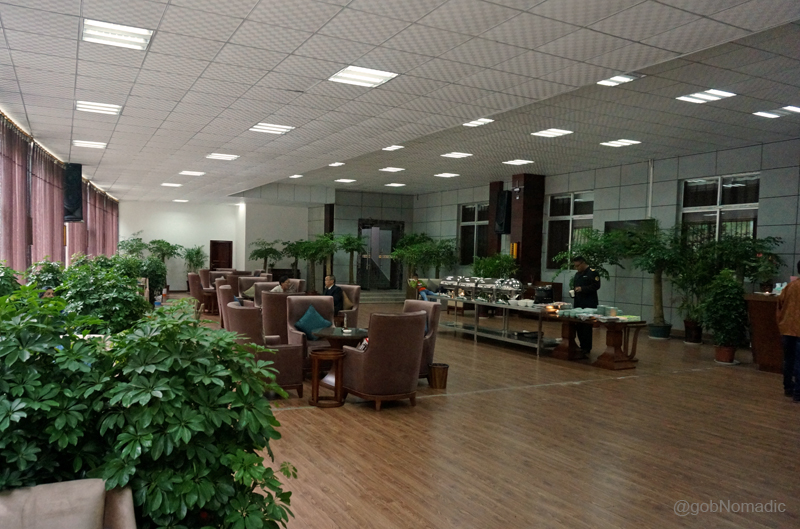
Lobby of the hotel at Yadong where we had our lunch. More images from the region at Flickr
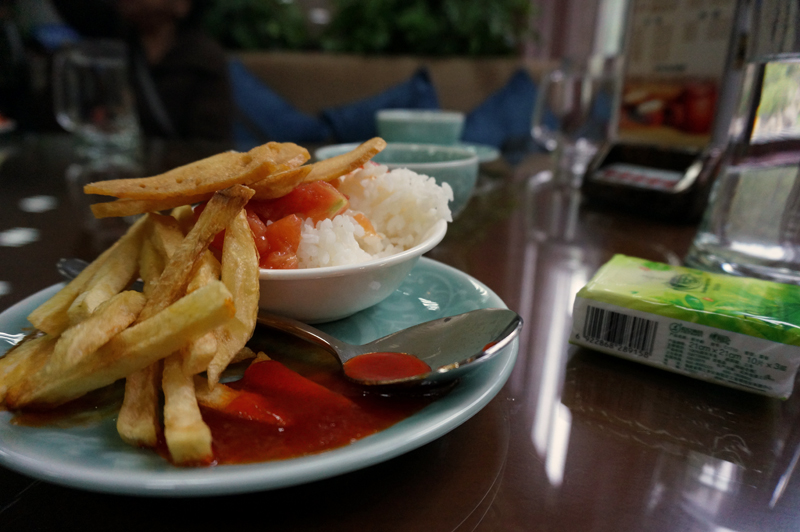
That was my meal; potato finger chips, tomato ketchup, tomato stew with some boiled rice

Surprising! Isn’t it? Ah well, that was quite normal up there

A residential complex by the tamed Amo Chu. Please visit Flickr for more images of the region
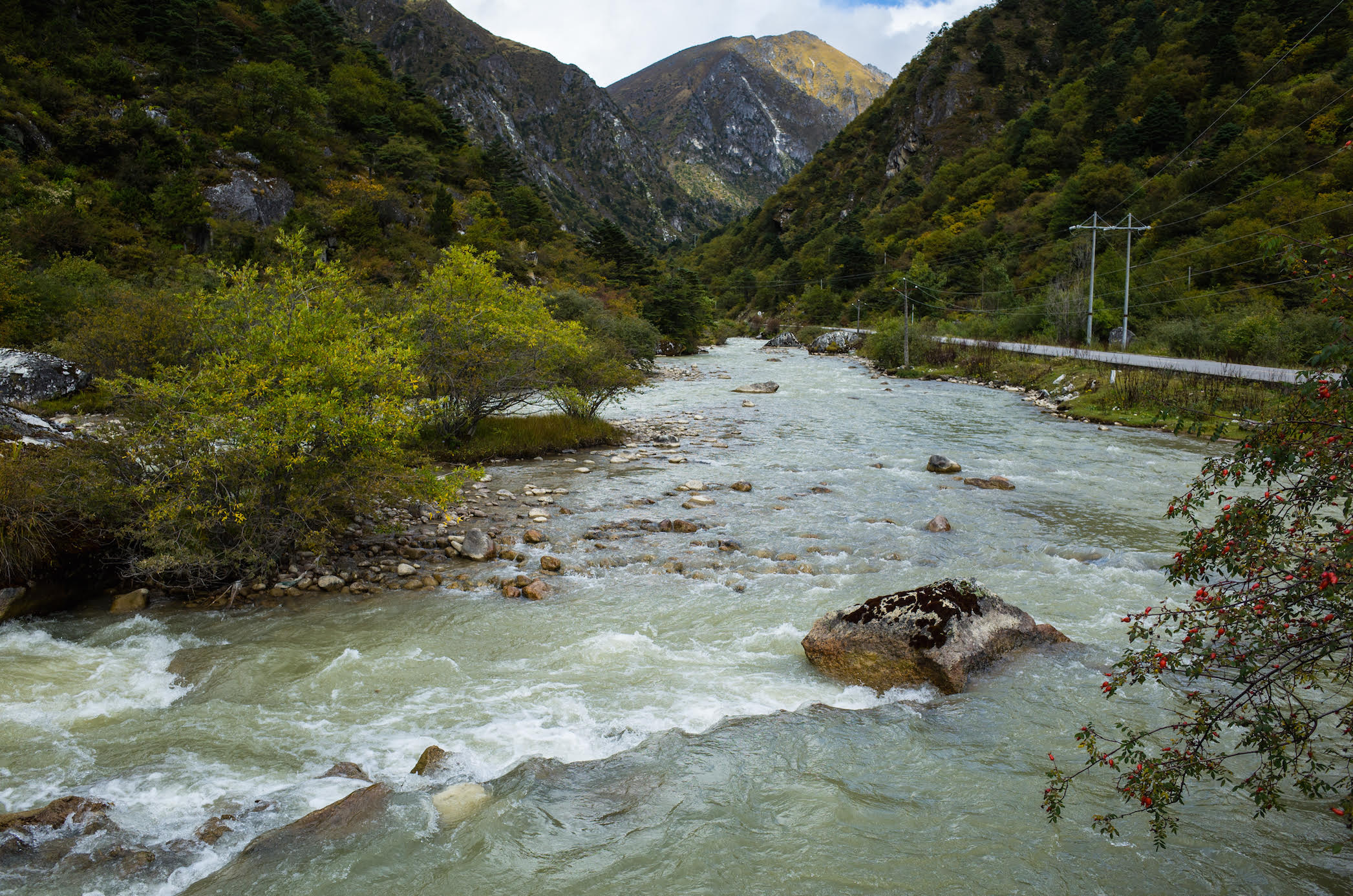
A calmer stretch of the Amo River. Enveloped by lavish primitive forests, the Yadong Valley is known to be a paradise for wildlife. Photo-Credit: L Wu. Please visit his Flickr Collection for more
Before we left the hotel, the guide reminded everyone that it was practically the last option on the day’s journey to have filtered water filled in their bottle or a thermos. Besides leading to plastic wastage, up here packaged water is actually very costly. Ahead the road climbed steadily in loops and sharp hairpin bends following the torrent upstream for most part until we reached a treacherous terrain bare of colour, life, sound, vegetation or even rock. Such was the nature of road infrastructure that we didn’t realise the transformation of tricky nature of the terrain. A dark cover of mist enveloped the valley as the terrain changed from sylvan green hills to plain brown alluvial deposits; with barren lifeless hills shooting up on either side. From the windowpane, I could distinctively spot vibrant wildflowers smeared in a riot of early spring colours – blues, reds and pinks.
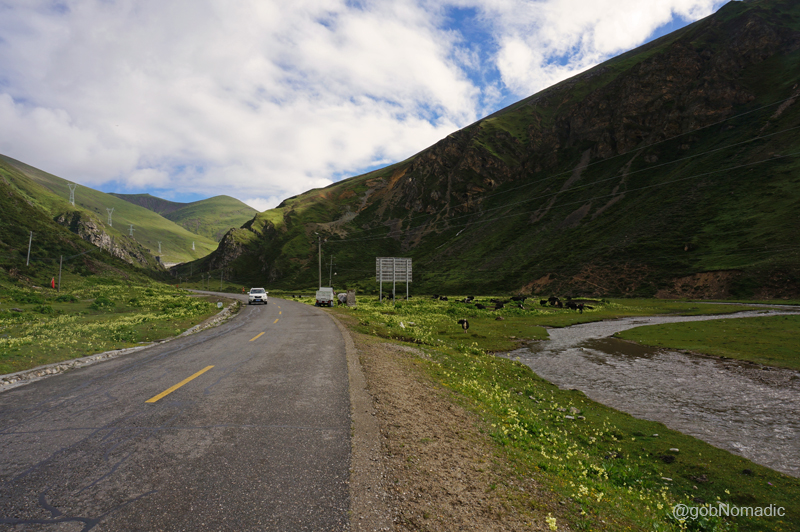
Green carpeted and intersected by the meandering infant Amo Chu greedily collecting the last traces of winter’s snow from a higher corridor that opened up to the tableland of Tibet. More at Flickr
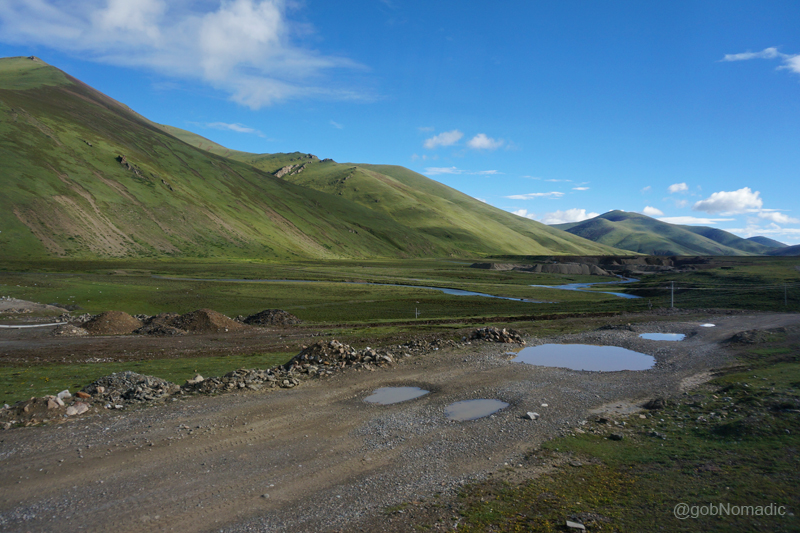
Near the olden township of Phari. The nearest Bhutanese town is just a few kilometre from this town
The sky was almost constantly overcast. From gaps in clouds, I saw barrenness leading up to the snowy peaks; noticeably the conical shaped sacred Chomolhari (7326m), or the abode of the lady goddess; the guardian deity of Chumbi Valley and the adjoining Tibetan tableland. We were now crossing Phari settlement (4300m), 47km from Yadong, green carpeted and intersected by the meandering infant Amo Chu greedily collecting the last traces of winter’s snow. The nearest Bhutan town is only a few kilometre away from Phari. The windswept desolate plain opened out further after we crossed an even higher pass, Tang La at 4760, typically marked by cairns and fluttering prayer flags along with a board.
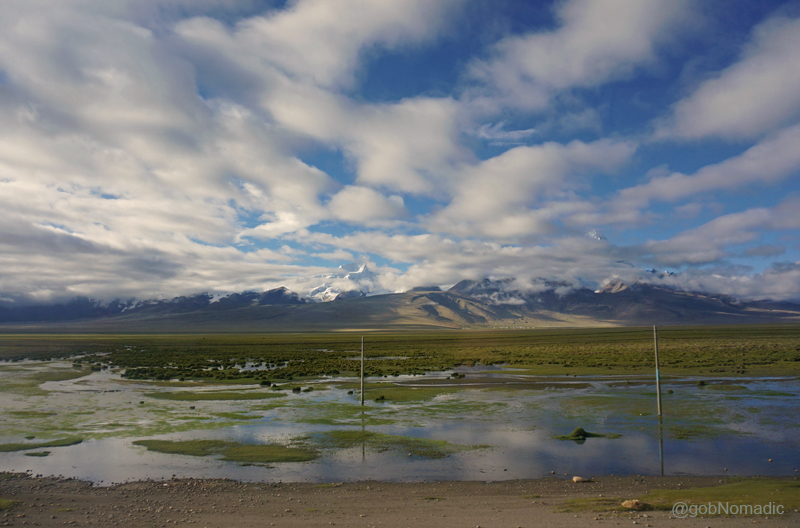
Landscape a little ahead of Tang La; Mt Chomolhari is only partially visible
Ahead, as we descended; a broad straight road stretched up till horizon. The view was partially obscured by the clouds. With an overwhelming feeling of entering a dream, we stopped for a short break some distance ahead of Tuna; by the magnificent Dochen Tso. The weather opened a bit but distant view was still cloudy. I got down from the bus and made just a few photographs in the vague hope of finding a clear weather on my way back. Agile marmots popped up from their burrows to enquire about the disturbers of their peace; only to nip down again with disinterest. Save for the sighing of the wind or murmur of co-travellers, the quiet was unbroken. A distant looking waterbody had lost its sheen under the leaden sky. The solitude offered by the landscape was indescribable.

By the Dochen Tso; the weather opened a bit but distant view was still cloudy. More images at Flickr

The Welcome Gate to the Kangmar County. Please visit Flickr for more images of the region
Unperturbed by the desolation, the bus kept moving. Inside the bus I kept myself glued to the outside panoramic display of godly colours of the fast changing dreamscape. More wetlands emerged. More snowy peaks announced their presence. Reaching the settlement of Gala, at an altitude of 4,604 meters; another distant looking turquoise waterbody appeared on our left: Gala Tso. As the landscape changed, I mused over the sight of ruins at Qumeixiong, marked by a red-coloured board as historical; we had crossed a while back. The countryside that looked appealing to me now was once a venue to a fierce battle between the natives and the British led by Francis Younghusband more than a century ago. Situated adjacent to Dochen, the tranquillity of Qumeixiong Valley was once blown apart by the sound of British artillery and firearms. The British expedition had completely dismantled many a shrines and buildings including that of the Phari and Qumeixiong fortress. Still dotted with bullet holes, a few of such ruins retain the same state as had been left when the British had attacked them. I made a mental note of trying to make a better snap record of the sight on the way back.

Landscape near Galaxiang (Gala, Kala) in the Kyangmar County. More images from the region at Flickr

The sight of ruins at Qumeixiong; more than a century ago, the Younghusband military expedition had completely dismantled many a shrines and buildings here. Photo-Credit: L Wu
The settlement of Kangma (4175m), our stopover for the night, was still almost 100km away. We were comfortably cruising at over 60kmph; the road traffic, I observed, was habitually attentive to the prescribed speed limits and general traffic rules. The altitude had dropped to 4,000 m after which cultivated patches of agriculture land surrounded by hillocks began to appear; mainly growing highland barley, potatoes, Chinese cabbage, radishes, peas and wheat, etcetera. After the settlement of Samada, the villages of Gebai, Nabushi and the stretch from Gelong to Yuekang were particularly better in agriculture. Almost all the popular settlements had schools, ATMs or banking facilities.
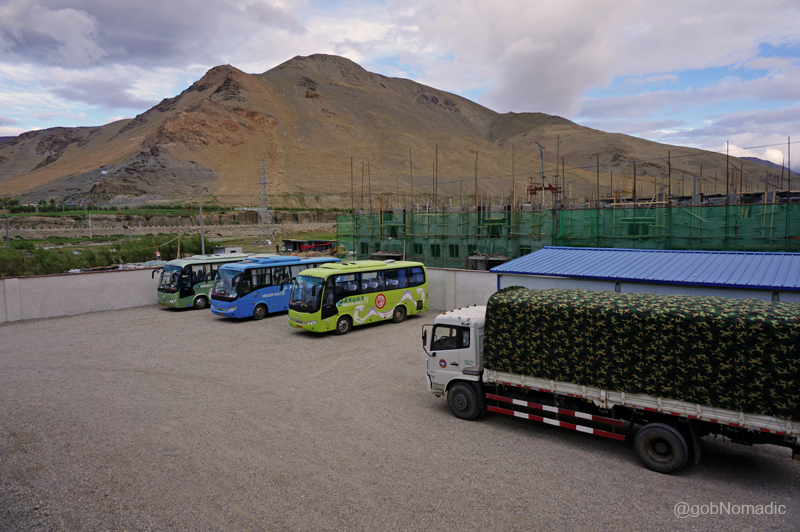
At the Kangmar residential complex; our vehicles and the luggage truck. More images at Flickr
A couple of hours later we were at the settlement of Kangma. Our accommodation was situated across the other side of Nyang Chu, a tributary to Yarlung Tsangpo, the mighty Brahmaputra. The accommodation centre faced the junction of provincial Riya highway to Shigatse and the roads to Beidahuang as well as Shiongzang; near Kangmar bus station ticket office. Immediately after checking into a room allotted to me along with two others, I headed towards the river bank to take a walk. The guide had stubbornly asked me to not carry the camera along. Alongside the bank, the alpine choughs were collecting their evening meals. I lost interest to carry on any further and headed back after the guide alarmed for the evening briefing meet. Back at the complex, it was sad to see a young and active lady going back to her homeland in Sikkim from here after she showed symptoms of AMS. The night drew on, dismally cold.
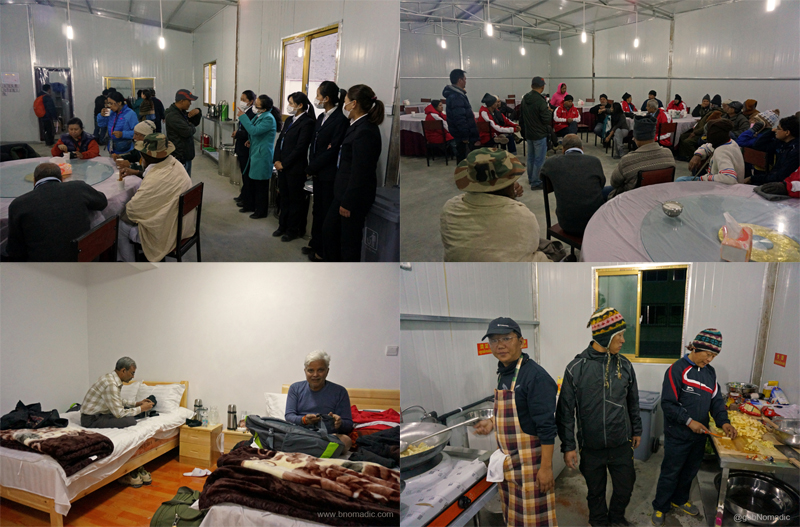
Clockwise from top left: The support staff at the residential complex; Evening briefing in progress; the accomplished mountaineers-turned-cooks inside the kitchen; at the room, Sh Noratmal a survivor from 2013 Kedarnath tragedy and Sh BK Chaturvedi from Delhi occupied with their phones
Homestay Review: Seetalvan Orchard at Kotgarh

Seetalvan Orchard is a Homestay located in a natural exquisite setting of the Kotgarh hills in Shimla district of the state of Himachal Pradesh. Looked after by an enterprising lady, who has tastefully converted her family-owned orchard into a modern-day rejuvenation centre; the Seetalvan offers an idyllic break from the humdrum of city-life. A few days ago, I stayed here for three days and this is what I have to say about them and the region.
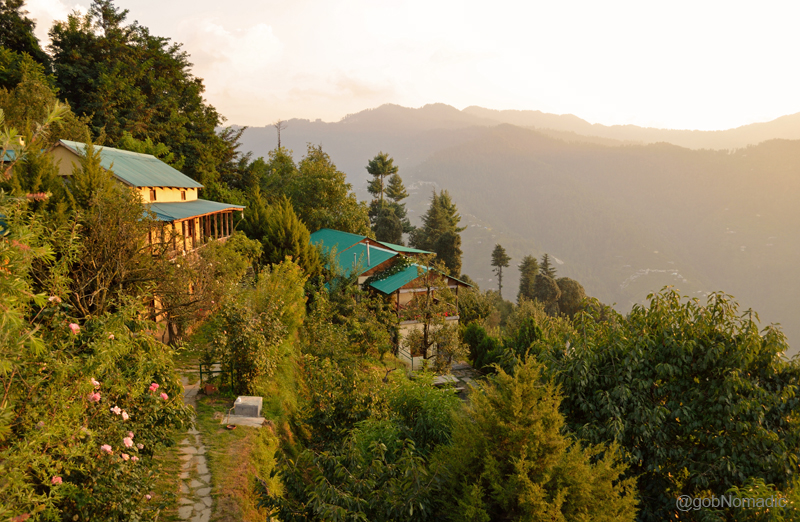
The Seetalvan Orchards and Homestay at Kotgarh. More pics from the region at Flickr
About Kotgarh (1950m)
The Valley of Kotgarh, popularly known as the valley of Golden Apples lies at a comfortable drive of 30 minutes (16 km) from Narkanda on the Shimla-Rampur highway. The small settlement on its hillside, a historic village on the erstwhile Hindustan – Tibet highway, is enveloped by a dense forest cover of deodars, pines, spruce and oaks. In its heyday, due to its comfortable-cum-strategic location on the erstwhile trade-route, the village was no less popular than Shimla. Whereas, Shimla evolved to become the popular summer retreat and ultimately the capital of British India, Kotgarh still has been able to almost retain its alluring charm. Read more about Kotgarh and nearby areas including the activities here: The misty hillside of Kotgarh.
The Seetalvan Orchard Homestay (2174m)
The owners of the Seetalvan Orchard bill their property, a modern Homestay, to be an “ideal blend of warmth, rustic appeal and luxury” offering a beautiful view of the middle Himalayas. Enclosed by a densely wooded deodar patch, the orchard comprises basically everything that can be grown on hills of this region. Apart from seasonal vegetables, the produce includes red, golden apples, kiwis, pears, peaches and cherries, etcetera.
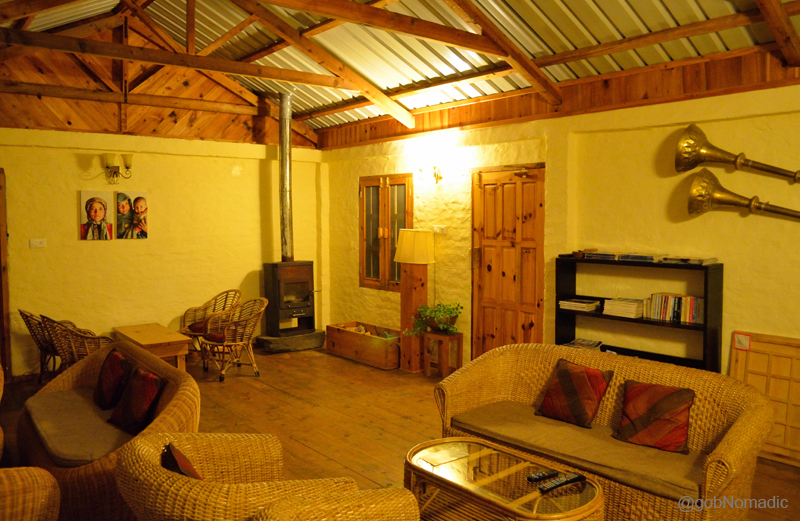
The common room; Notice the fireplace
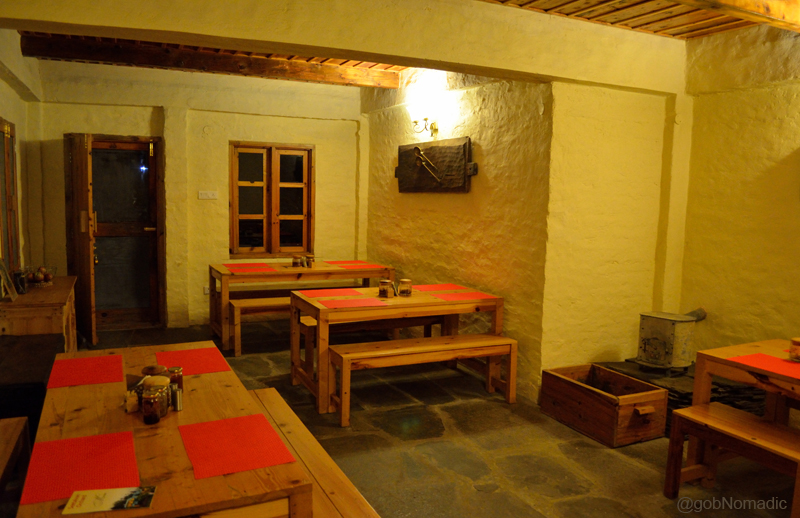
The Dining Hall; the fireplace again
The owners, a Jhina family, pride themselves with giving a personal, cultural and yet modern touch to create a semi-commercial property out of an ancestral estate. Having incorporated the basic fundamentals of modern architecture, the rooms are newly built. The kitchen-staff here has been especially trained to dish out homely north-Indian meals prepared out of locally procured ingredients. “We strive hard to serve tasty, healthy and fresh food so that it’s worth every penny you pay,” asserts the website. The owners also offer to organise sightseeing and adventure walks in the nearby area.
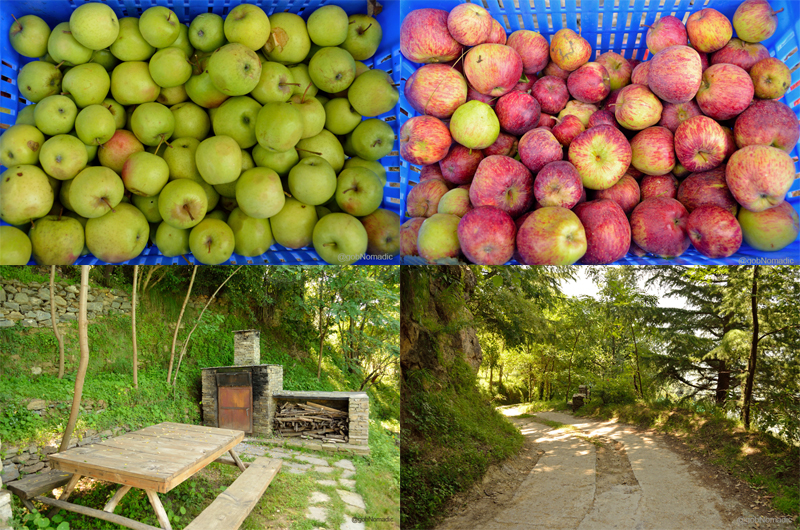
Clockwise from top: Harvested Golden, Red Apples, pathway inside the premises, wood-fired oven
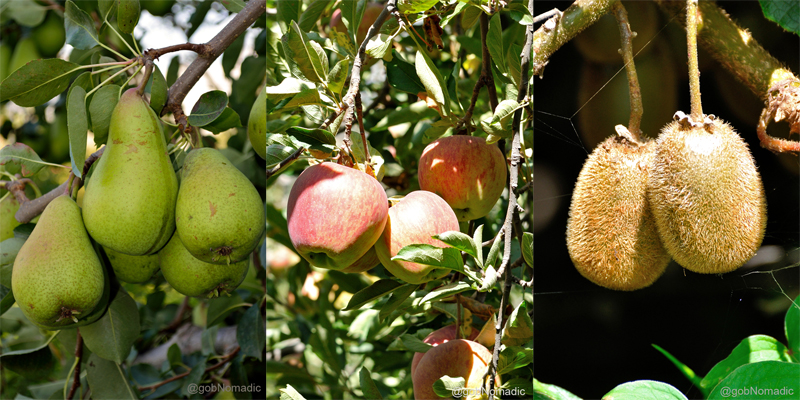
Ready to be plucked fruits: Pears, Red apple and Kiwifruit
My Experience at Seetalvan
I can never get tired of visiting the sylvan Kotgarh-Thanadhar hillside. The reason is obvious; not as much of a touristy region and a more preserved countryside for which I thank the flourishment of apple cultivation in the region. Guest houses or homestays are not plentiful in Kotgarh and finding a fully functional one is not an option; barring a couple of other possibilities. The orchard of Seetalvan is situated a little before the main settlement of Kotgarh. As I crossed Theog, a message from the owner, giving directions of the property, flashed on my phone. With much ease I located it.
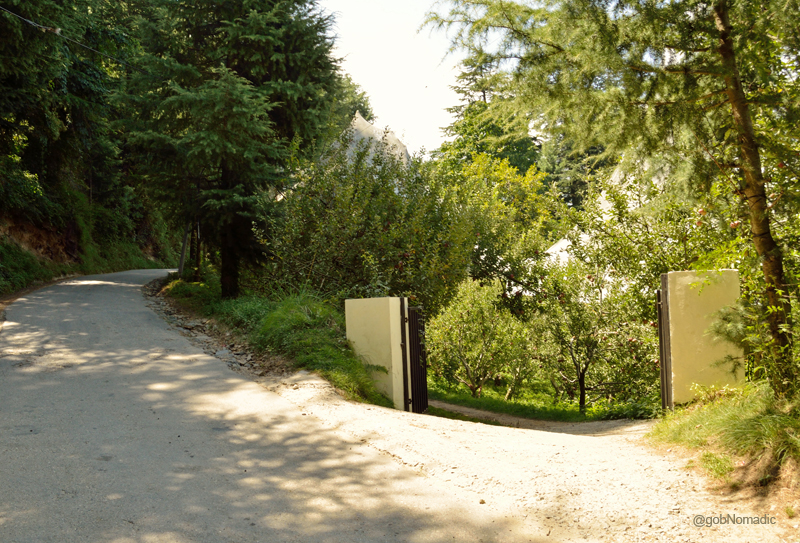
The humble entrance to the Homestay; located a couple of kilometer before Kotgarh
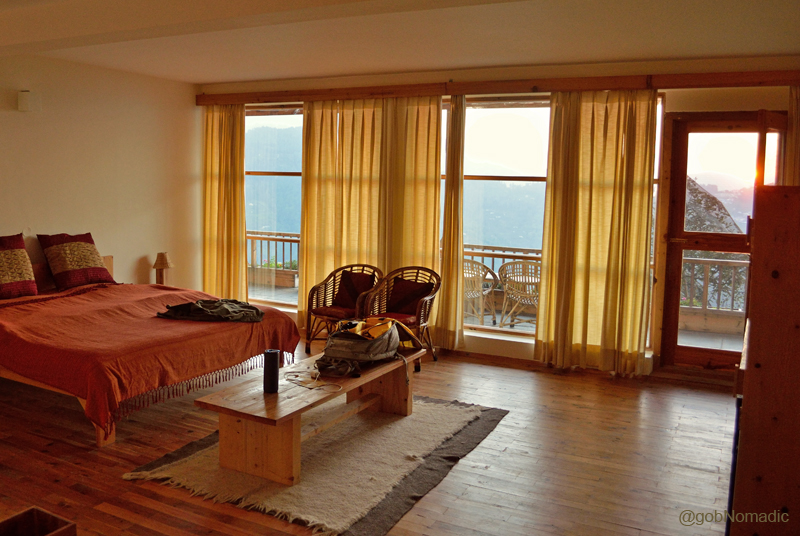
That was my room. Please visit Flickr Photoset for more images of the region
The caretaker, already waiting for me at the parking lot, escorted me to the room. The room was large and spacious for single occupancy or double, in fact, triple even. Minus a TV entertainment, intercom connectivity and Wi-Fi, the accommodation was well-appointed with almost everything one would expect at a luxuriously-billed property. I made myself a cup of tea. Polished in the typical yellow hue, much of the furniture and doorways was made out of deodar wood. The resin smell of the divine timber can actually work wonders and make you even more cheerful which is precisely what happened with me. Outside, the room opened up to a spacious balcony which had some prearranged basic furniture. The view encompassed Kullu and Mandi regions of the Himalayas. The rounded ridges endlessly rippled up far in the sky until they faded into the insipid blues on the horizon. Below me, the smell of recently plucked apples; juvenile magpies chasing each other, conversations of fellow resident-guests and the stretch of the orchard caught my attention. Further down on the valley floor, the mighty Satluj rounded to enter the Kullu region. Claimed to be the oldest organised cultivation, the lush green patch of dense deodars stood towards my left.

The spacious balcony. More images from Kotgarh-Thanadhar at Flickr Photoset

At the breakfast table; the sumptuous meal was washed down with plentiful of fresh Apple Juice
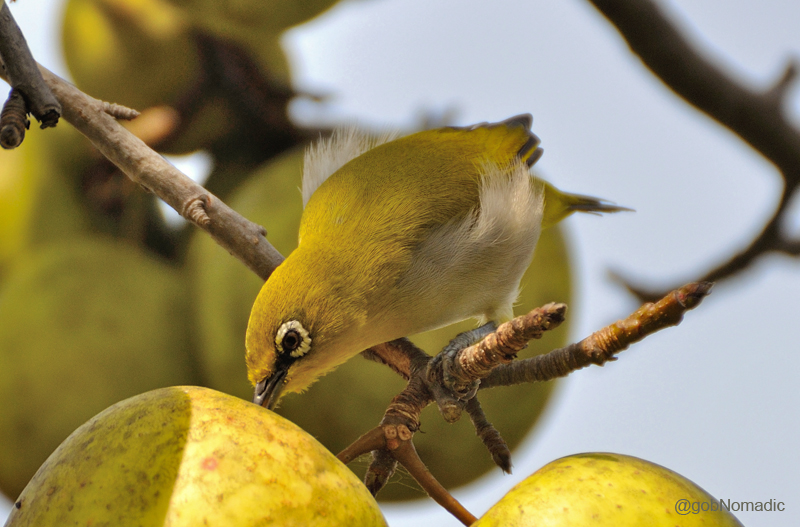
An Oriental White-eye feasting on a ripened Golden Apple
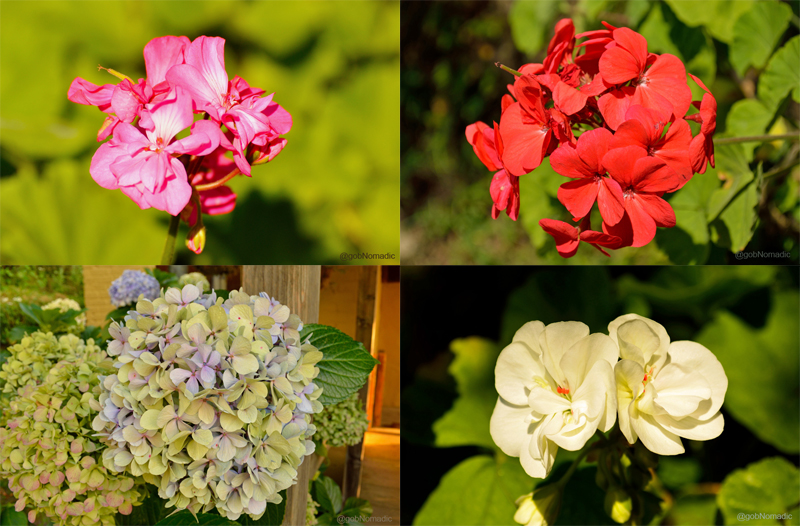
Apart from a variety of fruits and vegetables, the colourful orchard was a riot of seasonal flowers
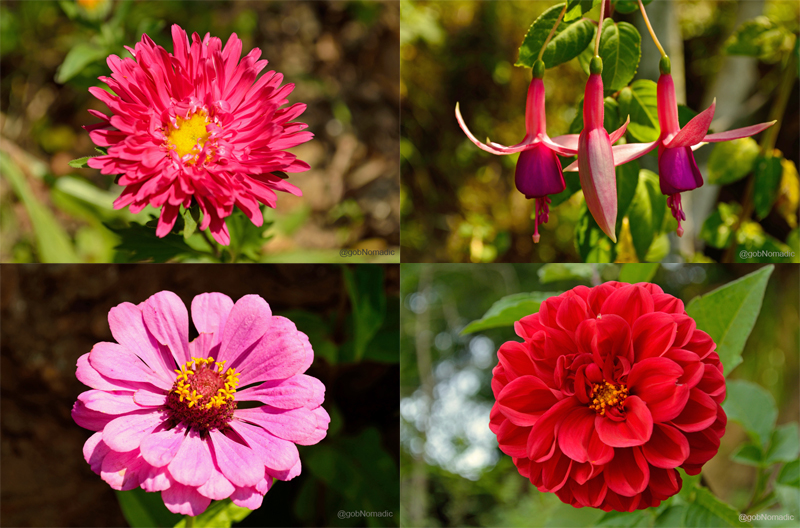
The flowers included dahlias, zinnias, geraniums, nasturtiums, bergenias, pansies, hydrangeas, fuchsias, asters, etc
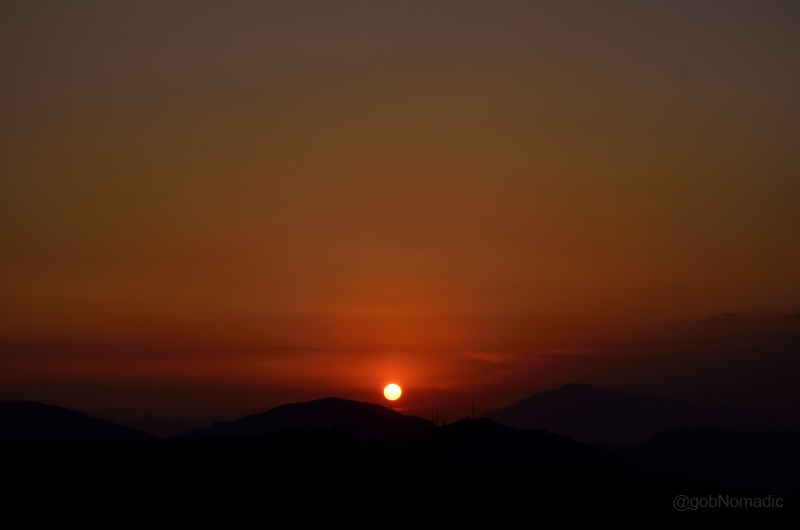
Sunset as observed from the orchard. More images from the region at Flickr Photoset
The common room was equipped with a small library comprising college literature, a couple of board games and a large screen to watch TV or play games. Reached through a stoop, the common-room opened up to a balcony on the right side. It was just an ideal place to grab a hot cuppa and pick a book or something. On one side the view commanded a sweeping Himalayanscape and the orchard on the other. I caught up with the owner Ms Minakshi Jhina, who was completely devoted to the upkeep and maintenance of the property of Seetalvan, her brainchild. With herself hailing from the Kotgarh-Thanadhar region itself; the property demands her attention and involvement all the time despite the staff being local. And she is ever willing; constantly tutoring and guiding her staff, a young, energetic and cultured team of local boys. The support-staff at Seetalvan was keen to accompany me or a walk and show me the terrain. Although, I preferred my own company but I found this willingness or service-option to be fairly useful as it would be of much help to a newcomer into the area.

Ms Meenakshi Jhina, the owner of the Seetalvan Orchards and Homestay
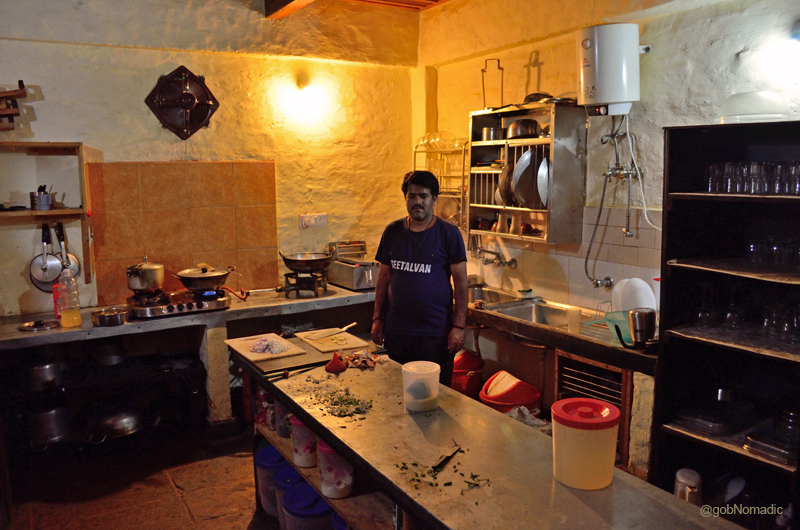
The Kitchen and the Cook at Seetalvan
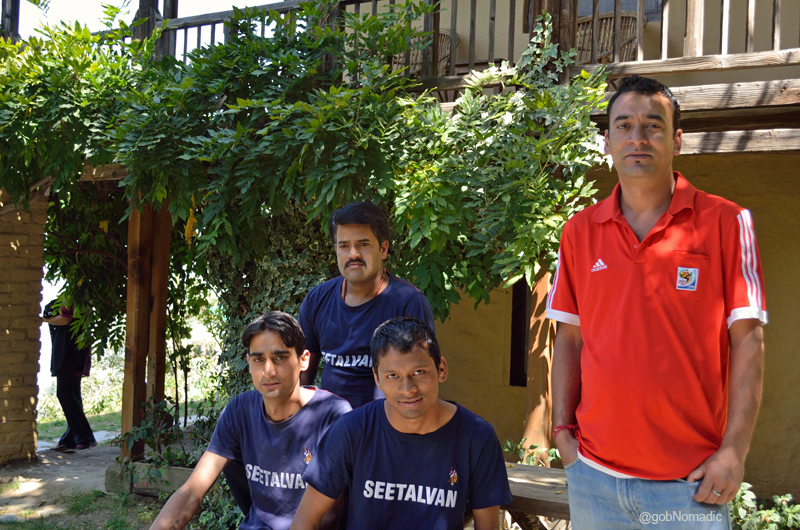
The staff at the Seetalvan Orchards
The way I saw it
Ambience and Location: 4.5/5
Accommodation and Staff: 4.5/5
Food and Dining: 4.5/5
Amenities: 4/5
Tariff: 3.5/5
If you wish to book your stay here, you can contact at +91.980.55.94069 or reach out through their website. It is listed fairly well at most travel planning portals and apps.
Disclaimer: This particular visit to Kotgarh and Thanadhar was based on an invitation from Seetalvan Orchard. The views expressed here are free of any bias and are solely based on my experience.
The Legend of Soldier Saint Baba Harbhajan Ji

The following post is a part of the “Kailash Mansarovar Yatra” Blog Series Into the Sacred Space. To read complete travel memoirs and trip report, please visit here.
As we prepared to depart from Kyongnosla for our next acclimatisation-halt on way to the Nathula, a small herd of yak-cow crossbreeds, called dzo, trooped on the road. Their herdsman was nowhere in sight. In the excitement of spotting something new, Yaks probably, a few pilgrims started taking snapshots of the domesticated animals that appeared half-asleep and disinterested. It was late morning already.

Misty Kyongnosla, the Fifteenth Mile. Please visit Flickr for more images of the region
Meanwhile, the cooks had assumed complete control over the ration they bought a day before. The entire stock was dutifully packed and weather-proofed in a pickup van which was to transport it to the pass, still a couple of days away. Our next station was Sherathang (4120m), a recently commissioned trading post only six kilometre short of the pass. It wasn’t the best of options for acclimatisation on India side of the pass at this altitude but the infrastructure supported our accommodation and wellbeing.
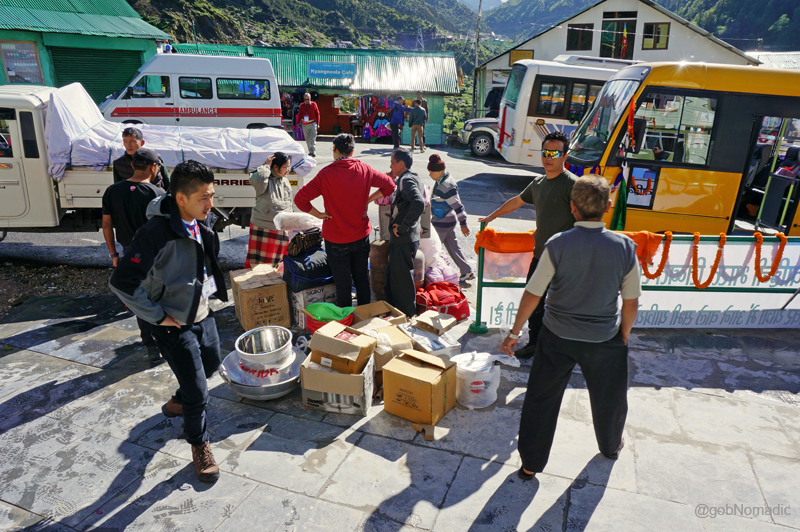
Loading rations and utensils at the Fifteenth Mile; basically whatever role the Food Committee was assigned with
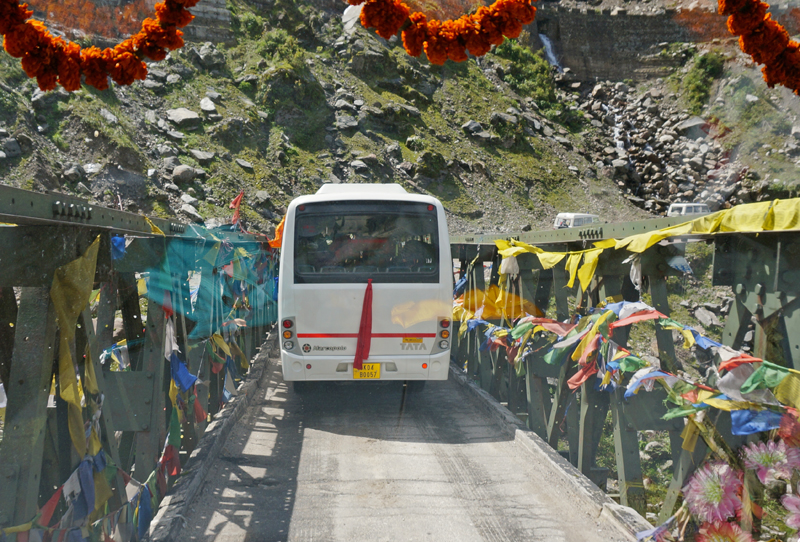
On way yet again. Please visit Flickr Photoset for more images of the region
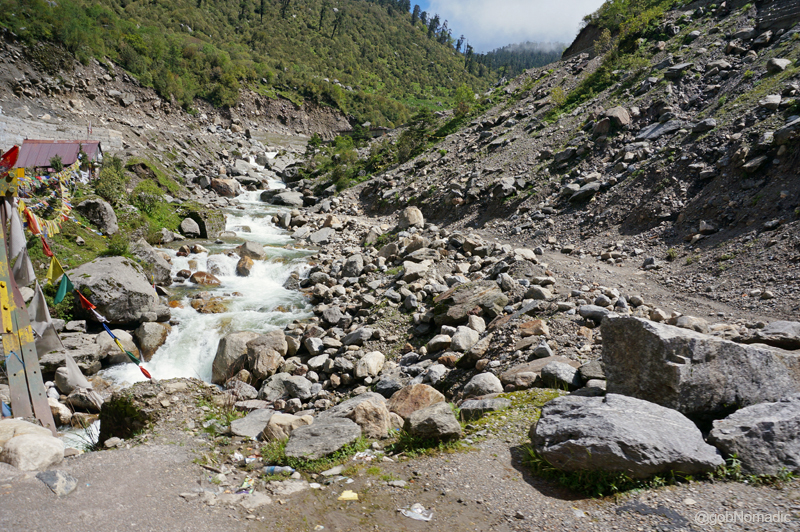
A stream crossing the road; or vice-versa. More images from the region at Flickr Photoset
As usual babaji initiated the ritual of holy cry of Har Har Mahadeo before we started for the next leg of our journey to the Sacred Space. Located at a distance of 26 km from the Fifteenth Mile on the road to the Nathula, Sherathang is otherwise a military check post. It was identified as the site for trade formalities, on India side, between India and China after the route got opened for trading in 2006. Rinchengang is the corresponding location in Tibet. The road ahead was smoothly tarred and broader as compared to the previous stretch. The mountain crests were too close to one another for a long sweeping view besides looking decidedly grim and barren. I decided to give my snap recorder a rest.

Sherathang; the first centre against the backdrop of a lakelet. More images from the region at Flickr
Although Sherathang is positioned above the treeline, there is plenty of moisture and greenery around. The nearby hills were covered with all sorts of shrubbery and wildflowers. Wedged between the Singalila Range on the west and the Chola Range on the east, the intriguingly moist terrain of Sikkim explains it. The overall alignment – following the east-west orientation, the Great Himalayan Range still further afar to the north – traps the moisture-laden winds coming from the Bay of Bengal. Experiencing an altitude of 4120m on the southern side of the Great Himalayan Range was a first for me.
At Sherathang, ten of us were allotted a spacious dormitory for the next couple of days. The rest of the group members were put into separate rooms in the hutment located on the other side of the main road. Both the centres faced each other. The trading mart and its office were situated within a stone’s throw distance from either centre. There is no market to shop or a café to munch here. A tin-fabricated temple, looked after by the ITBP, was situated adjacent to the centre. The temple blared Krishna and Shiva bhajans almost throughout the day through its basic PA system.

The second guesthouse at Sherathang; the temple to its right. More images at Flickr

The parking and the trading mart at Sherathang. More images from the region at Flickr
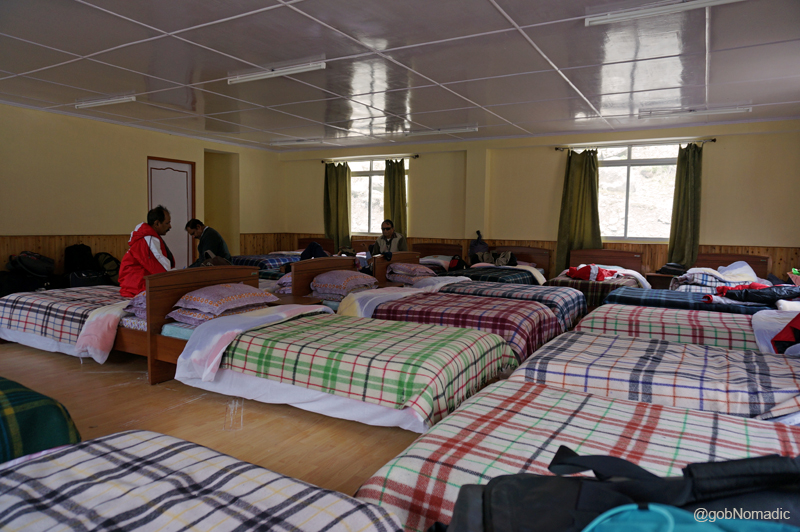
Our dormitory at Sherathang. Please visit Flickr for more images from Sikkim
Our dormitory was located on the third floor of the already higher building. The dining hall was at the third basement of the lower building. It was a task, especially for the elderlies, to move between the two locations. At lunch we were intimated that a medical session, by doctors of the ITBP, will be held in the evening. “The final medical assessment will be held the next evening”, a non-officiating doctor proclaimed even as he put an evil grin on his face. “Those of you who are found unfit will have to go back”, he added impishly. As a result of which, barring a few none looked any further interested in savouring the post-lunch dessert; usually electric-warmed tinned gulabjamuns. The helpless ones started taking an extra dose of medicine to control their fears – mostly related to blood pressure and sugar level. The alarming tone of the doctors had, in fact, amplified the upper blood pressure level in most pilgrims. Having come this far, none of us wanted to be turned back.

Medical check-up on the first day at Sherathang. Please visit Flickr for more images of the region

Our Babaji being given Supplemental Oxygen
We were advised total bodily rest at Sherathang. The pretext for immobility here was acclimatisation. Many of the pilgrims were already taking Diamox to prevent altitude sickness. Several were suffering from headaches, nausea and sleeplessness. I continued on my regimen of extra water intake, ginger and garlic to recalibrate my organs with the reduced levels of oxygen in the air.
The schedule-induced boredom and stagnancy drove me back into the dormitory at the guest house. I picked up my book again. Even though fully aware that we needed to be patient, it was getting impossible to wait for crossing over to the other side of the pass. With the sun playing hide and seek, it was getting misty outside. Inside, a few of the pilgrims had flogged themselves into a trance of chorus singing. They lined out bhajans with tuneless zealotry celebrating the cult of Lord Shiva. When prodded jocosely over and over, babaji belted out Shri Hanuman Chalisa. Almost everyone chipped in.
I was silently observing the proceedings as I updated my travel notes. A kitchen boy walked in to inform the resident-guests that the evening tea was ready along with “pakodas”. People acknowledged with enthusiasm but no one was keen to go all the way down to the dining hall. They continued with their frenzy of reciting shalokas and chants. Having waited for some time and observing that it was turtles all the way down, the kitchen staff had the tea and refreshment sent in the dormitory. Priding themselves for being “notorious” with STDC, the vocalists now gorged on the refreshment until someone reminded them about the evening medical test. I was shooed away when I tried to explain to them an even wider logic of celebrating the natural history of the Himalayas with special reference to the Kailash Mansarovar region.
That evening the results of the medical test terrified all of us. Almost all of us reportedly had a higher upper blood pressure level. Much of it was expected at a higher altitude but a lot of it had to do with the real terror, playing in our minds, of being rejected medically. The young doctor, who was in charge of the medical team of ITBP, complimented me after noticing my excellent oxygen saturation level. My BP was still a notch above the normally expected rate; I squarely blamed the anxiety created by the doctors. The medical brouhaha extended till dinner time after which I made a beeline to the ITBP-managed STD, the last practical option, on the road to the Sacred Space, to connect with the real world.
I slept peacefully that night. Some of the pilgrims who were on Diamox complained of sleepless the next morning. How could they discount intake of water I told them. Before I could grumble about boredom to the STDC, seeking some change in routine for the day, the news of visiting the terrain towards Jelepla (4267m) side and the famed Babaji ka Mandir, a shrine dedicated to the solider saint, was already doing the rounds.
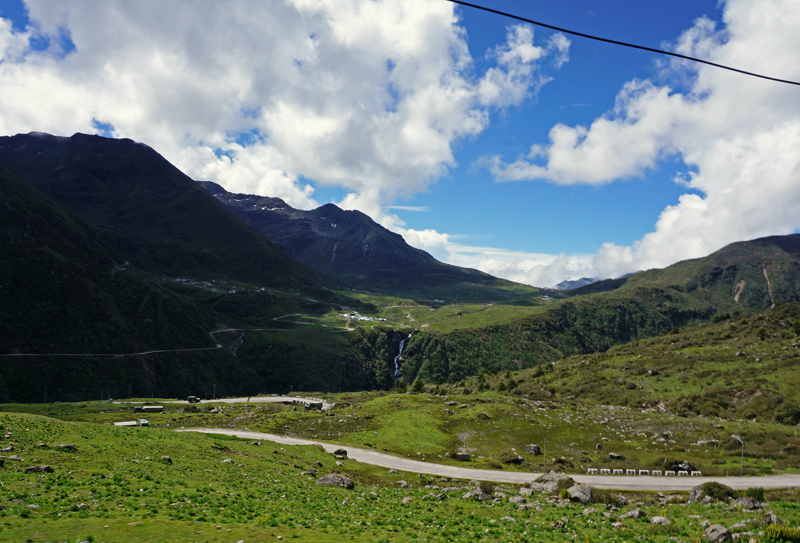
View towards the Kupup Valley. For more pics from the region, please visit Flickr Photoset
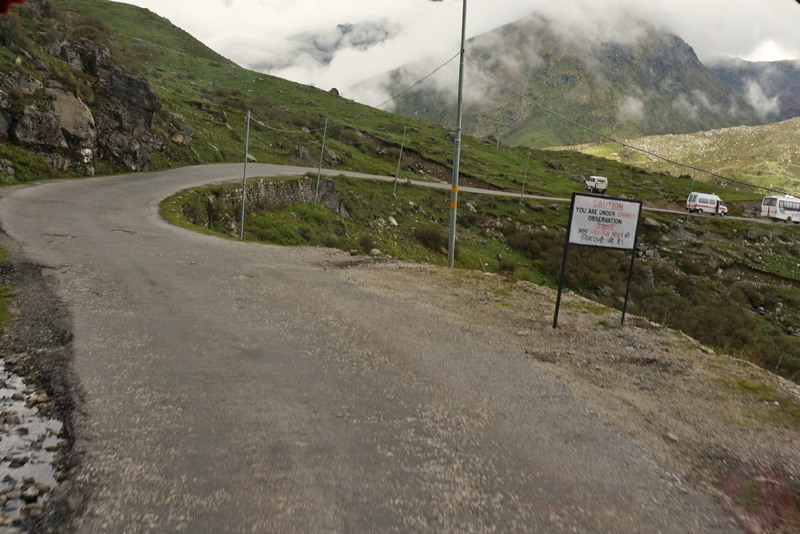
Caution: You are under Chinese Observation
Caressing slopes of the Nathula, the road led us onto a wide open pastureland of Kupup. The newer shrine- Baba Mandir – dedicated to the Baba was built at the junction of Kupup Gnathang, the black meadow, road and a trail leading to Menmecho Lake. At the mandir, a modern PA system blared out Sikh gurubanis. A uniformed Sikh soldier was stationed at the shrine to give prasad to the visitors. Nearby just below the Namnang Chho waterfalls, the Indian Army has also built a shrine dedicated to Lord Shiva. None of us had any idea about the fascinating history behind the locally revered solider saint of Sikkim until the guide initiated us into its story.
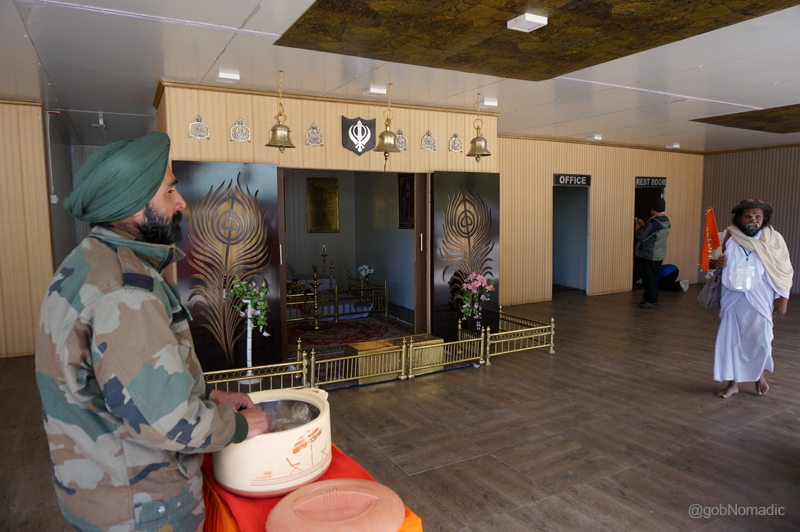
Inside the new shrine dedicated to Babaji. For more images from the region, please visit Flickr

A recently built Shiva shrine just below the Namnang Chho waterfalls. More at Flickr
Baba Harbhajan Singh Ji was an Indian army soldier who died in a weather-related accident on a remote outpost manning the treacherous Indo-Tibetan frontier. In real life, he served with full vigour and dedication. Legend has it that to this day he continues to guard the frontier and assists the soldiers stationed there. He is said to have himself led the search party to the site of his death to help them locate his body. Obliging to his request, which he apparently made in dreams of his fellow soldiers, his Samadhi and a shrine was later raised on the slopes of Tukla where his company was posted. It is claimed that the Baba visits this shrine, an army-bunker almost every night and make use of all his belongings including uniform and beddings after which he dutifully patrols the area. Still drawing his official salary, it is claimed; the departed soldier-turned-invisible-saint answers prayers of those soldiers who seek his help and look for guidance on the battlefield. Today, the legend and shrine of Babaji have become a star tourist attraction of East Sikkim.

The olden temple dedicated to Babaji. Please visit Flickr for more images from the region
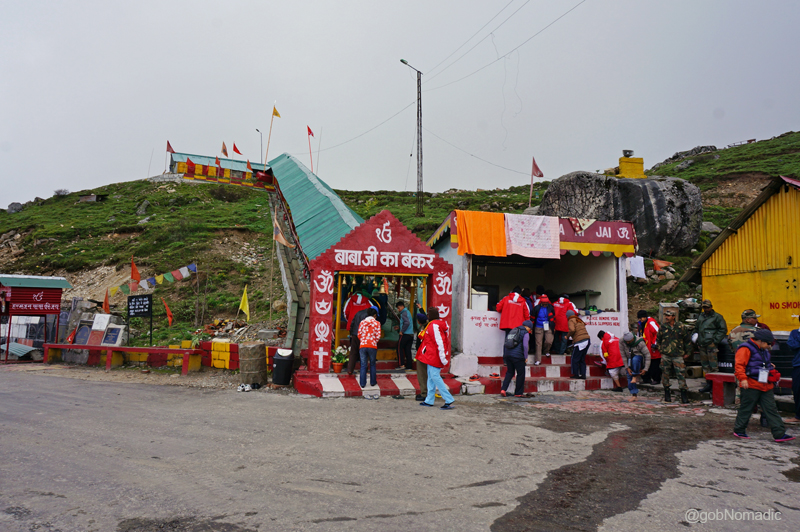
Babaji ka Bunker, an underground shelter. More images from the region at Flickr
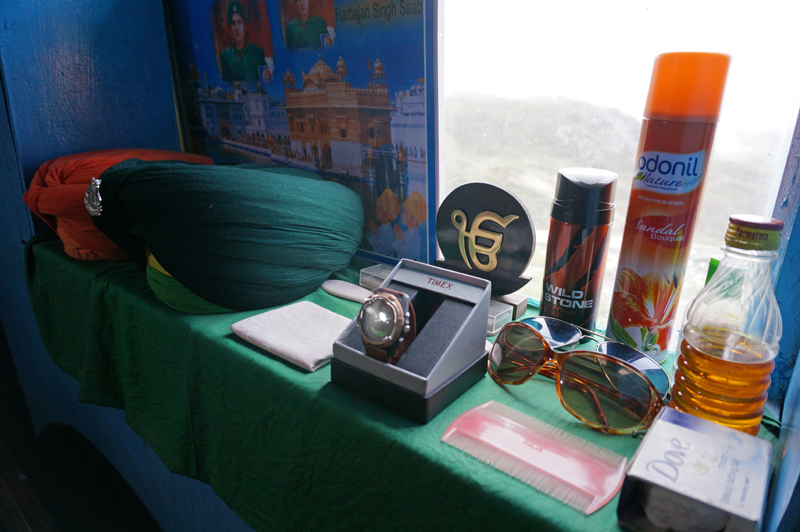
Babaji’s belongings inside the bunker. Please visit Flickr for more images from the region
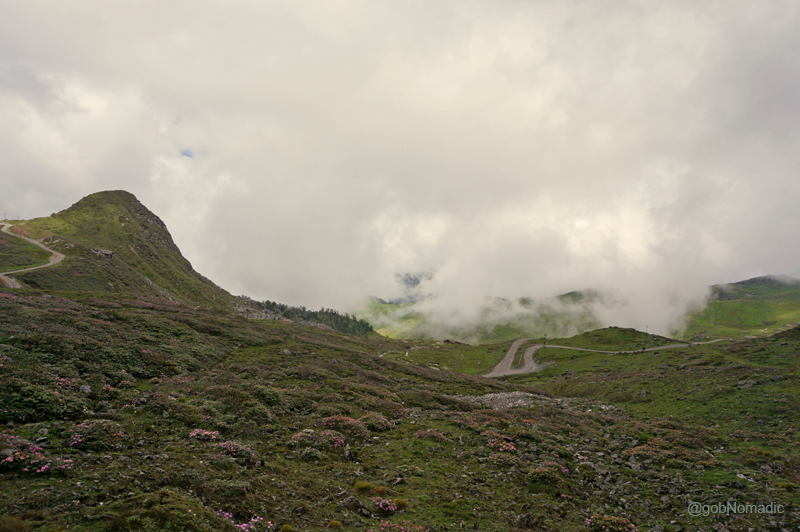
Wildflowers and the Tukla Valley. More images from the region at Flickr Photoset
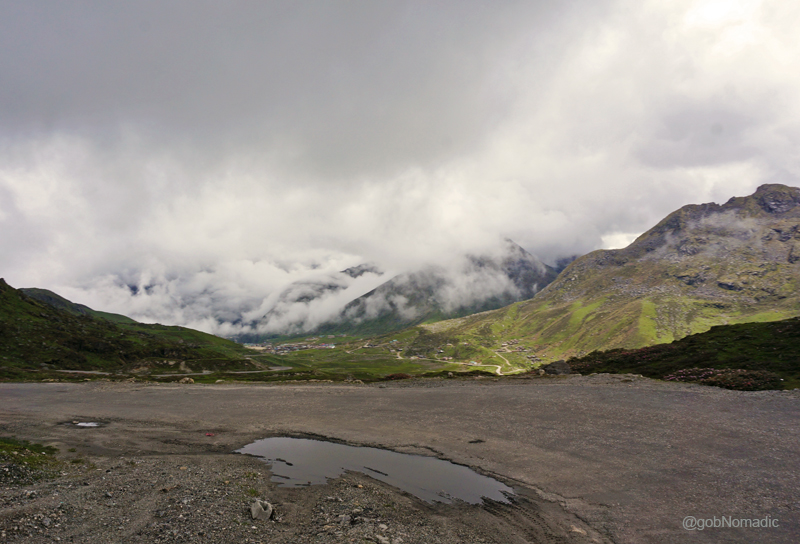
View towards the Jelepla and Kupup Valley down below. More images at Flickr Photoset
Still misty, the Kupup and Tukla valley terrains were blocked by a cover of cloud. At best I could see some wildflowers and wild rhubarb on the slopes. Driven by curiosity, eyes were fixed on the Chinese army bunkers towards the Jelepla, “The Lovely Level” side where the view was still clear. The landscape encompassing the Kupup Lake, an army golf course, even higher pastureland and an upper valley that led to the Jelepla, once a popular route to crossover to Tibet, made famous by Francis Younghusband to reach Lhasa was visible now. The Kupup camping grounds used to be traders’ first preference for a camping-halt. Many small streams meander down the valley from the slopes; creating a lakelet which gave the traders and now the stationed troops with some recreational means in this otherwise a dreary terrain. Quickly enough we were transported back to Sherathang after the news of arrival of Chinese Ambassador to India trickled in.
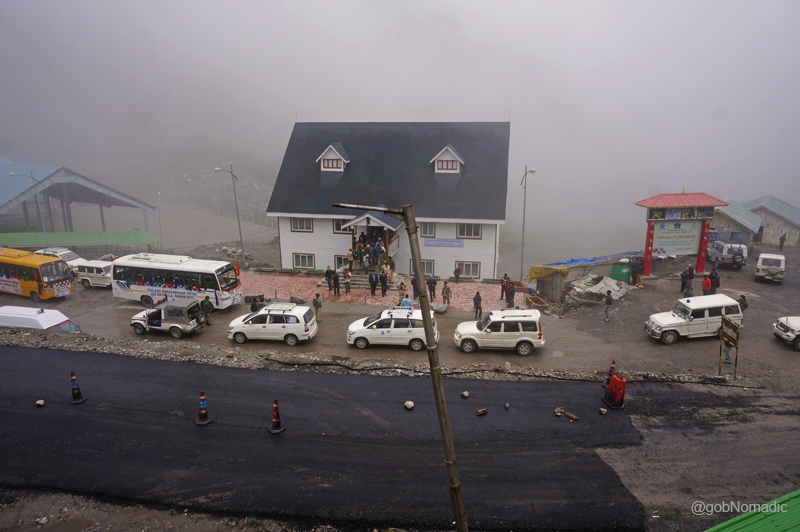
Arrival of the Chinese Ambassador to India at Sherathang. More images from the region at Flickr

The mountaineers-turned-cooks sorting out the ration after a fresh set of instructions came from the China-side. More at Flickr

The final briefing session at Sherathang. Please visit Flickr for more images from the region/ Yatra

Sh Tarun Vijay, Member of Parliament, Rajya Sabha greeting the travellers. More images at Flickr
Back at Sherathang, after the evening tea, our LO handed us a fresh list of items that were banned for entry into Tibet by the Chinese authorities. The arrival of the list basically meant that our cooks and the foods committee had to rearrange the ration. Meanwhile, the finance committee collected dollars from everyone to deposit combined yatra fee to the Chinese authorities, the next day. The luggage committee carefully marked the individual baggage that we intended to leave behind at the acclimatisation centre. The STDC had organised currency exchange in the dining hall. Once across the border, only dollars could be used for any currency exchange. Smartly enough, the medical team of the ITBP organised the final medical check-up without any formal warning which helped curtail our anxiety. I was relieved to see that all of us were declared medically fit for the journey ahead. A final briefing session was organised which was attended by regimental heads of the stationed forces, doctors, STDC staff, customs and a surprised visitor Sh Tarun Vijay, Member of Parliament who was to led us for the journey ahead. The customs and immigration people completed most of their formalities after dinner in the dining room itself. The excitement was back in the group. The younger ones gobbled up a rich supply of gulabjamuns before calling it a day.
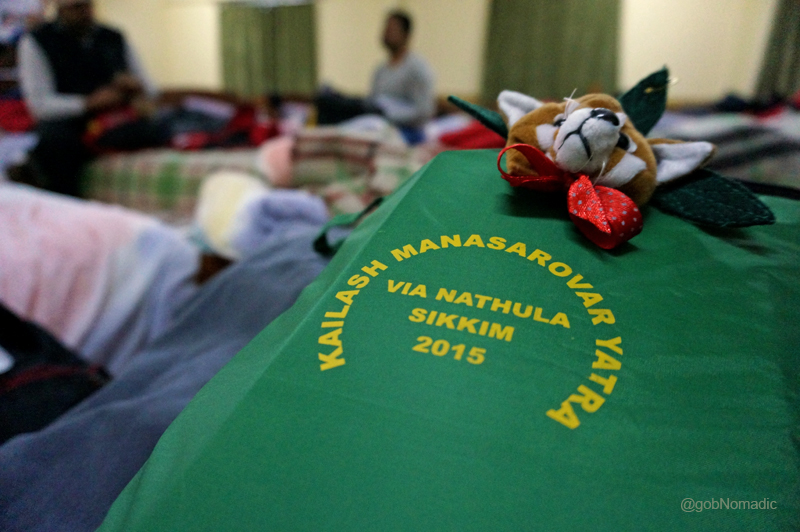
Happy Sleepy Panda!
The relocated abbey of ancient Tibetan Bon Religion at Dolanji
Last weekend, while on way to the peach valley of Rajgarh, I visited the Menri Monastery (1195m), situated at village Dolanji in Solan district of Himachal Pradesh. Located within a comfortable reach of Chandigarh, the region has always been a preferred weekend hideaway since the university days. A leisure drive from the City Beautiful takes about a couple of hours to reach the monastic complex of Dolanji; positioned at a distance of three kilometre from the diversion at Ochhghat on the Solan – Rajgarh road.
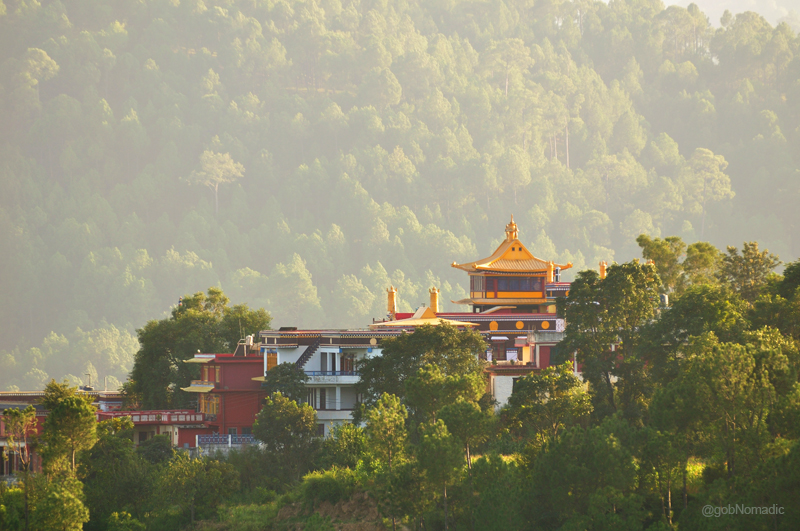
Dolanji Monastery; The relocated abbey of ancient Tibetan Bon Religion. More at Flickr Photoset
Set in a calm and green bowl of Solan hills, the monastery discourses and resuscitates the teachings and rituals of the most ancient, pre-Buddhist, spiritual tradition and native religion of Tibet – the Bon faith. Built from a scratch in 1967 after the local Bonpo settlement got recognition from the Government of India, today the monastery, the seat of the abbot of Bon faith, has become the chief centre of spiritual learning and ritual activity of Bonpos from across the globe.

The Yungdrung Bon Monastic Centre at Dolanji. Please visit Flickr for more images from the region
The monastery has an intriguing history. After the Lhasa uprising in 1959, a large number of Tibetans including the Buddhists and the Bonpos fled Tibet; along with the Fourteenth Dalai Lama. Much before that the count of Bon followers in Tibet had been reduced to minority as a majority of them now professed Buddhism. It is estimated that nearly one per cent of the total Tibetan refuge-seekers in India were Bonpos who initially gathered in the Manali region where they sought food and shelter. Subsequently, most of them got rehabilitated at village Dolanji while some of them settled at Mandowala near Dehradun in Uttarakhand.
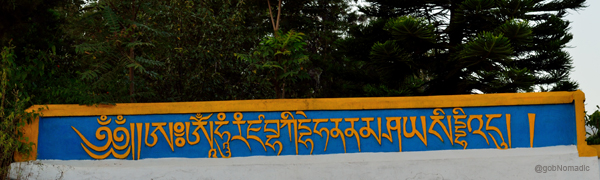
The main entrance to the monastery. More images from the region at Flickr Photoset

A young Bon Monk. More at Flickr Photoset
With the help of the Government of India and a few independent organisations, the Bon followers began to re-establish their chief religious and spiritual centre at Dolanji and named it after the Menri Monastery, the foremost but destroyed Bon monastery of that name in Tibet. Similarly, the new settlement at Dolanji has been referred to as Thobgyel Sarpa after the village Thobgyel which was near the ancient monastery of Menri in the Tsang province of Tibet. In fact, most of the residents in the settlement originally hailed from the Kailash Mansarovar and Tsang regions. In 1969, under the guidance of the abbot of Yungdrung Ling, the second most important Bon monastery of Tibet, the followers of Bon at Dolanji elected their Abbot – Menri Trizin thirty third Lungtok Tenpai Nyima – through a lottery draw system. Later on he assumed the spiritual leadership of all the Bon monasteries and institutions worldwide.

The main assembly hall of the Menri Monastery. Please visit Flickr for more images from the region
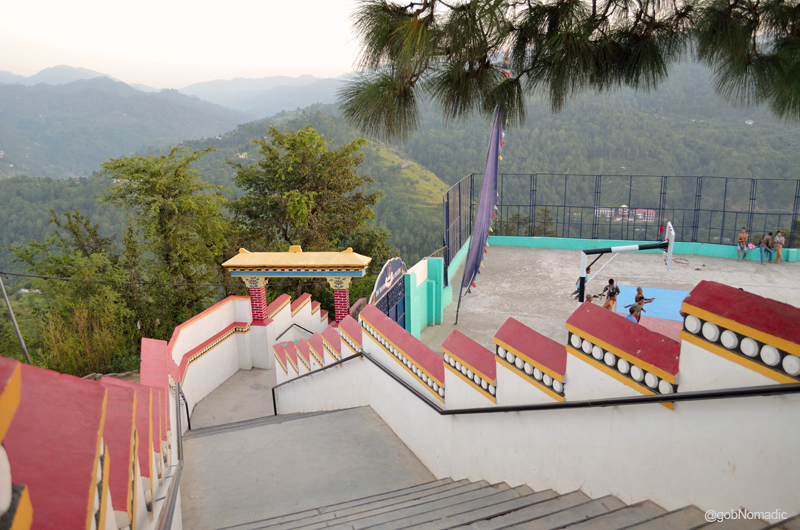
View towards the Valley from the courtyard. More images at Flickr Photoset
The bright yellow canopies of the monastery were aglow with the evening sun when I reached Menri. The monks were about to begin their routine evening recreational activities. With the younger ones occupying a large part of the playground, the elder ones were either chatting up in small groups in the compound or taking a walk on the village roads. A few of them were dutifully preparing the main assembly hall for evening rituals. A European couple was inquisitively circumambulating the main assembly hall du-khang in the prescribed anticlockwise direction. The lady had prayer beads in her hand.
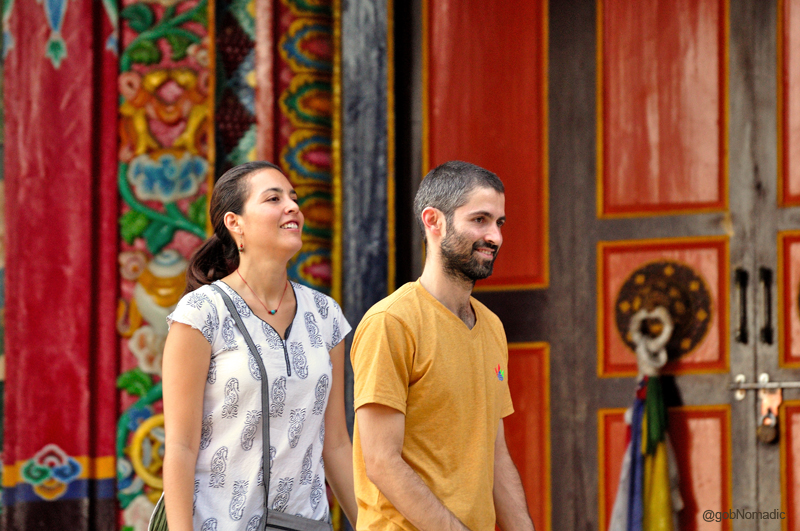
The Menri Monastery is frequented by pilgrims and visitors including foreigners. More at Flickr
In-between, the energetic calls of blue-red robed monks echoed forth in the calm open courtyards. The inmates were extremely cultured and disciplined. I greeted a young monk with a Namaste who nodded back even though he understood little Hindi. Out of respect, a few of the younger ones I came across nodded from a distance. And without exception, the compound was very well kept. The façade of the monastery is bedecked with the religious emblems and the typical Tibetan colourful prayer flags.
As of now, the whole monastic complex is embraced under the name of “The Yungdrung Bon Monastic Centre” and forms a part of the Tibetan Bonpo Foundation. From just a temple, the centre today has expanded to include a nunnery, a school with hostel, guesthouses, meditation halls and an infirmary, etc. This modern complex is an all-in-one compound with independent temple buildings, monastic cells, playground, etc. built within their own microenvironment. Interestingly (but not surprisingly), in constructing the du-khang, abbot’s residence and the meditation hall or Drup-khang, the management has devotedly stick to the original Tibetan architecture while the other important buildings like the hostel, cells and guesthouses, etc. are built in a typical contemporary concrete style. As of now, the centre is home to more than 400 resident lamas along with over 200 novices.
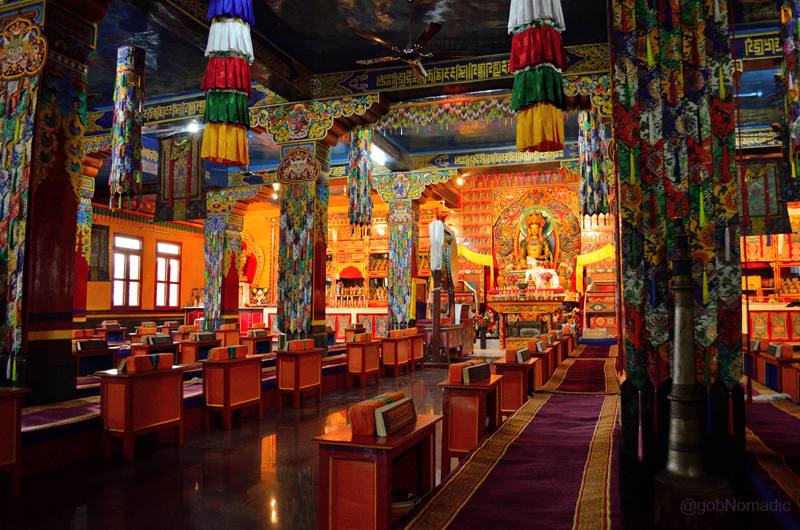
Inside the main assembly hall, du-khang of the Menri Monastery. More images at Flickr
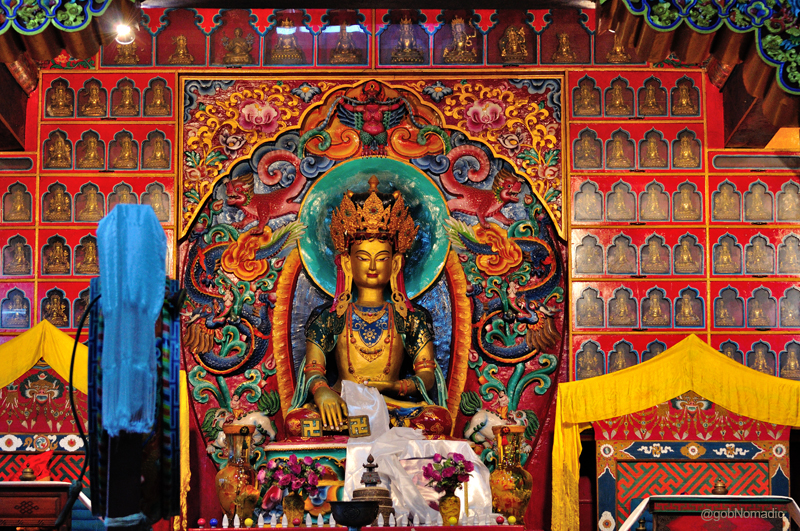
The imposing statue of Senrab Mibo, the primordial Deity of the Bon religion. More images at Flickr
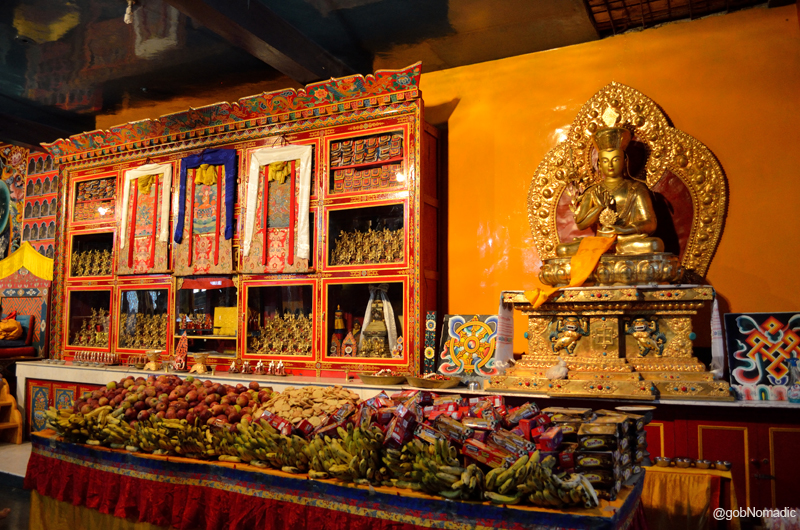
Offerings inside the assembly hall of the monastery. More images from the region at Flickr
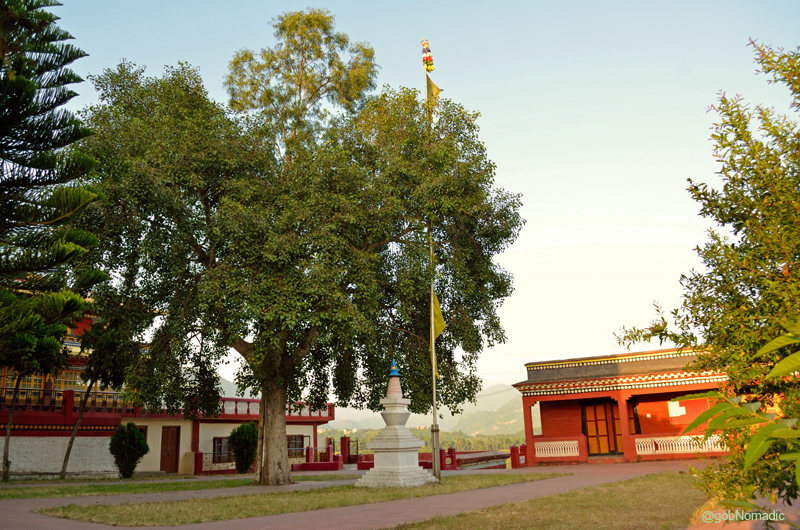
The main courtyard of the monastery is shaded by a large Bodhi tree. A blue-topped chorten beneath it intrigues the uninitiated visitors. The wide courtyard also serves as go-tha or vestibule. I headed inside the main assembly hall while my friend, founder of Chandigarh Bycycle, who accompanied me on this trip video-documented the ambience of the compound. The walls of the main hall of the monastery are painted in red, yellow, white and blue synthetic colours and beautified with ornate floral designs symbolic of the Tibetan style. The veranda walls are painted with the images of the Bon guardian deities of the four quarters, Chhok kyong-zi or the Lokpalas. Although, the monk-artists who executed these paintings took all possible care to preserve the thematic sanctity of the Tibetan art yet the glossy outcome of the enamel paints is at variance from the traditional Tibetan murals. The second important temple of the complex, the drup-khang or the meditation hall, situated adjacent to the du-khang, can only be visited by accomplished monks.
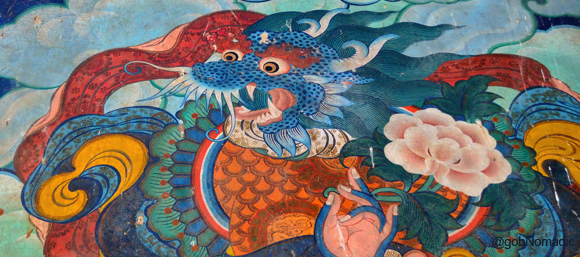
Miyunam Duki Gochhen (the Dragon headed Blue Human), one of the four guardian deities of the Bon Religion
The arrangement inside du-khang is principally traditional; plain walls, rows of monastic chogtse with scriptures placed on them, a central large space with wide aisles on both sides for movement. Against the back wall, miniature metallic images of the Bon deities are placed in the glassy shelves. The images included Tara and the mystic mandala among others. An imposing image of Senrab Mibo, the primordial Deity of the Bon religion, occupies the central space. Attired in ceremonial costumes, Senrab Mibo is shown meditating in the Bhumiparsha mudra of the Buddha Shakyamuni. Tibetan-coloured banners, painted and embroidered thangkas along with silken wall-hangings decorate up the interiors. Prepared in recent times, most of these thangkas depict Senrab Mibo in various manifestations. No particular activity was taking place inside the du-khang at that time of the evening. A few young monks were cleaning and rearranging the offerings, at the altar, that comprised fruits and biscuits.
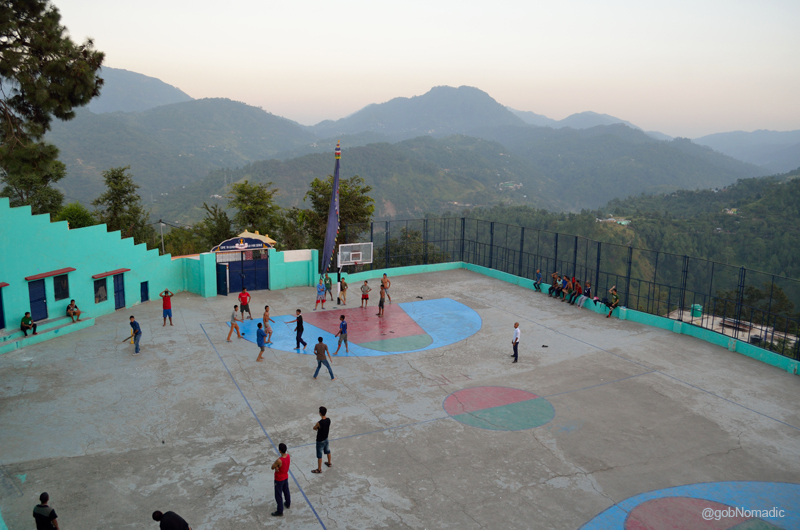
Younger ones at the playground; Don’t get surprised to find someone playing two games simultaneously
The Bonpos have taken great care in reviving the religious and spiritual essence of their faith; doing their best to keep the nostalgic fervour and traditional character of their Tibetan homeland alive in this modern form. Leave aside the Tibetan architecture, rebuilding a society in an entirely different geo-climatic, socio-religious, cultural and political setting is a no mean feat. The Bon religion preaches a high regard for nature and advocates the conservation of environment. It was my ideal weekend dose of travel and I’d recommend it to the curious travellers who seek to visit offbeat destinations and usually have less time at their disposal.







 bNomadic